
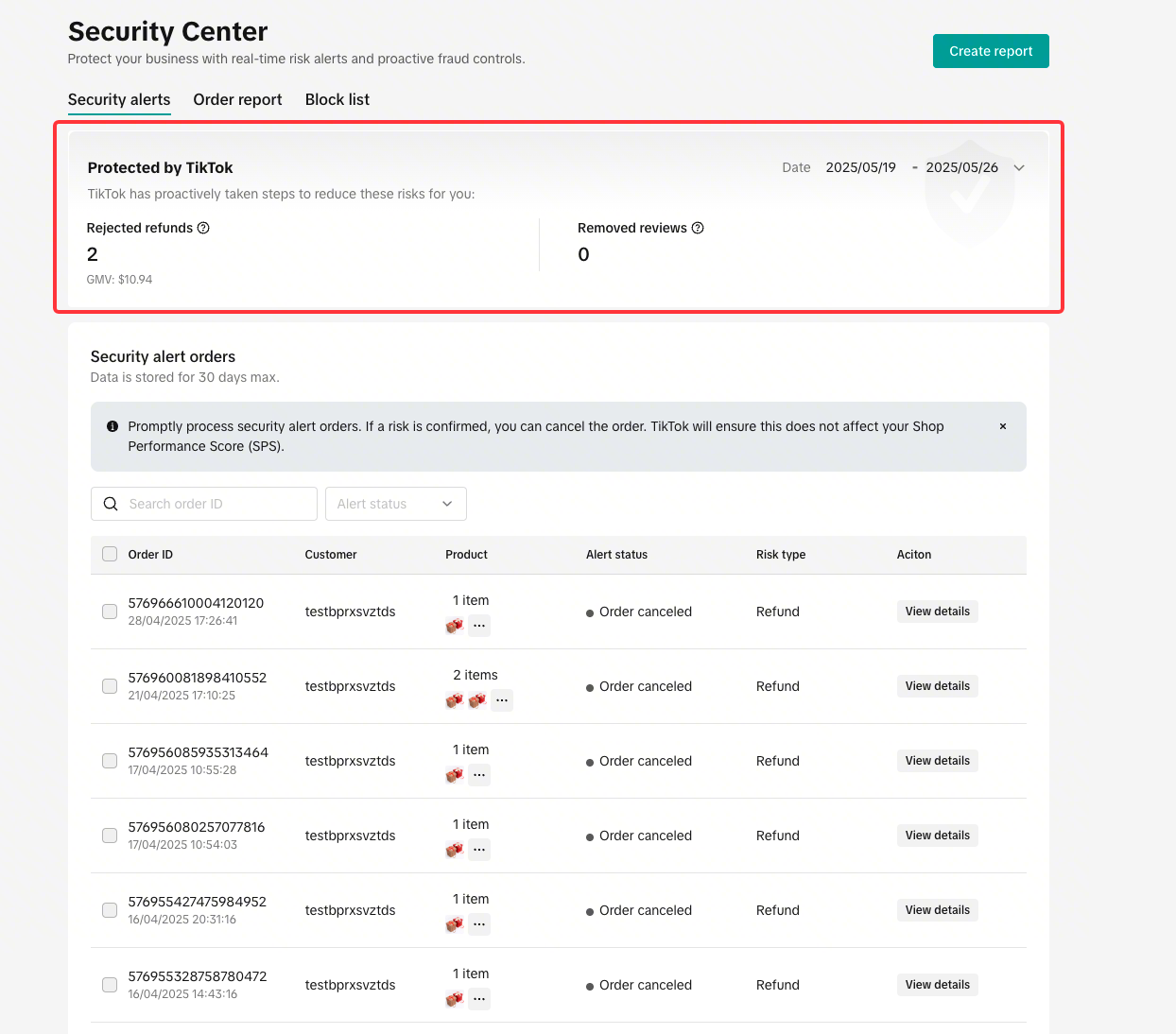
Recently, TikTok Shop Southeast Asia cross-border made two key adjustments to the buyer blocking function in the Seller Safety Center.
This is not merely a simple modification of backend parameters, but more like an attempt to find a more precise balance between platform ecosystem governance and the protection of top sellers' rights and interests.
Rule core: From universal quota limits to dynamic allocation.
The most direct change in this adjustment is the increase in quotas. For some high-volume sellers, the daily cap on blocking buyers jumps from 10 to 50, and the cap for the cumulative block list also expands from 100 to 200. More importantly, the new quotas take effect automatically, requiring no additional application from sellers, and the backend status is transparent and checkable.

Image source: seller-tiktok
However, what truly draws attention is not just the increase in numbers, but the introduction of the mechanism where high-risk buyers do not occupy quotas.
This means that when sellers encounter high-risk accounts that have been independently verified by the platform—such as repeated fraud, malicious returns, or persistent harassment—these blocking operations will no longer consume the sellers' own quotas. The platform will return the corresponding quota and retain the blocking records.
In short, quota resources have been redefined as a buffer zone for sellers' independent judgment, while the platform, through backend identification, shoulders protection against confirmed risks for sellers.
For sellers: Defense upgraded, but power has boundaries.
For compliant sellers, especially those with large order volumes, this is undoubtedly an important protective upgrade.
Previously, limited blocking quotas often seemed inadequate when facing increasingly specialized professional anti-counterfeit scammers in some parts of Southeast Asia. Under the new rules, sellers can focus their limited discretionary blocking slots more precisely on preventing potentially risky orders, while isolating high-risk users already flagged by the platform outside the system.

Image source: seller-tiktok
But note that this feature has been given an extremely clear red line. It may only be used for genuine risk scenarios such as repeated fraud, malicious returns or exchanges, and harassment. Blocking buyers due to price disputes, negative review disputes, or normal returns is explicitly defined as a violation.
The platform emphasizes that abusing permissions will result in the feature being withdrawn and even accountability being pursued. In plain terms, while TikTok Shop gives sellers a stronger defensive tool, it also prevents this tool from being twisted into a means of suppressing normal consumers' voices through strict preset consequences.
Sellers' response strategy should be to use this tool in a more refined manner, establish internal records of risky buyers, distinguish malicious interference from normal disputes, and ensure that every blocking action can withstand scrutiny.
After all, the original intention of the tool is protection rather than exclusion. Only by using the blocking function where it truly matters can sellers enjoy policy dividends while jointly maintaining a healthy business environment with the platform.


Image source: seller-tiktok
Conclusion
TikTok Shop Southeast Asia's adjustment to buyer blocking rules this time is not a simple functional iteration, but a recalibration of the rights and responsibilities among the platform, sellers, and consumers.
It provides compliant top sellers with greater defensive depth and more ease, and also places higher demands on the platform's own governance capabilities.
In the future, as Southeast Asia's e-commerce infrastructure matures, similar refined operational tools based on risk identification may become increasingly common.
For sellers, understanding and making good use of this tool, protecting themselves from malicious intrusion while avoiding touching the red line through misuse, will be key to adapting to the platform rules in the new stage.
What this signal means for growth teams
This market signal should be treated as an operating prompt, not a standalone trend. The brand question is whether the team can connect TikTok content, creators, paid media, commerce readiness, and reporting into one measurable growth cycle.
Commercial read
- Market signal: TikTok Marketing Information and Solutions
- Published: September 3, 2026
- Commercial lens: TikTok Ads, creators, TikTok Shop, live commerce, and reporting.
- Source transparency: the original source linked in this article
What brands should do next
- Identify the market, audience, product group, and KPI this signal could affect.
- Turn the insight into a small TikTok creative, creator, Shop, or paid media test before scaling spend.
- Add FAQ, offer clarity, product proof, and contact paths so traffic can convert instead of only reading.
- Review weekly performance across reach, click quality, Shop actions, creator output, and revenue impact.
Tuke Marketing helps brands connect TikTok Ads, creator partnerships, TikTok Shop operations, live commerce, and reporting into one accountable operating system.
What should brands do with this TikTok signal?
Brands should translate the signal into a focused operating test across creative, creators, TikTok Shop readiness, paid media, and reporting before increasing budget.
How does Tuke Marketing evaluate this kind of news?
Tuke Marketing reviews platform news through market timing, category demand, creator supply, commerce readiness, and measurable growth actions.
When should a team contact Tuke about this topic?
A team should contact Tuke when it needs to turn a TikTok market signal into a practical launch, creator, advertising, live commerce, or reporting plan.
Source transparency: Tuke cites the original source linked in this article and adds its own operating analysis for brands evaluating TikTok growth decisions.