
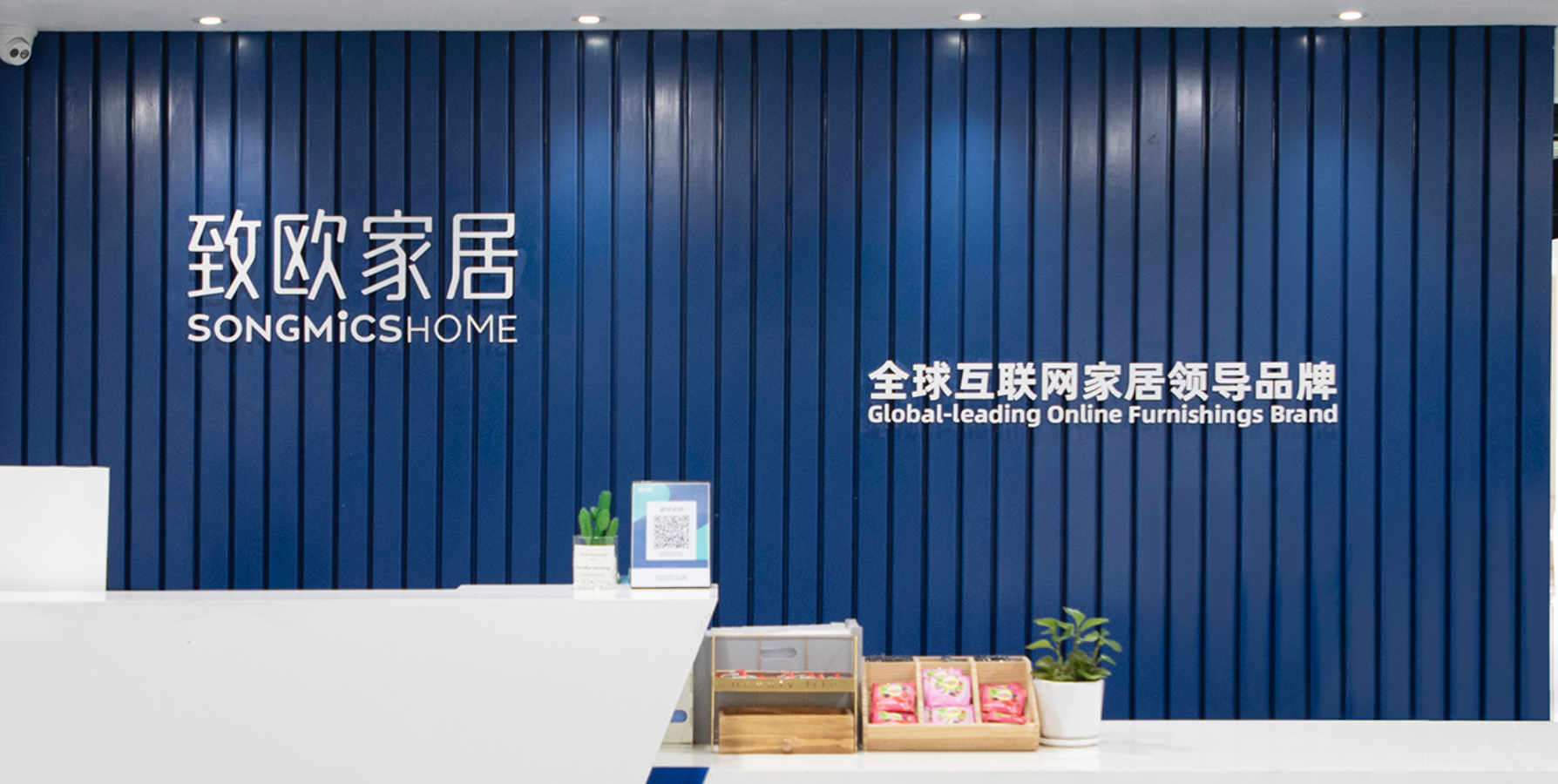
In the global market, the furniture industry, as an important part of China's manufacturing sector, has always occupied a significant position in international trade. However, with the increasingly complex international environment and the growing sophistication of consumer demands, Chinese furniture companies are facing the challenge of transforming from traditional manufacturing to brand-driven development.
"Tuke Technology," which brands itself as the "Online IKEA," is a very typical example.

As a furniture exporter that has been listed for less than a year, Tuke Technology achieved impressive results in 2023 by leveraging China's strong supply chain advantages and brand promotion on overseas social media platforms, basically realizing the leap from "Made in China" to "Created in China."
According to the company's 2023 financial report, Tuke Technology's total revenue reached 6.074 billion yuan in 2023, a year-on-year increase of 11.34%. Among them, furniture and home series accounted for the largest proportion, at 45.3% and 38.19% respectively, indicating thatthe home furnishing industry is currently a hot track for cross-border expansion.
Even data from the General Administration of Customs in September 2023 shows that China's exports of furniture and its parts continued to grow, rising 5.3% month-on-month to 38.22 billion yuan.


Image source: Tuke Technology
However, prosperity always hides concerns. With global economic fluctuations and increasing international trade barriers, the global competitive landscape of the furniture industry is undergoing significant changes.
While Chinese furniture manufacturing companies enjoy the advantage of low manufacturing costs, they also face problems such as insufficient brand influence and serious product homogenization.
Therefore, for companies like Tuke Technology, how to build brand competitiveness in the global market has become the key to their development. So what exactly has Tuke Technology done?

01 Brand Building and Market Positioning
By deeply analyzing consumer needs in target markets, Tuke Technology positions its products in the mid-to-high-end market. Its product design integrates modern aesthetics, focusing on the combination of function and form, meeting Western consumers' dual needs for practicality and beauty in furniture.
In addition, to strengthen brand power, the company has invested heavily in brand marketing, enhancing product design and brand image through cooperation with well-known designers.

02 Utilizing Digital Sales Channels
In today's digital era, e-commerce platforms have become quite mature. Therefore, even large items like furniture, which were originally only suitable for B2B export, can now be sold online through both B2B and B2C channels.
Tuke Technology has utilized mature platforms such as Amazon and Wayfair, as well as emerging social media platforms like TikTok, for brand promotion and product sales.
Especially on TikTok, after its home brand SONGMICS joined in May last year, it has accumulated over 10,000 followers and received 220,000 likes through creative videos and live sales, effectively increasing the brand's awareness and influence among young people.

03 Supply Chain Optimization and Cost Control
For brands going global, the biggest concern is the uncertainty of the global supply chain. Tuke Technology reduces operational risks through a diversified supply chain strategy.
The company has not only established a strong supply chain system in China, but also set up production bases in Southeast Asia and other regions, serving itself through a "self-operated warehouse + platform warehouse + third-party warehouse" model to cope with possible trade barriers and rising costs.
Regarding self-operated warehouses, the domestic and overseas area reached 280,000 square meters in 2023; platform warehouses cooperate with DPD and UPS; for third-party warehouses, new front warehouses have been set up in France, Mexico, etc., and most deliveries in Europe now achieve 3–4 day delivery times.
In addition, Tuke Technology further reduces production costs and improves efficiency through technological innovation, such as automated production lines.

04 What Can We Learn From This?
Tuke Technology's process of brand globalization is actually an excellent example for B-end enterprises going overseas.It has successively solved the three major problems commonly encountered in B-end overseas expansion: market cultural adaptation, brand trust building, and international competition and cooperation, achieving the transformation from B-end manufacturing to brand creation.
Facing market cultural adaptation, it has established local design teams and market research departments to deeply understand the cultural characteristics and consumption habits of target markets, thereby better adjusting its product lines and market strategies.
When it comes to building brand trust, on the basis of ensuring product quality, it gradually builds brand trust by providing high-quality customer service, such as quickly responding to consumer feedback and offering customized services, solving the problem of low consumer trust in emerging brands in the international market.
Finally, facing competition from international big brands, Tuke Technology adopts active market analysis and rapid response strategies. By monitoring competitors' dynamics, it promptly adjusts its own market strategies and product pricing. At the same time, the company also seeks cooperation opportunities with international brands to enhance its own brand's international image and market competitiveness through collaboration.
From this perspective, Tuke Technology's experience is indeed very worthy of reference for peers who want to go global, or other cross-border B2B and B2C enterprises.

At present, the home furnishing industry is booming, and there are many home furnishing giants like Tuke Technology that have successfully gone abroad, such as Hangzhou's Jiexiya, Henglin Co., and Loctek, all of which are typical representatives.
Take Jiexiya as an example. In December last year, it signed a listing counseling agreement with CICC and officially launched the A-share IPO process. Afterwards, it successfully completed the acquisition of the top 100 American home brand Z Gallerie at a bargain price. Once Jiexiya is successfully listed, it will add a strong player to the market.
In the fiercely competitive home furnishing field, the battle is becoming increasingly intense. As consumer habits and levels improve, companies wishing to stand out in the home furnishing market can start from segmented fields such as smart home and social media marketing on platforms like TikTok to gain a broader consumer market.
What this signal means for growth teams
This market signal should be treated as an operating prompt, not a standalone trend. The brand question is whether the team can connect TikTok content, creators, paid media, commerce readiness, and reporting into one measurable growth cycle.
Commercial read
- Market signal: TikTok marketing tips - short video marketing methods
- Published: April 23, 2024
- Commercial lens: TikTok Ads, creators, TikTok Shop, live commerce, and reporting.
- Source transparency: the original source linked in this article
What brands should do next
- Identify the market, audience, product group, and KPI this signal could affect.
- Turn the insight into a small TikTok creative, creator, Shop, or paid media test before scaling spend.
- Add FAQ, offer clarity, product proof, and contact paths so traffic can convert instead of only reading.
- Review weekly performance across reach, click quality, Shop actions, creator output, and revenue impact.
Tuke Marketing helps brands connect TikTok Ads, creator partnerships, TikTok Shop operations, live commerce, and reporting into one accountable operating system.
What should brands do with this TikTok signal?
Brands should translate the signal into a focused operating test across creative, creators, TikTok Shop readiness, paid media, and reporting before increasing budget.
How does Tuke Marketing evaluate this kind of news?
Tuke Marketing reviews platform news through market timing, category demand, creator supply, commerce readiness, and measurable growth actions.
When should a team contact Tuke about this topic?
A team should contact Tuke when it needs to turn a TikTok market signal into a practical launch, creator, advertising, live commerce, or reporting plan.
Source transparency: Tuke cites the original source linked in this article and adds its own operating analysis for brands evaluating TikTok growth decisions.