
Since Tuke launched the "full hosting model," cross-border e-commerce has ushered in a period of great development, with cases of sellers quickly achieving explosive sales becoming increasingly common. There are even products (GuruNanda Cocomint pull Oil) that have gone from nothing to selling over a million units on Tuke, successfully becoming the best-selling product in their market category.
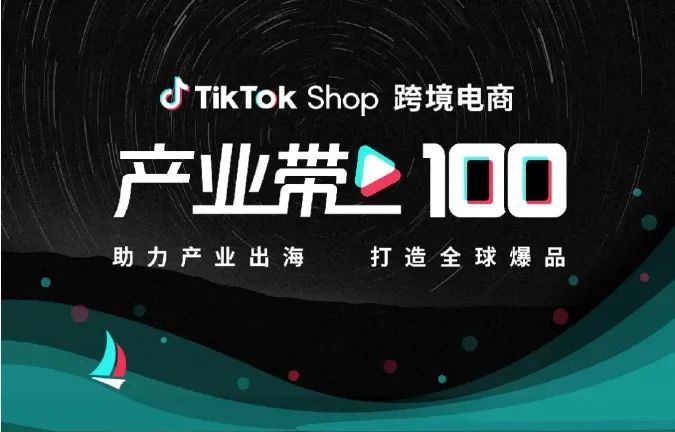
As we enter 2024, Tuke Shop has also launched a new"100 Industrial Belts Plan", aiming to create global best-selling products and help industries go overseas by combining industrial belts with cross-border e-commerce.
Specifically, Tuke Shop plans to deeply lay out more than 100 industrial belts in 2024, including the Guangzhou Panyu apparel industrial belt, the Shenzhen electronics industrial belt, and the Yiwu small commodities trade industrial belt, among others. By activating the "industrial belt x traffic" advantage, merchants in these industrial belts can better enter the international market.

However, while B2C products may go viral on Tuke, and even have the full hosting model to help with store operations, plus the latest "100 Industrial Belts" support plan from Tuke Shop,what do B2B brands rely on to go global?
Some may say, rely on the brand itself.
This statement is not wrong. The main reason for B2B brands to go cross-border is that the domestic market is too "involuted" and development space is limited, so they seek growth in international markets while expanding their global influence.
But for Tuke, most brands are actually crossing the river by feeling the stones. There are plenty of operational tutorials online, but not many successful cases.
Even Dongfang Zhenxuan had to post recruitment information in advance to hire Tuke operations staff before entering Tuke; San Zhi Yang Network had to nurture accounts in advance before entering Southeast Asia, and then conduct joint live streams with local influencers in Singapore to ensure the success of their cross-border activities.
If even big brands have to do this, what about other brands?
So,"what do B2B brands rely on to go global" actually has another answer, which isoverseas marketing service providers.

These service providers have been deeply involved in Tuke for years and are more sensitive and detailed about platform policy changes than ordinary people. They can help merchants achieve more autonomy. Moreover, regardless of the type of enterprise, the first hurdle in going cross-border is traffic. Having an experienced overseas service provider is always a good thing for acquiring platform traffic.
After all, all businesses in this world boil down to just two things: product and traffic.
With traffic, even if the product is not that great, it can still sell.
This statement applies to both B2B and B2C companies.

If you want to grab traffic overseas, Tuke and Google search are two points you can't avoid.
Tuke's huge traffic pool can drive up Google search volume, and the increase in Google searches can in turn provide traffic to the brand's social media accounts, forming a virtuous cycle. At that point, whether it's acquiring customer inquiries or selling products, good results can be achieved.
But as I said, although the logic is simple, actually doing it is not necessarily easy. There are a thousand Hamlets in a thousand readers, and there are also differences in Tuke's actual operations.
Just like the product GuruNanda Cocomint pull Oil I mentioned at the beginning, since its launch on Tuke Shop US, it has reached sales of 1.2 million units, with weekly sales exceeding 100,000 units. For other brands, this is almost impossible to replicate.

GuruNanda Cocomint pull Oil product
That's why I said earlier that I recommend cross-border companies going overseas via Tuke to try cooperating with managed service providers. Even if you can't perfectly replicate successful cases, it's still better than groping in the dark.
However, there are both genuine and fake managed service providers on the market, so you must carefully review them before cooperating. In such a big trend, it's common to see the good mixed with the bad.
In the future, cross-border e-commerce will be a state of diverse symbiosis, and from the current situation, Tuke will inevitably become an important channel for going overseas. At such a time, cooperating with managed service providers may not guarantee reaching the peak, but at least you're walking a path that others have already taken.
What this signal means for growth teams
This market signal should be treated as an operating prompt, not a standalone trend. The brand question is whether the team can connect TikTok content, creators, paid media, commerce readiness, and reporting into one measurable growth cycle.
Commercial read
- Market signal: TikTok Marketing Information and Solutions
- Published: March 5, 2024
- Commercial lens: TikTok Ads, creators, TikTok Shop, live commerce, and reporting.
- Source transparency: the original source linked in this article
What brands should do next
- Identify the market, audience, product group, and KPI this signal could affect.
- Turn the insight into a small TikTok creative, creator, Shop, or paid media test before scaling spend.
- Add FAQ, offer clarity, product proof, and contact paths so traffic can convert instead of only reading.
- Review weekly performance across reach, click quality, Shop actions, creator output, and revenue impact.
Tuke Marketing helps brands connect TikTok Ads, creator partnerships, TikTok Shop operations, live commerce, and reporting into one accountable operating system.
What should brands do with this TikTok signal?
Brands should translate the signal into a focused operating test across creative, creators, TikTok Shop readiness, paid media, and reporting before increasing budget.
How does Tuke Marketing evaluate this kind of news?
Tuke Marketing reviews platform news through market timing, category demand, creator supply, commerce readiness, and measurable growth actions.
When should a team contact Tuke about this topic?
A team should contact Tuke when it needs to turn a TikTok market signal into a practical launch, creator, advertising, live commerce, or reporting plan.
Source transparency: Tuke cites the original source linked in this article and adds its own operating analysis for brands evaluating TikTok growth decisions.