

Every year before summer arrives, there is always a group of sellers who enter the harvest season in advance.
Some sell pool toys, some sell beach supplies, and others sell camping equipment.
This year,one of the first trending products on Tuke US was a seemingly ordinary product—an inflatable bed.
During the recentTuke Shop US Spotlight Day event(May 2026), a water inflatable bed from water leisure brand Sloosh,sold$450,000 in 7 days, with an explosion factor reaching188%.
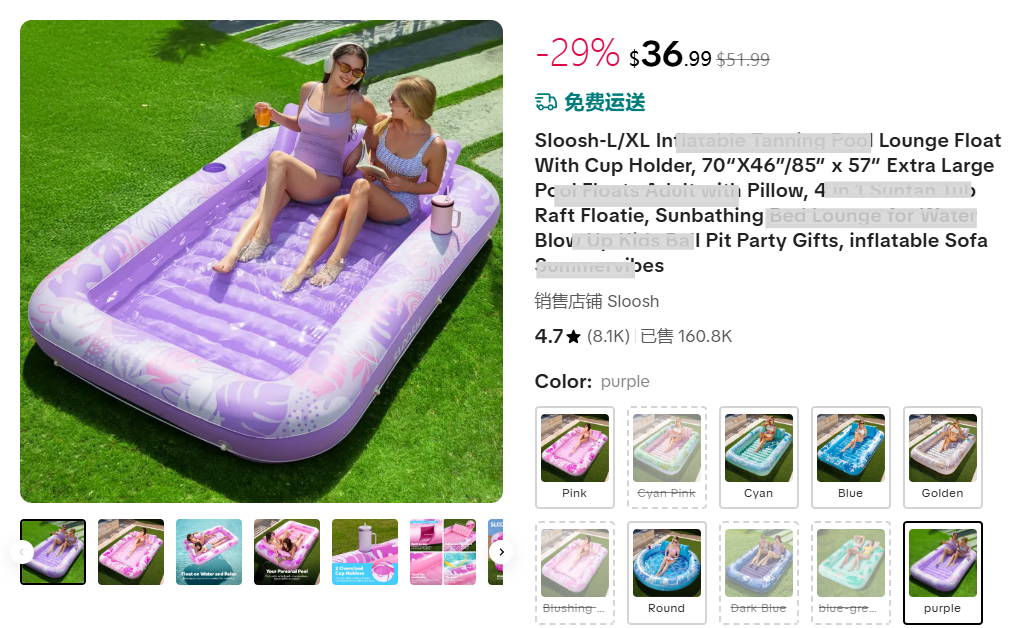
Image source:Tuke Shop
What's even more interesting is that this is not its first explosion.
As early as2025,the same product set a record of10,900 units sold in a single week, and helped the brand achieveannual revenue of $2.6228 million.
While many sellers are still studying what to sell in summer,Sloosh has already enjoyed the summer traffic dividend for two consecutive years.
So, why can a seemingly ordinary inflatable bed continue to sell explosively?
Today, let's take a look atSloosh's growth logic.
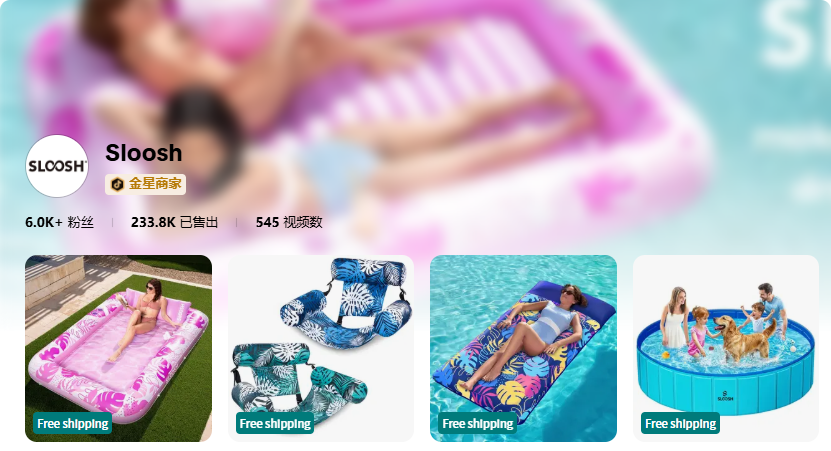
Image source:Tuke Shop
Sloosh:A brand that fills the"summer gap"
The name Sloosh is already familiar to many partners working in the US market.
It is the independent outdoor and water leisure sub-brand of American consumer products company Joyin (Chinese name Leyang), with a very focused positioning,mainly producing outdoor water play and pool inflatable products for spring and summeras well asoutdoor leisure categories.
Why didJoyin place a heavy bet on summer, this "holiday vacuum period"?
The reason is actually very simple.
Summer lacks major festival drivers like Christmas or Halloween, but the high-frequency scenarios in North American life are very real—backyard relaxation, pool parties, beach vacations, camping and water play, almost throughout the entire warm season.
What Sloosh wants to do is to make these everyday scenarios more fun and more "shareable".

Image source:Sloosh
A market driven by the seasons
Sloosh's achievements are inseparable from one fact: Americans' obsession with "water" and "summer". You can see it as a lifestyle, or as a rigid demand.
From the demand side, the data is straightforward. Data shows that there are about10.7 million pools in the US, of which 10.4 million are private residential pools. This means pool-related consumption is an important part of American family daily life.
Google Trends data also shows that in the past30 days, the search popularity of "pool party" has remained between 75 and 100, and the US is one of the countries with the highest search volume. On Tuke, videos with the #pool party tag have exceeded 1 million, with cumulative views in the tens of billions.
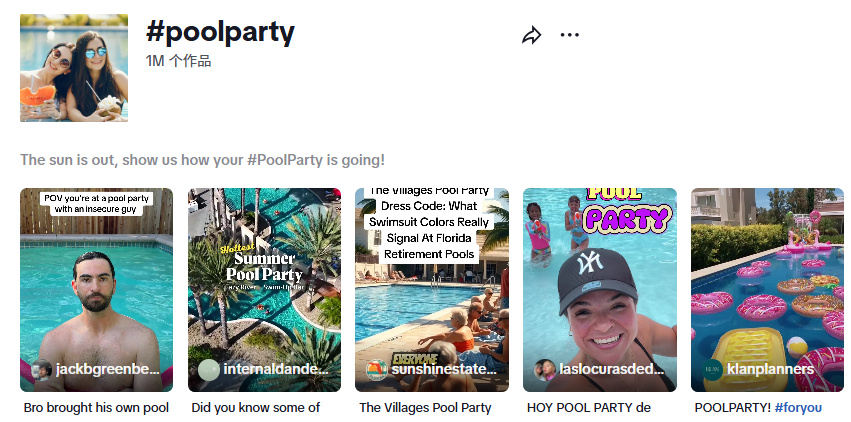
Image source:Tuke
In terms of market size, the global inflatable water toy market was about$1.584 billion in 2025, and is expected to reach $2.123 billion by 2032, with a CAGR of 4.4%.
The North American water sports product market is estimated to be worth $14.4 billion in 2025, and is expected to reach $27.8 billion by 2035, with a CAGR of 6.9%.
This"high demand + large market" industry background provides Sloosh with a natural growth soil.
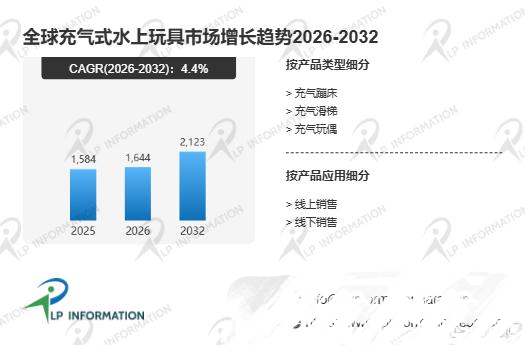
Image source:Global Info Research
But just having market dividends is not enough to explainwhy Sloosh can continue to stand out.
After all, the US market has never lacked inflatable bed products.
Whether on Amazon, or retail channels such as Walmart,Target, similar products have long been a fiercely competitive and mature track.
The real question worth thinking about is: why do some brands only follow the peak season when selling inflatable beds, whileSloosh can produce bestsellers for two consecutive years?
The answer may not lie in the product itself, but in the brand's understanding of content and scenarios.
Rather than selling inflatable beds,Sloosh is more like selling a summer lifestyle, and placing it well on Tuke.
How exactly does Sloosh do it on Tuke?
Sloosh's approach on Tuke can be said to have played the "content-driven sales" game very solidly. The core logic is: put more than 80% of sales on influencer marketing.
Data shows thatSloosh's store sales have long maintained a contribution rate of over 80% from influencer marketing, while self-operated livestreams and store traffic only play a supporting role(not to say these two are not important).

Image source:echotik
For many brands, influencer cooperation is just one marketing tool.
But forSloosh, the influencer system has become an important part of the sales system.
Influencer pool: not greedy for big, not seeking many, but seeking stability
Currently,Sloosh has already built anetwork of over13,000influencer partners,mainly based onpure commission cooperation model.
The biggest advantage of this model is risk control.
For seasonal brands, demand peaks are often concentrated in specific periods. If a large number of fixed-fee collaborations are used, marketing costs will increase rapidly.
The commission model allows investment to be directly linked to sales, which is a very cost-effective deal for seasonal brands.
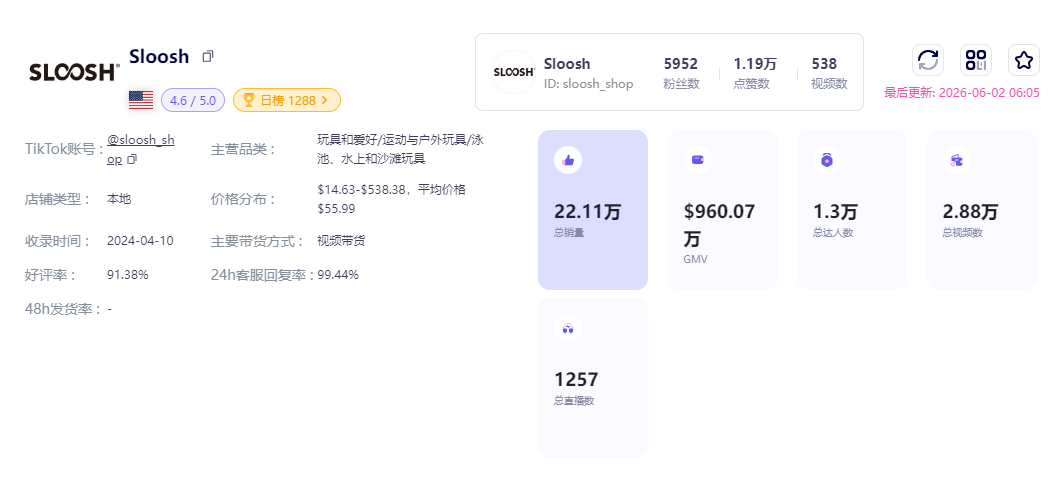
Image source:echotik
In terms of influencer selection,Slooshalsohas its own set of criteria: not solely based on follower count(source:Tuke Shop).
Compared to top bloggers with millions of followers, the brand prefers to choose mid-tier influencers with tens of thousands to hundreds of thousands of followers, prioritizing content creators in outdoor camping, home life, urban leisure, and fitness trends.
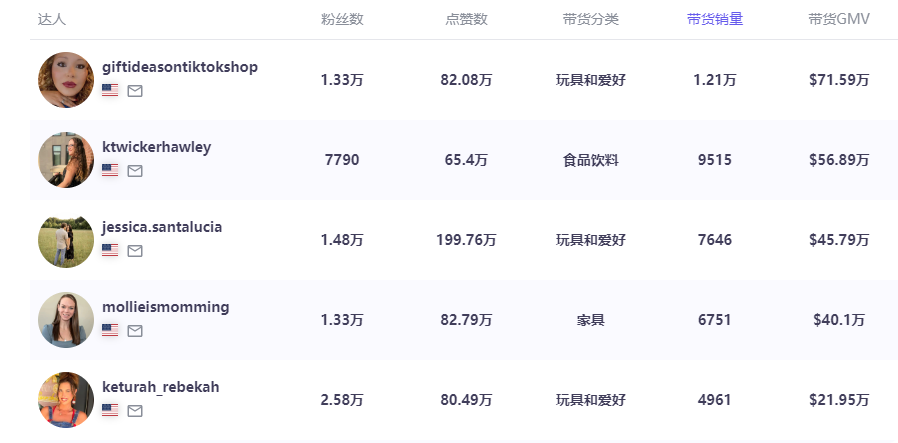
Image source:echotik
The reason is actually very simple: the user profiles of these influencers naturally overlap with Sloosh's target audience, so the product doesn't appear forced in the video, but rather like an ordinary summer day.
Tuke influencer @jessica.santalucia is a good example. Although she only has 15,000 followers, due to the high fit between her account and the brand's tone, in the past 30 days, her video views reached41.43 million, bringing the brand$293,700in sales.
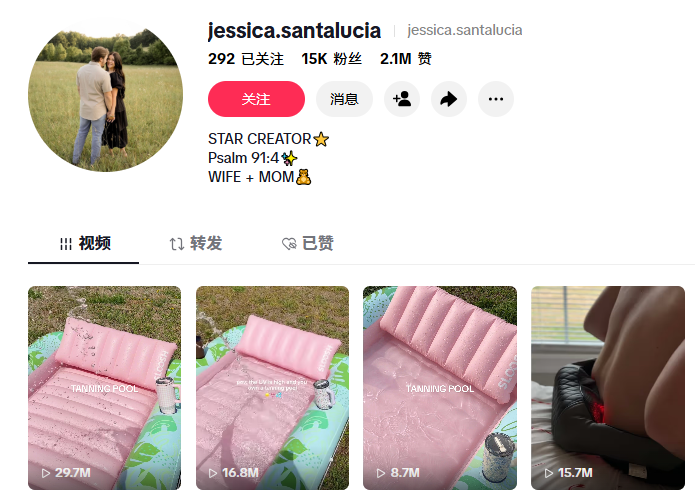
Image source:Tuke
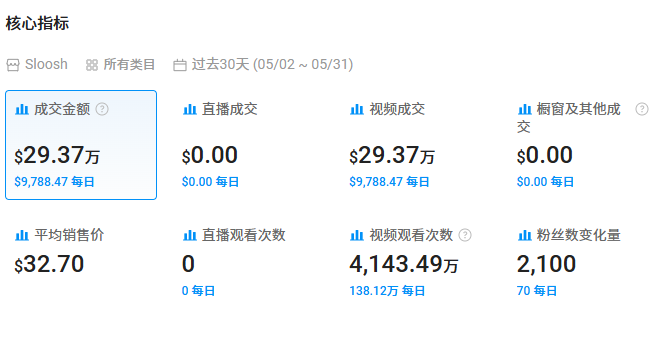
Image source:kalodata
This case also proves again that in theTuke ecosystem, what determines the sales effect is not just the size of the fan base.
Compared to simply pursuing large traffic, finding content creators who are highly matched with the brand scenario is often easier to achieve stable conversion.
Test with self-made content, amplify with influencer content
Many people think influencer cooperation on Tuke is just "find someone, send samples, wait for sales", but Sloosh adds one more step: let the official account test the script first.
The brand'sTuke managerXie Juncheng once pointed out that the official account is the best place to test scripts and new products. By running high-conversion content templates on the official account and then copying them in bulk to downstream influencers,Sloosh greatly reduced trial and error costs.
At the same time, they are planning to transform the official account from a simple sales account to a lifestyle sharing account, accumulating long-term brand assets throughIP-based operations.
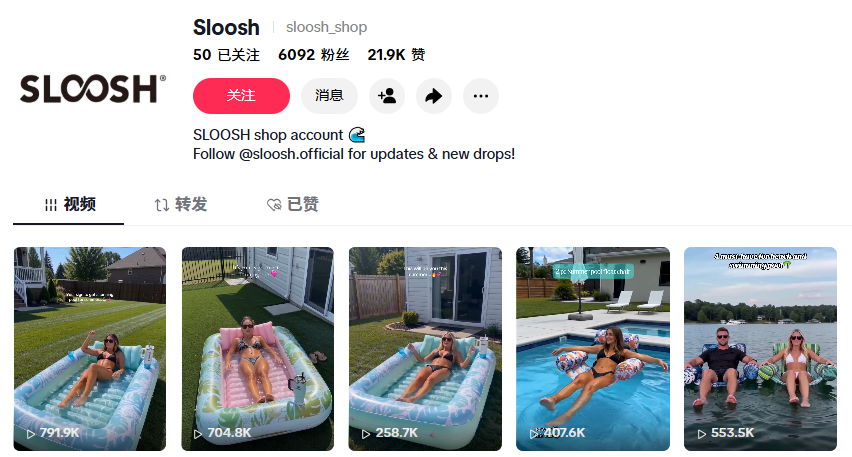
Image source:Tuke
A good scenario is better than ten sales pitches
With channels and strategies in place, what kind of content can makeTuke users buy? Simply put, "the scenario is right".
A camp video that sold$220,000 is the best example: a young man quickly inflates the bed on the camping lawn, pours in clean water, and puts a cup on it.
The video is onlyabout 20 seconds, but the amount of information viewers get is huge—easy to store, easy to install, wear-resistant and durable, and usable in multiple scenarios.
This is the core advantage of scenario-based content: let the product"speak for itself", rather than speaking for the product.
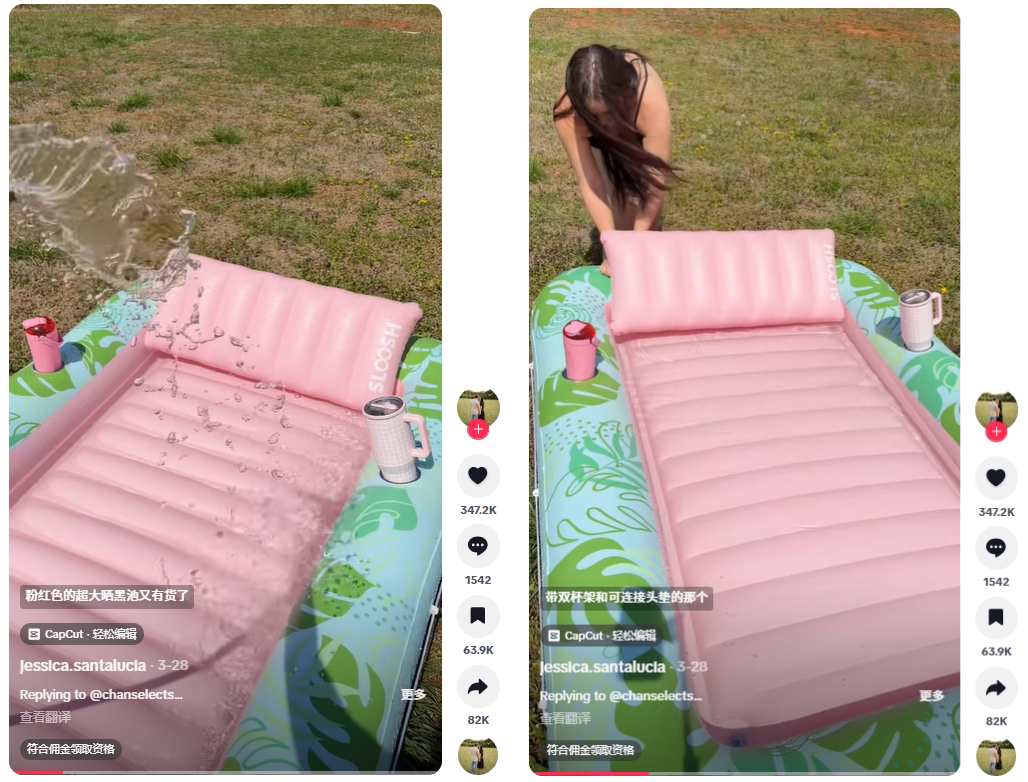
Image source:Tuke
Pre-stockpiling: not relying on luck to bet on bestsellers
There's another detail worth noting:Sloosh is particularly clear about "content stockpiling".
The brand team has calculated a time account: it usually takes1 to 2 weeks for influencers to receive samples and complete video publishing, so it's impossible to send all samples at once. Therefore, before big promotions, samples must be sent out in batches in advance, so that the number of materials accumulates to a sufficient level before the event.
This approach was particularly evident whenSloosh prepared for the US mid-year promotion on June 18, 2026—before the event started, a large number of influencer videos had already been launched, forming a wave of "content resonance", just waiting for the explosion on the day of the big promotion. At present, Sloosh has completed overseas stock preparation for the mid-year promotion, setting a daily sales target of $200,000.
Simply put: if you only start preparing content when the big promotion arrives, it's already too late.

Image source:Sloosh
In conclusion
Looking back atSloosh's growth path, there is actually no complicated business model.
What it does is very simple:
Find a high-frequency scenario, continuously develop products around this scenario, and then amplify demand throughTuke content.
Many sellers are always looking for"the next bestseller".
But what is truly worth paying attention to is often not the product itself, but the lifestyle scenario behind the product.
Pool parties, backyard leisure, camping and water play—these seemingly ordinary lifestyles actually support a market worth billions of dollars.
For sellers going overseas, opportunities may not only exist in new trends.
Many times, it is hidden in the daily life scenarios that users experience every day.
Whoever can discover these scenarios first and amplify the demand with content will have a better chance to become the nextSloosh.
What this signal means for growth teams
This market signal should be treated as an operating prompt, not a standalone trend. The brand question is whether the team can connect TikTok content, creators, paid media, commerce readiness, and reporting into one measurable growth cycle.
Commercial read
- Market signal: TikTok marketing tips - short video marketing methods
- Published: June 5, 2026
- Commercial lens: TikTok Ads, creators, TikTok Shop, live commerce, and reporting.
- Source transparency: the original source linked in this article
What brands should do next
- Identify the market, audience, product group, and KPI this signal could affect.
- Turn the insight into a small TikTok creative, creator, Shop, or paid media test before scaling spend.
- Add FAQ, offer clarity, product proof, and contact paths so traffic can convert instead of only reading.
- Review weekly performance across reach, click quality, Shop actions, creator output, and revenue impact.
Tuke Marketing helps brands connect TikTok Ads, creator partnerships, TikTok Shop operations, live commerce, and reporting into one accountable operating system.
What should brands do with this TikTok signal?
Brands should translate the signal into a focused operating test across creative, creators, TikTok Shop readiness, paid media, and reporting before increasing budget.
How does Tuke Marketing evaluate this kind of news?
Tuke Marketing reviews platform news through market timing, category demand, creator supply, commerce readiness, and measurable growth actions.
When should a team contact Tuke about this topic?
A team should contact Tuke when it needs to turn a TikTok market signal into a practical launch, creator, advertising, live commerce, or reporting plan.
Source transparency: Tuke cites the original source linked in this article and adds its own operating analysis for brands evaluating TikTok growth decisions.