
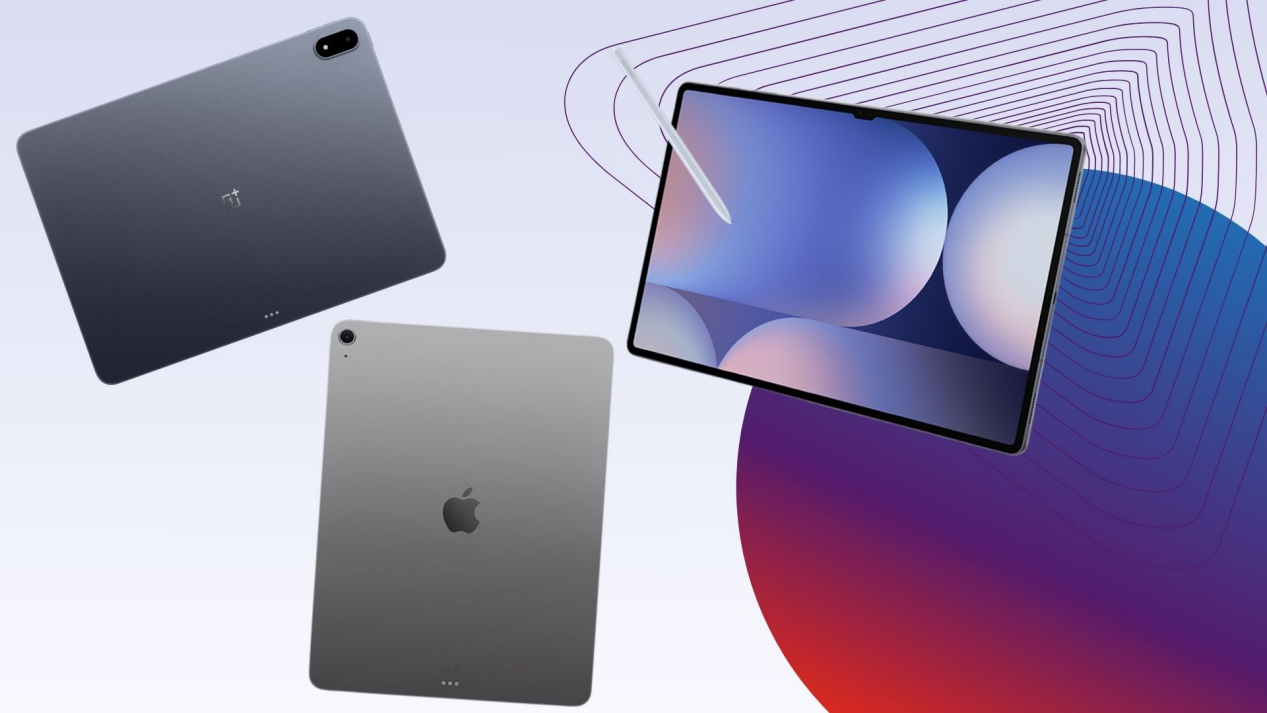
If a tablet cannot install apps, cannot watch videos, cannot play games, and even cannot deliver decent performance benchmarks, but its price dares to match the iPad, would you think it has a market?
In today's consumer electronics market, this sounds like a joke.
Cutting off 99% of functions, only retaining the most primitive reading and writing, this almost goes against the underlying logic of the consumer electronics market. But reality has given a completely opposite answer.

Mainstream tablet brands on the market Image source: Google
A Norwegian brand reMarkable, not only achieved $11 million in pre-sales with this seemingly 'shortcoming everywhere' paper tablet at its launch, but also forcibly tore a gap in the tablet world dominated by iPad, capturing nearly 40% of the global high-end market share.
Zoominfo data shows that reMarkable's annual revenue has now reached $338 million.
In this era of pursuing 'All in One', why are some people still willing to pay a high price to buy a paper tablet with functions cut to the extreme?

Image source: Google
The digital miracle of subtraction
It is understood that the story of reMarkable began with a dilemma encountered by founder Magnus Wanberg while studying at Harvard.
As a heavy user of pen and paper, Wanberg found that while computers improved information processing efficiency, they also became a 'black hole' of attention. Emails, web push notifications, social messages constantly interrupted his thinking. However, if he only used traditional pen and paper, although he could stay immersed, organizing, retrieving, and storing became major challenges.

Founder Magnus Wanberg Image source: reMarkable
When graduating, faced with four large boxes of handwritten notes and loose pages, he seriously considered for the first time: in the digital age, could the experience of paper that allows people to calm down and focus be replicated on electronic devices?
But the answers on the market at that time were not satisfactory. Tablets became more versatile, but further away from focus; e-readers had a single experience and could not meet writing needs. Wanberg sensed the opportunity in the blank area in between.
In 2013, reMarkable was officially established in Norway. The team did not follow the trend to build a device that could do everything, but focused on one extremely specific thing: making a better piece of paper. To this end, they spent over three years repeatedly refining the display effect of the e-ink screen, the damping feel of the stylus, and optimizing writing latency, striving to make digital writing infinitely close to the touch of real paper.
In 2016, the product prototype was unveiled and pre-orders started, eventually securing about $11 million in pre-order funds.

Image source: Google
The following year, the first-generation reMarkable was launched, with no app store, no entertainment functions, and even no social media, only retaining reading, writing, and annotation. Relying on the writing friction close to real paper and almost imperceptible latency, reMarkable forged a brand new category of Paper Tablet in the market.
In 2022, the brand's cumulative sales exceeded 1 million units, and its valuation rose to $1 billion; just over a year later, by the end of 2023, this number doubled to 2 million units.
While many brands kept adding features and expanding use scenarios, reMarkable always focused on its own niche, finally securing the top spot in the high-end paper tablet track, occupying nearly 40% of the global high-end market share.

Image source: Google
Anti-mainstream narrative: not competing on specs but on scenarios
In an environment where many brands are competing on configurations and benchmark scores, reMarkable's marketing approach is almost the opposite.
It does not talk about processor models or show screen parameters, but repeatedly conveys a core message: slow down, leave some space for thinking.
This brand targets people who have long dealt with knowledge and information, such as researchers, consultants, university professors, product managers, and content creators. This group feels the pain of information overload most deeply and is also most willing to pay for focus.
In reMarkable's promotional materials, you won't find a cluttered list of specs; instead, you'll see one real-life use case after another. Scholars quietly annotating papers in their studies, managers quickly organizing their thoughts after meetings, creators jotting down ideas the moment inspiration strikes. These images themselves contain not a single word of sales pitch, yet they are more convincing than any spec.

Image source: TikTok
This scene-driven brand expression also runs through the construction logic of the independent site.
The reMarkable official website follows a minimalist approach, with plenty of whitespace, restrained color schemes, and clean product displays, featuring neither pop-up ads nor promotional banners.
From browsing to placing an order, the entire journey is compressed into the shortest possible steps, with every page detail echoing a product philosophy of minimizing distractions. For target users already exhausted by information overload, this consistent, authentic experience is in itself the most compelling persuasion.

Image source: reMarkable
Leveraging TikTok to make the 'paper experience' visible.
On social media, reMarkable similarly continues this anti-mainstream style.
As of now, reMarkable's official TikTok account @remarkableofficial has 51.3k followers and a total of 209.4k likes. Looking at the numbers alone, this is not particularly impressive. However, when considering the brand's category attributes and target audience, its content strategy on TikTok is actually quite worth analyzing.
The account mainly publishes two types of content: one is high-quality brand advertising short films with a clean, quiet visual style that continues the minimalist tone of the official website; the other is unboxing and product feature introduction videos that demonstrate the writing experience in a more intuitive way.

Image source: TikTok
What truly brought explosive growth to reMarkable on TikTok was influencer collaboration.
Influencer @karl_conrad, with 93,000 followers, posted an unboxing experience video focusing on the writing smoothness and product features of the paper-like tablet. The video received 34.2 million views and over 93,200 likes.
The video itself does not have complex editing or exaggerated emotional expression, but presents the product usage process in a relatively calm manner. This sense of authenticity actually makes it easier to gain users' trust.

Image source: TikTok
Another influencer @thetechbadger with 556.8K followers took a different approach. He shot a short video with humorous plot: at the beginning, he tried to write on an ordinary notebook with a tablet pen but left no trace, then revealed the reMarkable for smooth operation, and even tucked the tablet into his pants pocket to showcase portability at the end.
This video has reached 27.7 million views and received over 71,400 likes.

Image source: TikTok
Conclusion
Beyond the reMarkable case itself, there is perhaps one thing more worthy of consideration for domestic enterprises.
The complexity and inclusiveness of overseas markets often exceed many people's imagination.
Consumers in different regions vary greatly in aesthetic preferences, usage habits, and price sensitivity. Many niche categories that have already become a red ocean in the domestic market, even considered to have no opportunities, may just be an uncultivated field in another market.
Nowadays, the infrastructure of global social media and cross-border e-commerce is already quite mature. A well-polished product story, combined with the content distribution capabilities of platforms like TikTok, has a full opportunity to break into a new market in a relatively short period of time.
This stretch of sea is vast enough and forgiving enough, waiting for those who are willing to settle down and make products, while also daring to step out.
What this signal means for growth teams
This market signal should be treated as an operating prompt, not a standalone trend. The brand question is whether the team can connect TikTok content, creators, paid media, commerce readiness, and reporting into one measurable growth cycle.
Commercial read
- Market signal: TikTok marketing tips - short video marketing methods
- Published: July 18, 2026
- Commercial lens: TikTok Ads, creators, TikTok Shop, live commerce, and reporting.
- Source transparency: the original source linked in this article
What brands should do next
- Identify the market, audience, product group, and KPI this signal could affect.
- Turn the insight into a small TikTok creative, creator, Shop, or paid media test before scaling spend.
- Add FAQ, offer clarity, product proof, and contact paths so traffic can convert instead of only reading.
- Review weekly performance across reach, click quality, Shop actions, creator output, and revenue impact.
Tuke Marketing helps brands connect TikTok Ads, creator partnerships, TikTok Shop operations, live commerce, and reporting into one accountable operating system.
What should brands do with this TikTok signal?
Brands should translate the signal into a focused operating test across creative, creators, TikTok Shop readiness, paid media, and reporting before increasing budget.
How does Tuke Marketing evaluate this kind of news?
Tuke Marketing reviews platform news through market timing, category demand, creator supply, commerce readiness, and measurable growth actions.
When should a team contact Tuke about this topic?
A team should contact Tuke when it needs to turn a TikTok market signal into a practical launch, creator, advertising, live commerce, or reporting plan.
Source transparency: Tuke cites the original source linked in this article and adds its own operating analysis for brands evaluating TikTok growth decisions.