
Recently, the payment platform2C2P by Antom releaseda new study, causing quite a stir in the e-commerce circle.
The report reveals that the Southeast Asian e-commerce market is rising at an astonishing pace, with its market size expected to surge from156.3 billion USD in 2024 to 289.8 billion USD in 2029, an 85% increase in five years.
Even more remarkable is itscompound annual growth rate of 13.2%, ranking second among major global economic regions, only behind India. This “hot land” composed of a young population, rapid digitalization, and strong consumer demand is becoming a new blue ocean that global business forces cannot ignore.
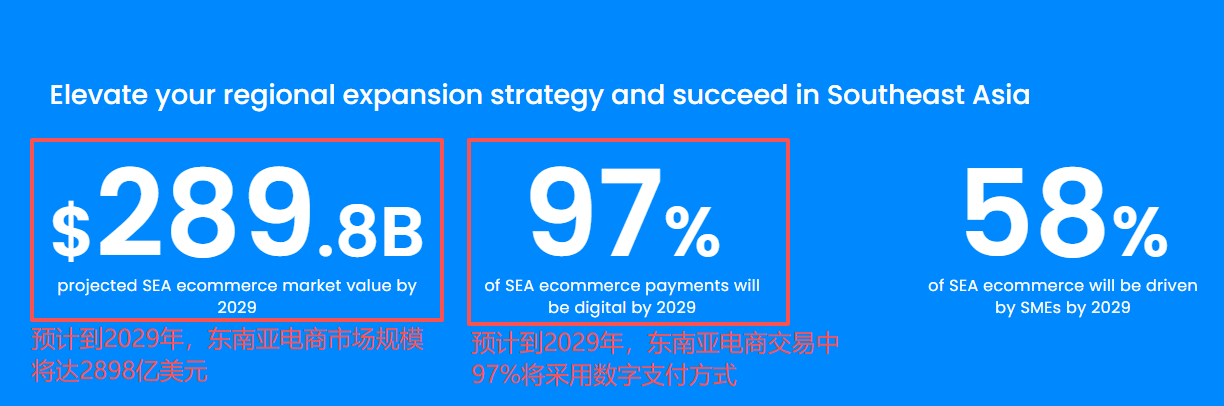
Image source:2C2P by Antom
Market Engines Roaring, Growth Momentum Surging
The explosive growth of the Southeast Asian market is not out of thin air. Behind it is the continuous release of multiple structural drivers.
From a market fundamentals perspective, Southeast Asia has a large population base, a high proportion of young people, and a continuously rising internet penetration rate. More and more consumers are getting used to online shopping, laying a solid user foundation for the expansion of the e-commerce market.
Behind the data explosion is the continuous release of consumption potential in the region. With the steady economic development of Southeast Asian countries, residents’ per capita disposable income continues to rise, the trend of consumption upgrading is obvious, and both the frequency and average value of online shopping are steadily increasing.These factors intertwine to jointly ignite the engine of high-speed growth in the Southeast Asian e-commerce market.

Image source:Inside Retail Asia
Payment Revolution: The Key Lever for Growth
If the vast market is the stage, then the rapid evolution of digital payments is the key lever that pushes this e-commerce drama to its climax.
The research report clearly points out that digital payments are continuously seizing market share. Among them, mobile wallets are particularly outstanding, with transaction volume expected to surge from38.2 billion USD in 2024 by 107% to 79 billion USD in 2029, and their share of the entire e-commerce market will rise from 24% to 27%.
The Buy Now Pay Later (BNPL) model shows even more rapid growth, with an expected increase of 174%, jumping from 6.9 billion USD to 18.9 billion USD.
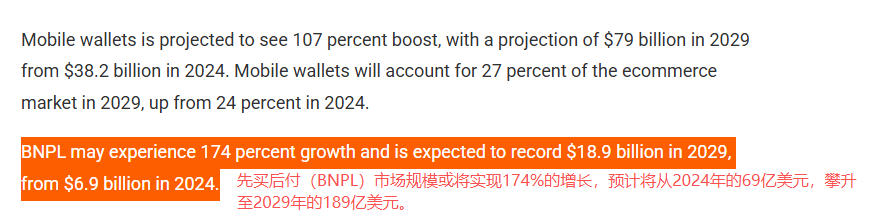
Image source:technode.global
According to World Bank data, as much as56% of the population in Southeast Asia does not have a bankcard. The popularization of digital payment tools, especially mobile wallets andBNPL that do not require binding to traditional bank cards, is effectively reducing reliance on cash, greatly expanding the boundaries of e-commerce services, and formally bringing the massive “unbanked” consumer group into the digital economy system. This is an important cornerstone for the market to achieve exponential expansion.
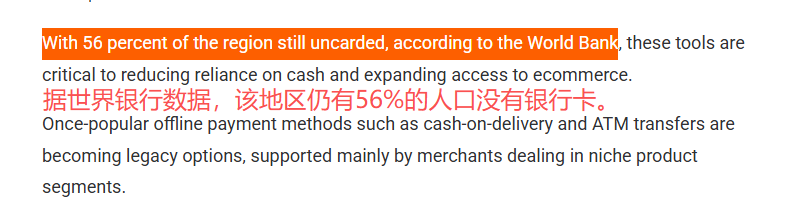
Image source:technode.global
New Opportunities and Strategies for Cross-border Sellers
Facing this promising market, cross-border sellers must not only embrace vast opportunities but also face profound challenges.
The rapid market expansion brings a huge number of new consumers, providing fertile ground for new brands to grow, but competition will inevitably become more intense. To truly gain a foothold, sellers can no longer stop at simply listing products, but must complete the transformation from“selling goods” to “refined operations.”
This requires them to truly immerse themselves in the local market, not just translating Tuke, but also understanding cultural customs and consumer preferences in depth, so as to refine product selection and marketing content; they must optimize everystepof the consumer experience, especially in the payment process. Seamlessly integrating with local mainstream e-wallets and“Buy Now Pay Later” methods is key to reducing cart abandonment; in addition, building a fast and reliable logistics and after-sales network is essential for establishing lasting trust.
Finally, don’t forget that Southeast Asia is a market deeply shaped by social media. Content seeding and interaction throughTikTok, Instagram and other platforms are often the most direct way to reach young consumers.
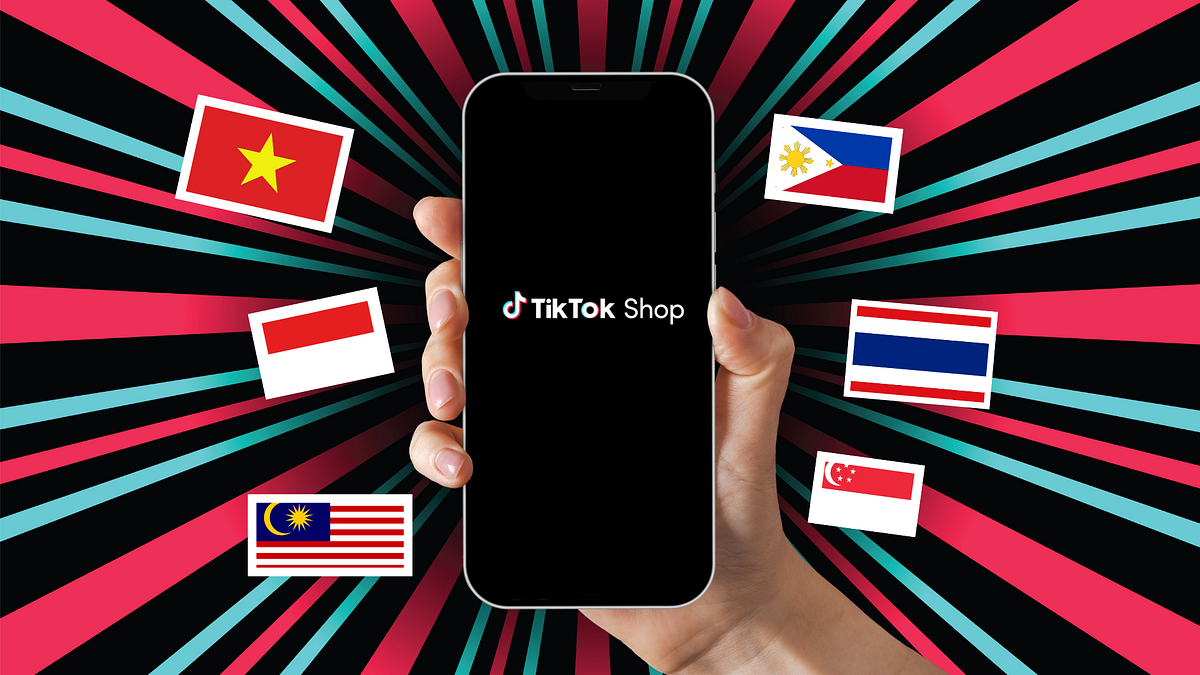
Image source:Medium
Conclusion
The Southeast Asian e-commerce market is entering a golden five years with the world’s second fastest growth rate, driven by the release of consumption potential from56% of the unbanked population through digital payment tools. The explosive growth of mobile wallets and BNPL not only rewrites the payment landscape, but also redefines seller competition strategies and platform development logic.
For Tuke sellers, what is needed now is no longer a rough stocking mentality, but refined operations that deeply cultivate local payment habits and build consumer trust.
In the next five years, whoever can go further in payment convenience and scenario integration will be able to secure a place in this nearly 300 billion USD market. The tide has come, and only those who go with the trend can sail far.
What this signal means for growth teams
This market signal should be treated as an operating prompt, not a standalone trend. The brand question is whether the team can connect TikTok content, creators, paid media, commerce readiness, and reporting into one measurable growth cycle.
Commercial read
- Market signal: TikTok Marketing Information and Solutions
- Published: May 18, 2026
- Commercial lens: TikTok Ads, creators, TikTok Shop, live commerce, and reporting.
- Source transparency: the original source linked in this article
What brands should do next
- Identify the market, audience, product group, and KPI this signal could affect.
- Turn the insight into a small TikTok creative, creator, Shop, or paid media test before scaling spend.
- Add FAQ, offer clarity, product proof, and contact paths so traffic can convert instead of only reading.
- Review weekly performance across reach, click quality, Shop actions, creator output, and revenue impact.
Tuke Marketing helps brands connect TikTok Ads, creator partnerships, TikTok Shop operations, live commerce, and reporting into one accountable operating system.
What should brands do with this TikTok signal?
Brands should translate the signal into a focused operating test across creative, creators, TikTok Shop readiness, paid media, and reporting before increasing budget.
How does Tuke Marketing evaluate this kind of news?
Tuke Marketing reviews platform news through market timing, category demand, creator supply, commerce readiness, and measurable growth actions.
When should a team contact Tuke about this topic?
A team should contact Tuke when it needs to turn a TikTok market signal into a practical launch, creator, advertising, live commerce, or reporting plan.
Source transparency: Tuke cites the original source linked in this article and adds its own operating analysis for brands evaluating TikTok growth decisions.