
Recently,TikTok Shop has been making frequent moves in two key overseas markets.
The UK site has launched a product subscription feature for all sellers, trying to use discounts to retain repeat customers; while Southeast Asia cross-border will revamp its store rating rules starting this July, replacing the previous complaint rate with after-sales processing time.
These two moves seem independent, but actually point in the same direction: the platform is shifting from extensive growth to refined operations, and merchants' long-term business capabilities are being placed in a more important position.
UK Site: Subscription Feature Goes Live, Using Discounts for Repeat Purchases
TikTok Shop UK has officially opened the "Product Subscriptions" feature to all sellers. Simply put, this is a set of periodic repurchase tools where sellers can offer four levels of discounts: 5%, 10%, 15%, or 20% to attract users to place regular orders. Currently, it is limited to high-repurchase categories such as beauty, food & beverage, health, home goods, personal care, and pets.
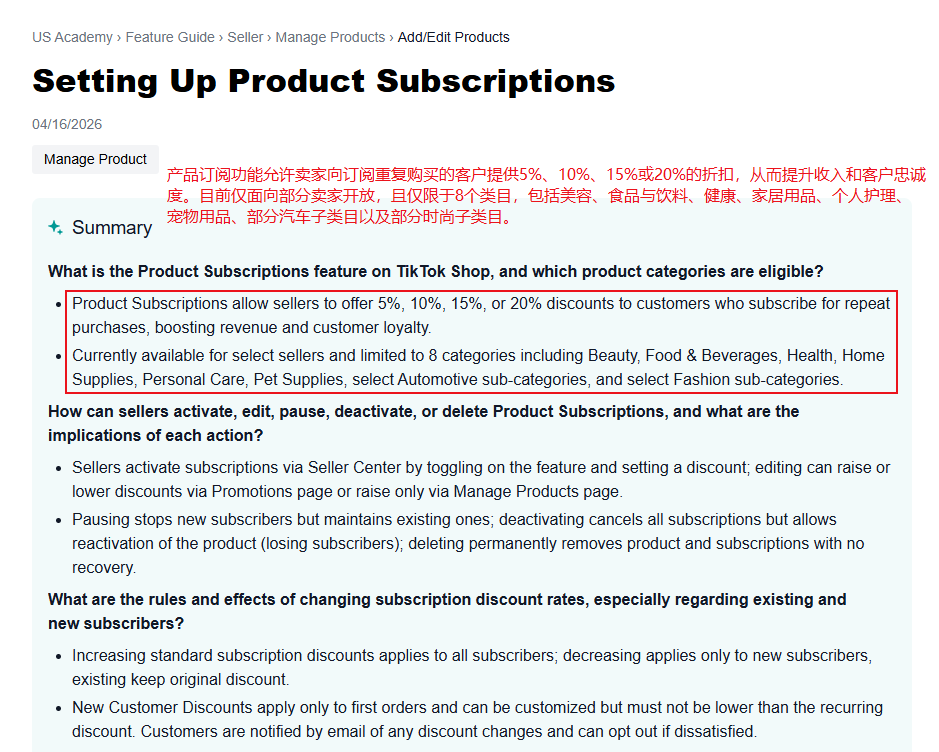
Image source:seller-us.tiktok
For sellers, this is both an opportunity and a test. On the positive side, subscriptions can lock in multiple rounds of future consumption in advance, reduce customer acquisition costs, and make store order forecasts more stable. But the platform also gives an important reminder: if the pricing strategy is wrong, it may squeeze profits for a long time.
For example, if you set a 20% discount early on to boost volume, you can't lower it to 10% later; old users still retain the previous 20% discount, and only new users can see the lower discount. This means that once you offer too high a discount to old users, this "historical burden" will always be there. Conversely, if you gradually increase from a small discount, both new and old users will upgrade together.
Another thing to watch out for is bargain hunters. Although the platform will provide extra incentives for the first order to boost conversion, users who are only after low prices have very low loyalty. If sellers only focus on attracting new users with high discounts, they can easily fall into the dilemma of one order in, one order out.
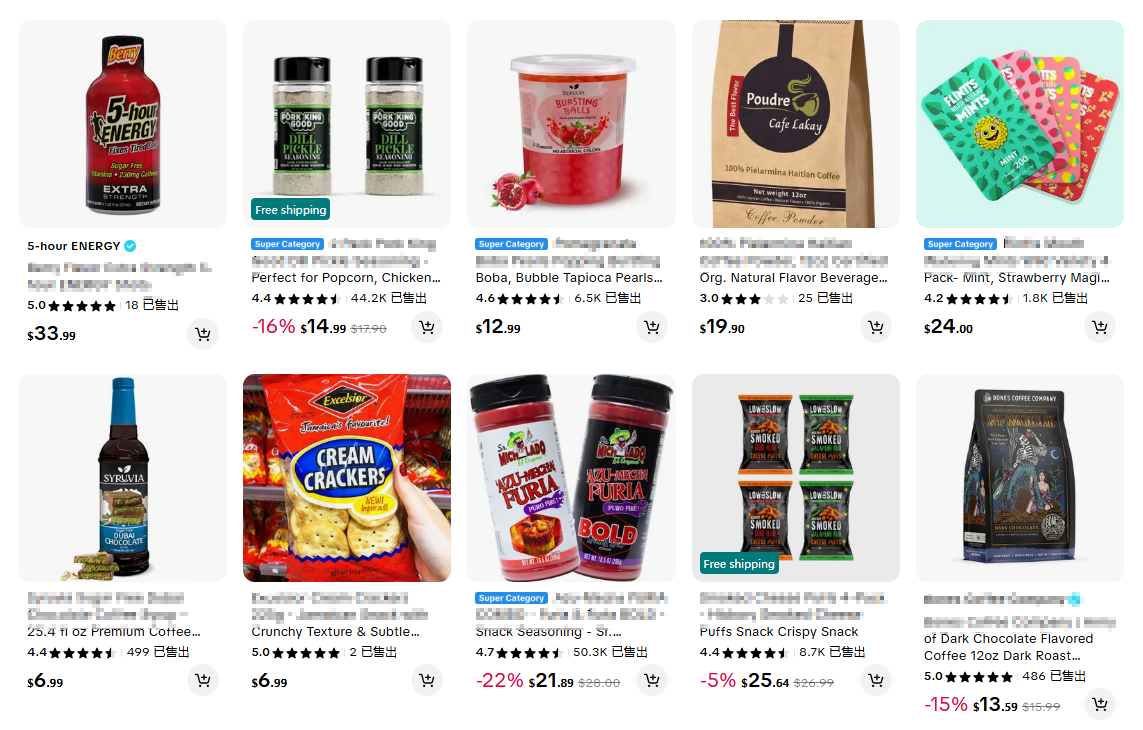
Image source:TikTok Shop
The truly valuable approach is to screen out customer groups with long-term demand for the product itself, treating subscriptions as a tool to maintain old customers, rather than a simple promotional method. For categories with naturally low repurchase rates, forcing subscriptions may be counterproductive.
Southeast Asia Cross-border: Major Overhaul of Store Rating Rules, Speed Is More Important Than Attitude
Almost at the same time,TikTok Shop Southeast Asia cross-border also announced an important change: from July 2026, store ratings will use the 60-day merchant after-sales processing time to replace the original buyer complaint rate. Starting from May this year, merchants can preview the new rating performance in advance, with more than a month of buffer period to adjust.

Image source:Google
The essence of this adjustment is a fundamental shift in the platform's criteria for measuring service quality. The previous complaint rate focused more on attitude issues, such as whether users were satisfied or expressed dissatisfaction; while after-sales processing time directly tests efficiency, such as how long it takes for the seller to respond after a user initiates an after-sales request.
Obviously, the latter more directly affects the consumer's shopping experience. According to the platform's goal, merchants need to keep the average after-sales response time within 20 hours.
Meanwhile, the store rating page has also been upgraded. Merchants can more clearly see which aspects are lagging behind, and the platform will also provide improvement suggestions. For new merchants whose ratings are temporarily inactive, the system will clearly inform them how many more orders need to be completed to obtain a rating.
Another notable change is that for indicators such as negative review rate and merchant-responsible return/refund rate, merchants' performance will be compared horizontally with sellers in the same category, avoiding unfair cross-category benchmarking.
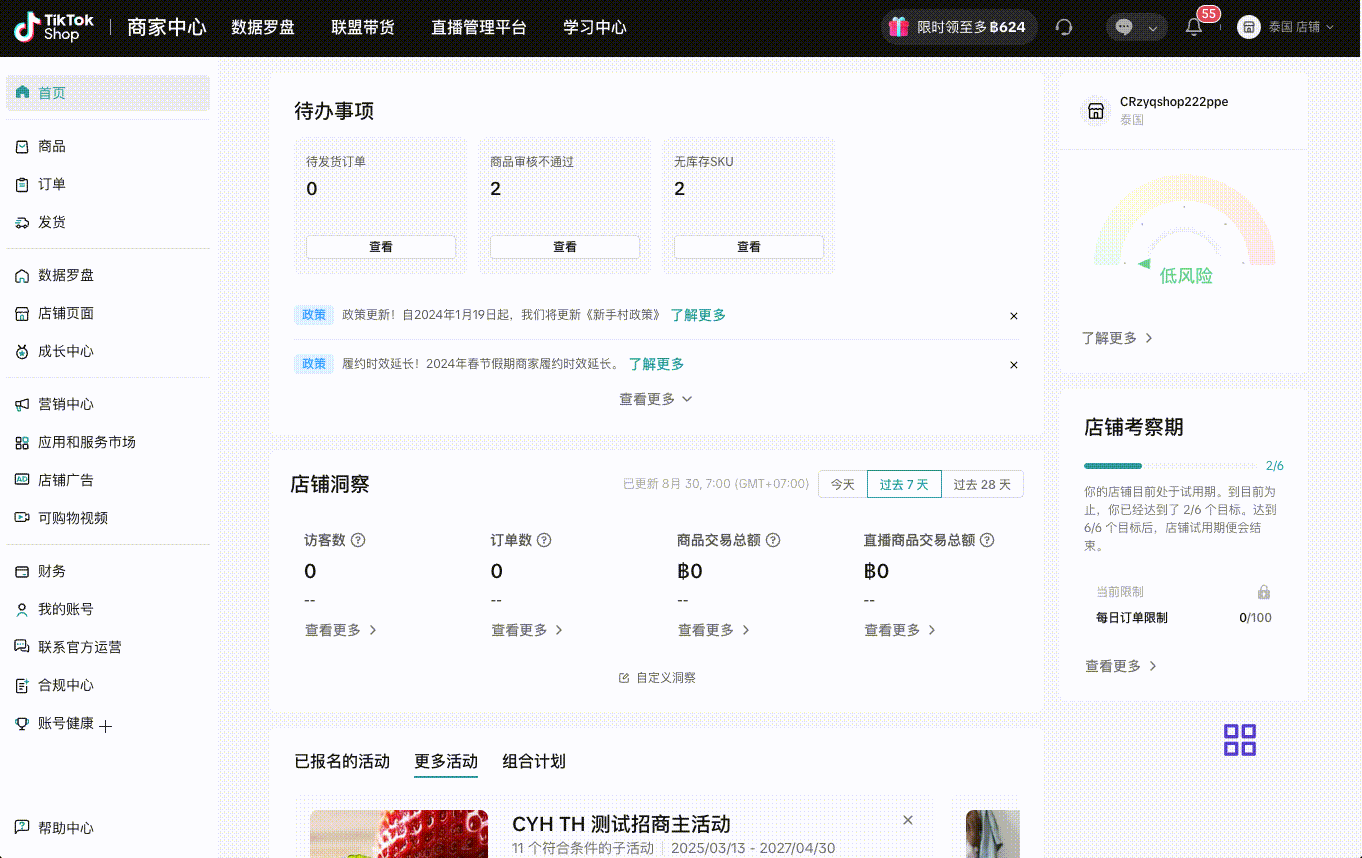
Image source:seller.tiktokglobalshop
For sellers, this new rule means the after-sales team must speed up. In the past, as long as there were no major complaints, everything was fine; now every after-sales request is on a countdown. The faster you handle it, the better your store rating; the longer you drag, the lower your rating drops.
Especially for merchants with large order volumes but insufficient customer service staff, it may be necessary to redesign the after-sales process, such as setting up auto-replies, presetting templates for common issues, or even considering the introduction of simple customer service tools.
Conclusion
The subscription feature on the UK site uses discounts to exchange for loyalty at the front end of the transaction, testing sellers' pricing wisdom and user screening ability; the rating rule reform in Southeast Asia cross-border uses speed to exchange for trust at the back end of the transaction, forcing sellers to improve after-sales efficiency.
Looking at both together,TikTok Shop is gradually building a more mature e-commerce ecosystem—not just a numbers game focused on GMV, but starting to seriously hone retention, service, and experience, these slower but more important fundamentals.
For sellers, no matter which market you are in, adapting to this new logic as soon as possible, shifting your focus from how to quickly get orders to how to retain people for the long term and solve problems efficiently, is the way to survive in the future.
What this signal means for growth teams
This market signal should be treated as an operating prompt, not a standalone trend. The brand question is whether the team can connect TikTok content, creators, paid media, commerce readiness, and reporting into one measurable growth cycle.
Commercial read
- Market signal: TikTok Marketing Information and Solutions
- Published: May 9, 2026
- Commercial lens: TikTok Ads, creators, TikTok Shop, live commerce, and reporting.
- Source transparency: the original source linked in this article
What brands should do next
- Identify the market, audience, product group, and KPI this signal could affect.
- Turn the insight into a small TikTok creative, creator, Shop, or paid media test before scaling spend.
- Add FAQ, offer clarity, product proof, and contact paths so traffic can convert instead of only reading.
- Review weekly performance across reach, click quality, Shop actions, creator output, and revenue impact.
Tuke Marketing helps brands connect TikTok Ads, creator partnerships, TikTok Shop operations, live commerce, and reporting into one accountable operating system.
What should brands do with this TikTok signal?
Brands should translate the signal into a focused operating test across creative, creators, TikTok Shop readiness, paid media, and reporting before increasing budget.
How does Tuke Marketing evaluate this kind of news?
Tuke Marketing reviews platform news through market timing, category demand, creator supply, commerce readiness, and measurable growth actions.
When should a team contact Tuke about this topic?
A team should contact Tuke when it needs to turn a TikTok market signal into a practical launch, creator, advertising, live commerce, or reporting plan.
Source transparency: Tuke cites the original source linked in this article and adds its own operating analysis for brands evaluating TikTok growth decisions.