
Brazil, the largest economy in South America with a population of over 200 million, is becoming one of the fastest-growing e-commerce markets in the world.
Data shows that by 2025, Brazil's e-commerce market size has exceeded $64.09 billion, and it is expected to reach $89.18 billion by 2029, with an annual growth rate of about 8.6%, leading the entire Latin American region.
However, facing this hot land, many Chinese cross-border sellers full of expectations appear hesitant, and "dare not enter the market" has become a common mentality.
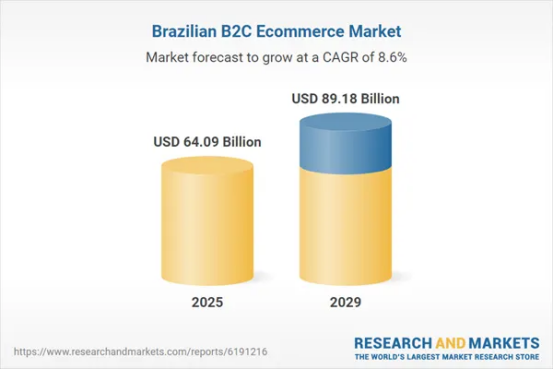
Image source:finance.yahoo
The reason, in fact, is closely related to the "high threshold" of Brazil's logistics.
According to the new regulations, the tax exemption policy for goods under $50 has been officially abolished, and a unified 20% import tariff is levied, plus a 17% ICMS (Goods and Services Circulation Tax) in each state, resulting in a total tax burden of about 44.5%.
Meanwhile, the customs clearance inspection rate at Brazilian customs has risen from previous low levels to 15%-25%, and behaviors such as underreporting prices or vague product names face the risk of high fines.
For cross-border sellers accustomed to "low-price mass listing," this means that the profit margin of the traditional direct mail model has been almost completely swallowed up. When the profit space for low-price direct mail is greatly compressed and compliance costs soar, the key to standing firm in the Brazilian market lies in localization capabilities.
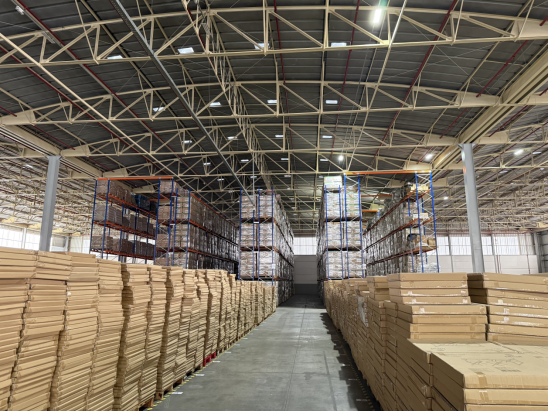
Why is local warehousing and distribution the ticket to enter the Brazilian market?
If direct mail is like "light cavalry," flexible but lacking stamina, then local warehousing and distribution is the "heavy armored force," requiring large upfront investment but able to build a real competitive moat once established.
In terms of cost, timeliness, compliance, and after-sales, the gap between direct mail and local warehousing and distribution is already very clear—almost an insurmountable chasm.
Comparison Dimension | Traditional Direct Mail Model | Local Warehousing and Distribution Model |
Cost | Small package direct mail needs to bear about 44.5% comprehensive tax burden, severely eroding profits for mid- and low-priced products. | Goods are shipped in bulk by sea container, unit shipping cost can be reduced by 60%-70%; bulk customs clearance can distribute taxes, making the terminal tax-inclusive price more competitive in the market. |
Timeliness & Experience | The logistics chain is as long as 30-60 days, poor consumer experience, extremely difficult returns, resulting in low repurchase rates. | Products are pre-stocked in local warehouses, and after consumers place orders, delivery can be achieved in 3-7 days. The shopping experience is no different from local e-commerce, greatly improving conversion rates and customer loyalty. |
Compliance Risk | Heavily reliant on recipient's personal tax number (CPF) for customs clearance; incomplete document authentication easily leads to parcels being detained or returned. | Relying on merchants' local compliance operations, warehousing and distribution services are carried out in a formal commercial fulfillment model, helping sellers standardize local operation processes and reduce end fulfillment compliance risks. |
After-sales & Inventory Management | Cross-border return costs are high, and in practice, it is mostly "refund without return," resulting in high merchandise loss rates for merchants. | Supports local returns to warehouse, quality inspection, and re-listing for sale; through intelligent warehousing system (WMS), achieves real-time inventory synchronization and efficient management across multiple platforms. |
With the trend of tax reform and tightening platform rules, the comprehensive advantages of local warehousing and distribution are becoming increasingly prominent. Sellers' core needs focus onlocal warehousing custody, order fulfillment, last-mile delivery, and after-sales inventory managementand other core capabilities.
In the Brazilian local fulfillment track, J&T Cloud Warehouse, which focuses on local warehousing and distribution services, has become a reliable choice for cross-border sellers to deploy in Brazil.
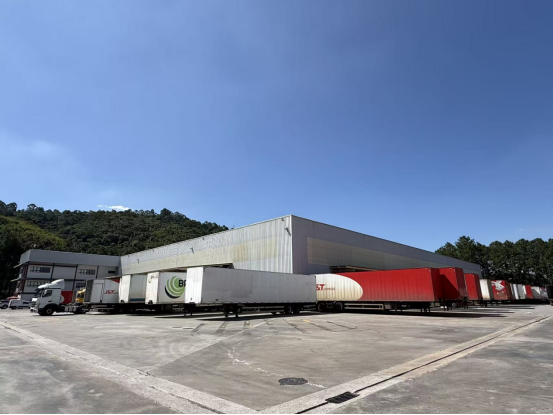
J&T Cloud Warehouse: Professional Local Warehousing and Fulfillment Solution Deeply Cultivating Brazil
According to the recently released Q1 2026 performance report by J&T Express, its global business grew strongly, with a total parcel volume of 8.326 billion, up 26.2% year-on-year. Behind this is J&T's continued deepening of localized operations in emerging markets, especially in Latin America.
In Brazil and surrounding markets, J&T Express is accelerating its deployment, with parcel volume this quarter reaching 154 million, up over 100% year-on-year. Local consumption potential is strong, and the company is working with TikTok, Temu, SHEIN, AliExpress, and Mercado Libre to jointly promote efficient cross-border logistics development. Leveraging its operational experience in China and Southeast Asia, J&T continues to improve the warehousing and distribution system in Latin America.
As a key move in this strategy, J&T Cloud Warehouse's core positioning in Brazil is as a "Brazilian local self-operated warehousing and distribution service provider," dedicated to providing local warehousing custody, order fulfillment, last-mile delivery, return processing, and other localized professional services for Tuke brands.

1. Foundation Strength: Self-built, Self-operated, Rapid Rise
Currently, J&T Cloud Warehouse has set up a self-built, self-operated pilot warehouse in São Paulo, Brazil.
This warehouse was completed in July 2025 and officially put into use in October. The single pilot warehouse covers 5,000 square meters, with standardized storage and distribution operation space, efficiently supporting large-scale SKU management. In just three months, it achieved full warehouse operation, ranking among the top third-party express cloud warehouses in Brazil in overall operational quality, covering the entire country.
Relying on its own warehousing and distribution system and digital management capabilities, J&T Cloud Warehouse can achieve unified management and efficient fulfillment of multi-channel orders, helping clients improve inventory turnover efficiency and terminal delivery experience.
2. Fulfillment Efficiency: System Integration, Real-time Management
In terms of order processing, J&T Cloud Warehouse supports B2C and B2B multi-channel order types, and can integrate with mainstream e-commerce platforms (including local and cross-border platforms) via system integration (WMS/OMS/API), achieving real-time order synchronization, instant inventory updates, and intelligent batch distribution.
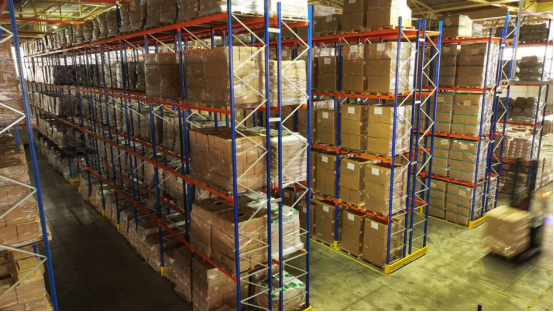
How J&T Cloud Warehouse Deeply Empowers Clients
J&T Cloud Warehouse focuses on Brazil's local backend fulfillment, specializing in solving clients' core pain points in local warehousing, order shipping, last-mile delivery, and return activation, helping clients optimize local operation costs and service experience in Brazil.
For example, in cooperation with a leading e-commerce platform, J&T Cloud Warehouse built a complete closed-loop return processing system for them.
After integration, the platform can synchronize return orders in real time to J&T's WMS system. Return parcels are sent to J&T Cloud Warehouse, where receipt, quality inspection, unpacking, relabeling, and re-listing are completed.
It should be noted that Brazil's e-commerce return rate has long been high. According to the Brazilian E-commerce Association, about 30% of online shopping products are returned by consumers. If returns are not handled properly, the hidden costs of cross-border e-commerce returns will be immeasurable.
Compared to previous passive inventory handling methods, this system gives the inventory process a clearer management path and adjustment space.
In addition, based on this, J&T Cloud Warehouse also provides intelligent warehousing management, order fulfillment, last-mile delivery, return processing, return warehousing, order unpacking, labeling and review, fully supporting high-frequency fulfillment industries such as beauty, FMCG, home e-commerce, catering, and instant delivery.

Conclusion
The new tax reform in the Brazilian market has brought profound and irreversible adjustments, not only raising the compliance threshold and operating costs, but also opening a new growth window for logistics service providers with true local fulfillment capabilities.
In this process, compliance and localization have become the key fulcrums for sellers' long-term development in Brazil. The continuous improvement of the local fulfillment system is reshaping the business ecosystem and brand selection logic. As an important participant, J&T Cloud Warehouse is promoting Tuke brands to achieve more sustainable growth in new markets with solid local operations and systematic capabilities.
What this signal means for growth teams
This market signal should be treated as an operating prompt, not a standalone trend. The brand question is whether the team can connect TikTok content, creators, paid media, commerce readiness, and reporting into one measurable growth cycle.
Commercial read
- Market signal: TikTok Marketing Information and Solutions
- Published: April 21, 2026
- Commercial lens: TikTok Ads, creators, TikTok Shop, live commerce, and reporting.
- Source transparency: the original source linked in this article
What brands should do next
- Identify the market, audience, product group, and KPI this signal could affect.
- Turn the insight into a small TikTok creative, creator, Shop, or paid media test before scaling spend.
- Add FAQ, offer clarity, product proof, and contact paths so traffic can convert instead of only reading.
- Review weekly performance across reach, click quality, Shop actions, creator output, and revenue impact.
Tuke Marketing helps brands connect TikTok Ads, creator partnerships, TikTok Shop operations, live commerce, and reporting into one accountable operating system.
What should brands do with this TikTok signal?
Brands should translate the signal into a focused operating test across creative, creators, TikTok Shop readiness, paid media, and reporting before increasing budget.
How does Tuke Marketing evaluate this kind of news?
Tuke Marketing reviews platform news through market timing, category demand, creator supply, commerce readiness, and measurable growth actions.
When should a team contact Tuke about this topic?
A team should contact Tuke when it needs to turn a TikTok market signal into a practical launch, creator, advertising, live commerce, or reporting plan.
Source transparency: Tuke cites the original source linked in this article and adds its own operating analysis for brands evaluating TikTok growth decisions.