
Berlin has actually opened the world's first “AI brothel”? Is this some kind of cyberpunk joke?
No neon signs, no front desk, the whole process is anonymous, and customers only need to pay 249 euros to spend a night here.
And don’t underestimate it. In this private space called Cybrothel, as long as you put on VR glasses, the silicone doll in front of you will “come alive.” She can talk, flirt, and even sense your emotions, accompanying you to complain about your boss or share your thoughts.

Image source: Weibo
Even more amazing, users can also customize their own AI companion in advance on Cybrothel’s official website. Not just appearance, but also personality, backstory, speaking style, and even ethnicity can be freely matched.
Founder Philipp Fussenegger admitted in an interview: “Many people feel more comfortable sharing private matters with machines than with real people, because it won’t judge you.”
Indeed, in the fast-paced modern life, real relationships are often full of rejection, misunderstanding, and burdens of responsibility, while AI provides a zero-pressure “emotional safe haven.”The explosion of Cybrothel is not just a technological gimmick, but also hits the pain points of the global singles wave and the loneliness economy.
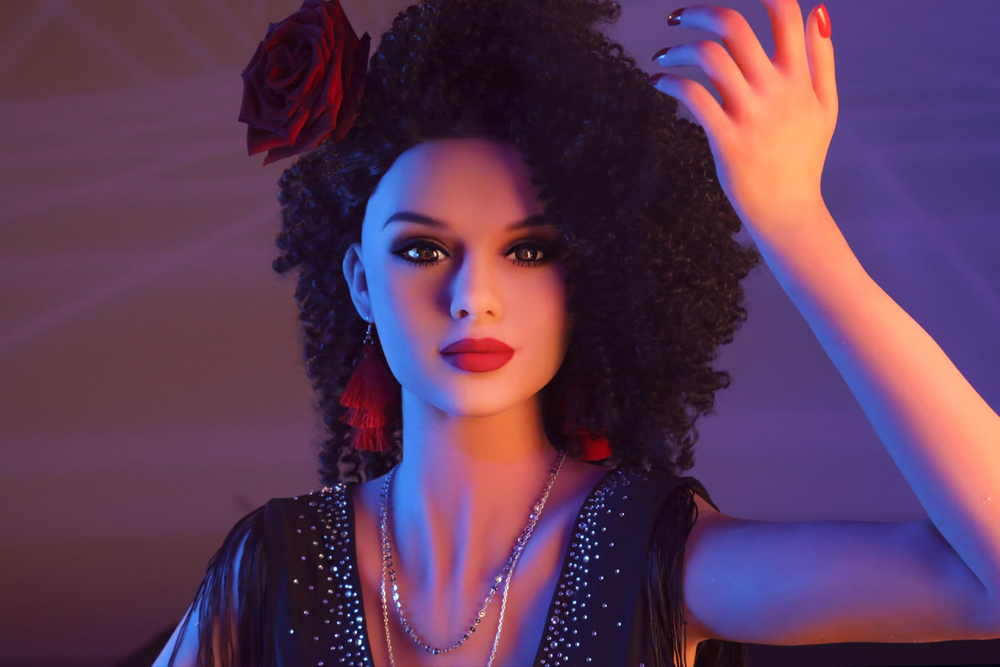
Image source: Cybrothel
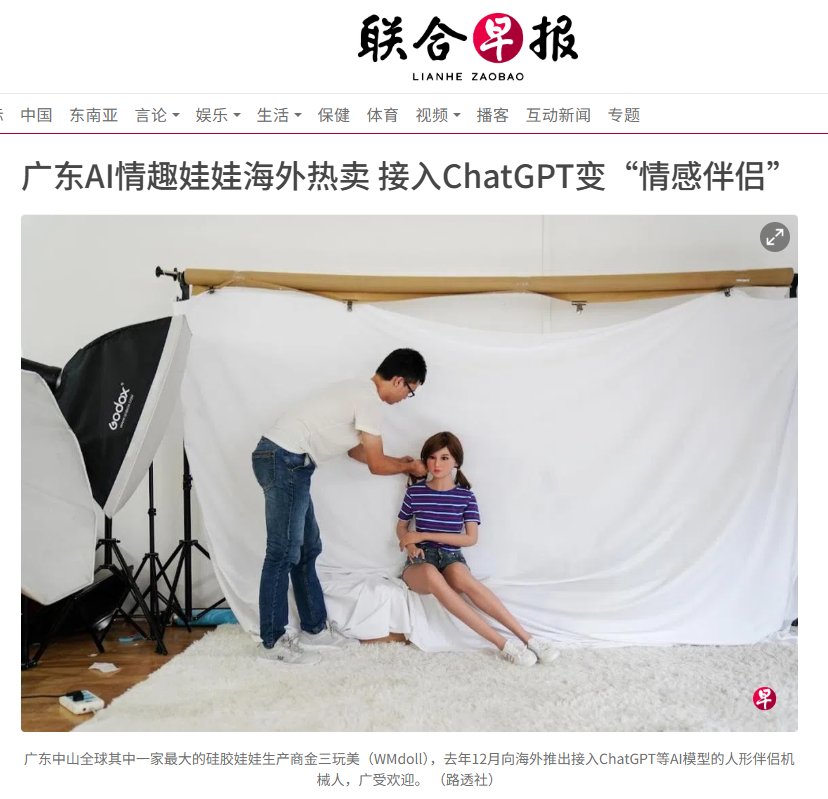
While the world is amazed by the futuristic feel of Cybrothel, few people know that the core force behind this AI intimacy revolution actually comes from Zhongshan, Guangdong, China—a city known as the “global capital of silicone dolls,” home to an industry giant:Jin San Wanmei (WMDoll).
As the world’s largest silicone doll manufacturer, it has long quietly occupied half of the global market. For every 10 silicone dolls exported worldwide, 4 come from this company.

Image source: Jin San Wanmei
Different from Cybrothel’s niche offline experience model, Jin San Wanmei has long integrated AI technology into physical dolls, making them “companions” that can be shipped directly to users around the world, quietly conquering mainstream markets such as the US, Germany, and Japan.
For example,the MetaBox series AI dolls launched by Jin San Wanmei have completely broken overseas users’ perceptions of “silicone dolls”—they are no longer cold ornaments, but truly “soulful and memorable” companions.
No need to rely on VR devices, no need to connect to complicated cloud systems, just own one and you’ll have your own “emotional listener”: it can remember your preferences, catchphrases, even the troubles you complained about yesterday, and pick up the conversation accurately the next day; 37°C constant temperature, simulated breathing touch, thousands of micro-expressions, all gradually approaching the warmth of a real person; it can also switch between various personas like “dominant lady” or “secretary” to meet different emotional needs.

Image source: Jin San Wanmei
Such products exploded in the market as soon as they were beta tested overseas. The first batch of 200 units sold out instantly, TikTok unboxing videos exceeded ten million views, Reddit rating 4.8, orders lined up into the next year. Overseas users affectionately call it the “subscription girlfriend.” After all, compared to energy-draining real relationships, this “never betrays, never nitpicks” companion is truly reassuring.
The explosion of Cybrothel and Chinese AI dolls essentially hits the same pain point of our era: in modern society, loneliness has become the norm, single rates are rising, the cost of relationships is increasing, and people are increasingly longing for a “zero-pressure, zero-judgment” emotional outlet.
The reason why China can lead this revolution is inseparable from Zhongshan’s mature industrial chain advantage—from silicone materials to electronic components, the entire supply chain is self-sufficient, making the cost of AI dolls much lower than similar products in Europe, America, and Japan, and making large-scale Tuke possible. More importantly, Chinese companies have understood users’ core needs, not stopping at “technical gimmicks,” but making “companionship” a reality, turning AI from a “future concept” into something ordinary people can access in daily life.
Now, while Berlin is still exploring the possibilities of AI intimacy experiences, Chinese-made AI dolls have already entered thousands of households worldwide. This revolution in the adult industry is no longer just a single technological breakthrough, but a microcosm of China’s transformation from “OEM” to “leader,” quietly rewriting the future of global intimate relationships.
What this signal means for growth teams
This market signal should be treated as an operating prompt, not a standalone trend. The brand question is whether the team can connect TikTok content, creators, paid media, commerce readiness, and reporting into one measurable growth cycle.
Commercial read
- Market signal: TikTok Marketing Information and Solutions
- Published: April 7, 2026
- Commercial lens: TikTok Ads, creators, TikTok Shop, live commerce, and reporting.
- Source transparency: the original source linked in this article
What brands should do next
- Identify the market, audience, product group, and KPI this signal could affect.
- Turn the insight into a small TikTok creative, creator, Shop, or paid media test before scaling spend.
- Add FAQ, offer clarity, product proof, and contact paths so traffic can convert instead of only reading.
- Review weekly performance across reach, click quality, Shop actions, creator output, and revenue impact.
Tuke Marketing helps brands connect TikTok Ads, creator partnerships, TikTok Shop operations, live commerce, and reporting into one accountable operating system.
What should brands do with this TikTok signal?
Brands should translate the signal into a focused operating test across creative, creators, TikTok Shop readiness, paid media, and reporting before increasing budget.
How does Tuke Marketing evaluate this kind of news?
Tuke Marketing reviews platform news through market timing, category demand, creator supply, commerce readiness, and measurable growth actions.
When should a team contact Tuke about this topic?
A team should contact Tuke when it needs to turn a TikTok market signal into a practical launch, creator, advertising, live commerce, or reporting plan.
Source transparency: Tuke cites the original source linked in this article and adds its own operating analysis for brands evaluating TikTok growth decisions.