

Recently, a major news has swept through the Indian e-commerce circle: the largest local e-commerce platformFlipkart has finally completed a long-planned major event—moving the company’s “registration” from Singapore back to India. This is not just a simple change of registration location. For insiders, this is the clearest signal that Flipkart is about to sprint for an IPO (Initial Public Offering).
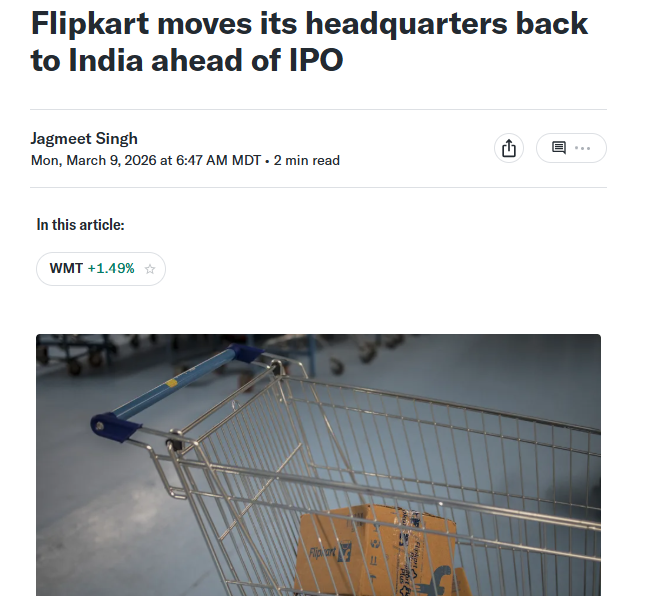
Image source:finance.yahoo
Farewell to“overseas identity”, Flipkart officially “comes home”
Actually, this matter was settled inearly March. Flipkart officially confirmed that they have received approval from the Indian government and completed internal restructuring. Now, Flipkart Internet Private Limited has officially become the new holding entity of the group. This marks that the e-commerce giant, which moved to Singapore in 2011 for easier financing, has finally brought its “heart” back home after more than a decade away.
Why go through all this trouble? It’s obvious to everyone that this is paving the way for listing. Moving the main entity back to the home country will make future capital operations and equity structures clearer, and it’s easier to gain recognition from local regulators.Flipkart is also good at expressing itself, saying this is “a reflection of its long-term commitment to India.” The big boss behind the scenes, Walmart, knows well that to list in India, the posture must be right first.
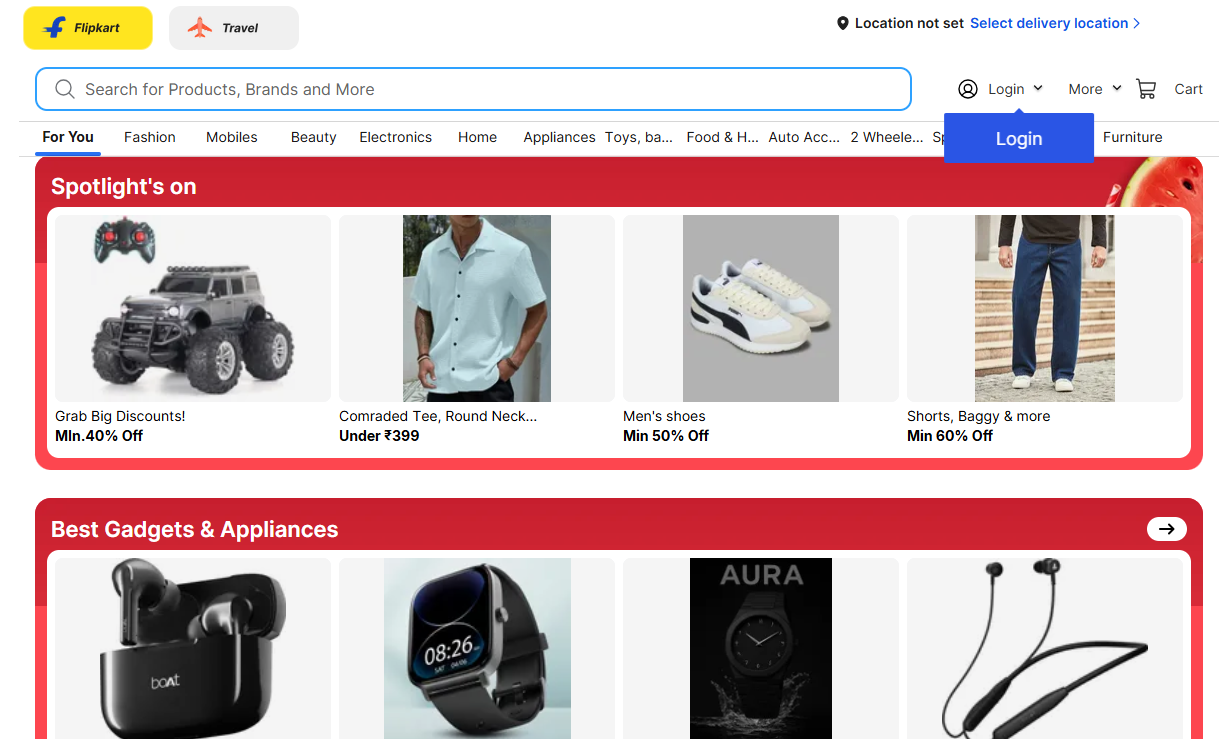
Image source:Flipkart
Timeline confirmed: a race against time
With the registration settled, the itinerary naturally surfaces. According to insiders,Flipkart’s goal is to ring the bell and list on the Indian local exchange before March 2027 (that is, before the end of fiscal year 2026).
This is not just talk; they have already started moving.
Reports say,Flipkart has entered preliminary discussions with investment banks, and even plans to start formal “pitch” bidding by major investment banks in April to prepare for the IPO. Big names like Goldman Sachs, Morgan Stanley, Kotak Mahindra Capital, both domestic and international, are on the contact list.
At this pace, the draft prospectus is likely to meet everyone later this year.
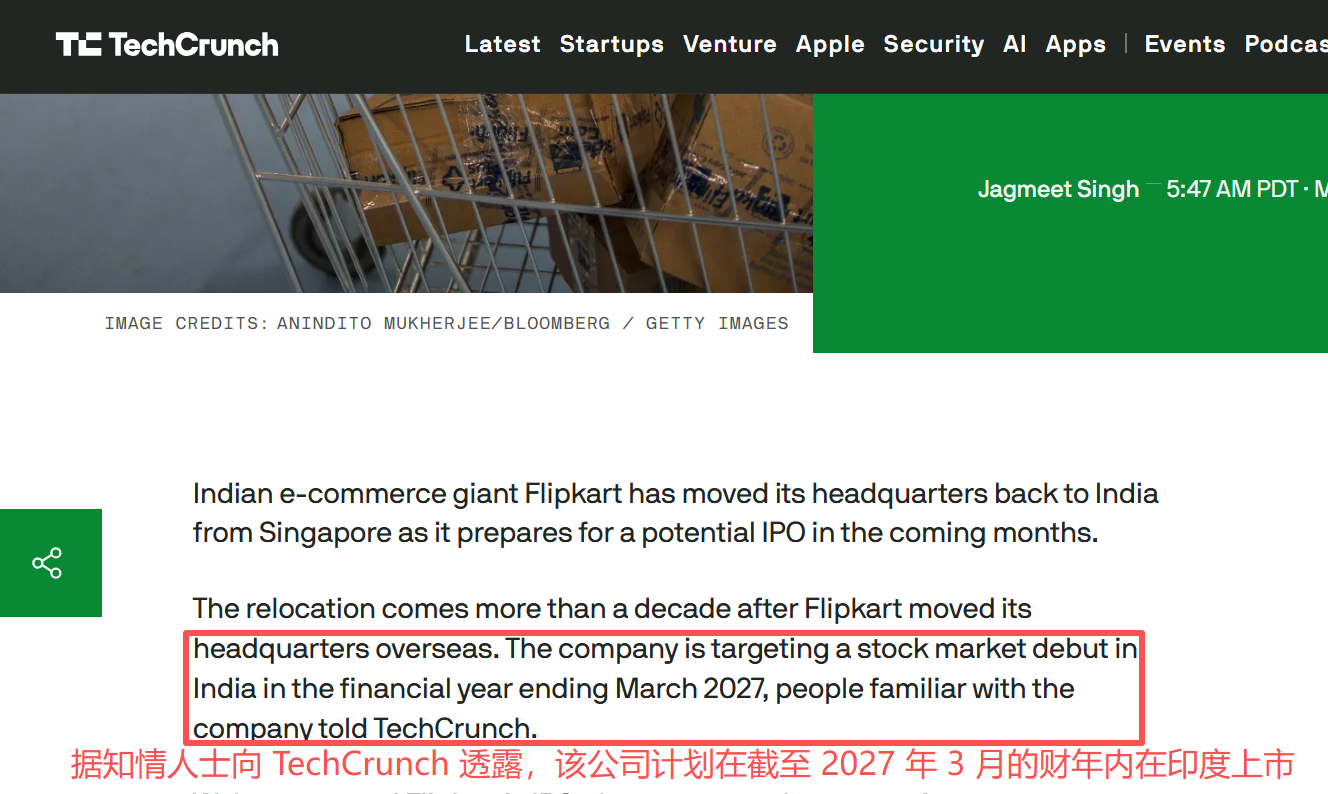
Image source:techcrunch
Strike while the iron is hot: How strong isFlipkart now?
To get a seat at the table, you need to have strong assets. So, what isFlipkart’s current foundation?
In terms of scale, it is still the undisputed“number one” in the Indian e-commerce market. Data shows that Flipkart’s gross merchandise value is expected to reach about $30 billion in 2025 (some data shows about $26.3 billion), registered users have exceeded 500 million, the platform is crowded with more than 140 million sellers, and the types of products listed exceed 150 million.
Today’sFlipkart is no longer just a website selling books. Its territory now includes fashion e-commerce Myntra, travel platform Cleartrip, logistics company Ekart, and even entered the hot “instant retail” track last August with Flipkart Minutes. This whole layout is to tell a richer story to the capital market.
Moreover, the financial situation is also moving in a good direction. Reports mention that infiscal year 2025, its operating income exceeded 200 billion rupees, and net losses narrowed significantly by 37%. While cutting costs (optimizing expenses), it is also expanding (laying out new businesses), obviously “beautifying” the financial statements before listing.
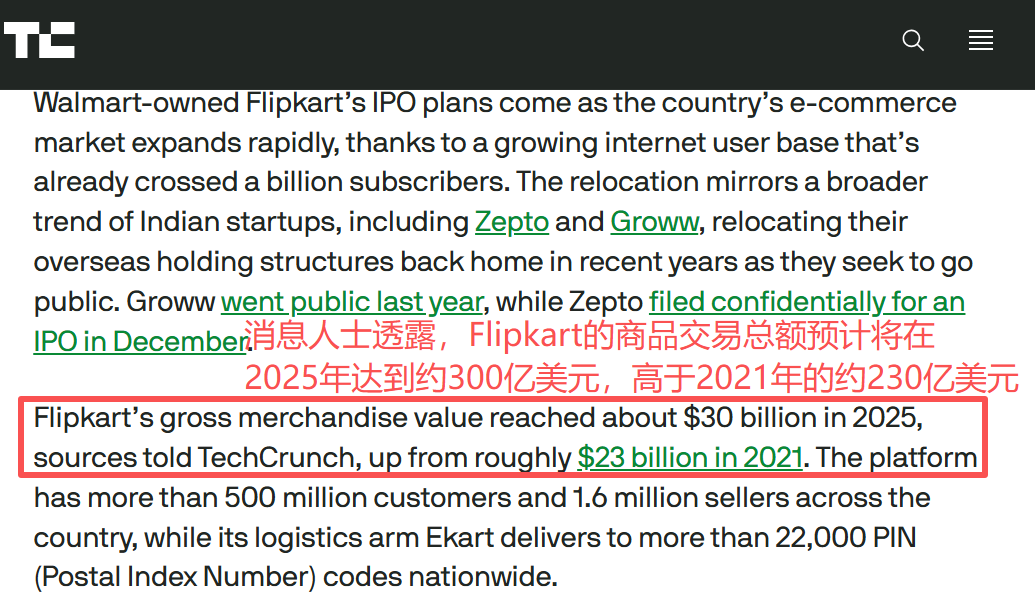
Image source:techcrunch
Impact on sellers and the market
Flipkart’s listing is also an important signal for cross-border sellers targeting the Indian market.
On one hand, listing means more capital“ammunition”. Flipkart will definitely increase investment in technology, logistics, and the emerging instant retail field, making its fighting power stronger. Competition with Amazon India and Reliance Retail will only become fiercer.
On the other hand, once the platform becomes a listed company, financial reporting pressure will come, rules may become stricter, and compliance requirements for sellers may also be higher. However, if sellers can take advantage ofFlipkart’s expansion and seize the traffic dividend period, it will be a big opportunity for many sellers.
Overall,Flipkart is determined to rush into the capital market this time. As its listing process advances step by step, the big drama of Indian e-commerce is just getting started.
What this signal means for growth teams
This market signal should be treated as an operating prompt, not a standalone trend. The brand question is whether the team can connect TikTok content, creators, paid media, commerce readiness, and reporting into one measurable growth cycle.
Commercial read
- Market signal: TikTok Marketing Information and Solutions
- Published: March 17, 2026
- Commercial lens: TikTok Ads, creators, TikTok Shop, live commerce, and reporting.
- Source transparency: the original source linked in this article
What brands should do next
- Identify the market, audience, product group, and KPI this signal could affect.
- Turn the insight into a small TikTok creative, creator, Shop, or paid media test before scaling spend.
- Add FAQ, offer clarity, product proof, and contact paths so traffic can convert instead of only reading.
- Review weekly performance across reach, click quality, Shop actions, creator output, and revenue impact.
Tuke Marketing helps brands connect TikTok Ads, creator partnerships, TikTok Shop operations, live commerce, and reporting into one accountable operating system.
What should brands do with this TikTok signal?
Brands should translate the signal into a focused operating test across creative, creators, TikTok Shop readiness, paid media, and reporting before increasing budget.
How does Tuke Marketing evaluate this kind of news?
Tuke Marketing reviews platform news through market timing, category demand, creator supply, commerce readiness, and measurable growth actions.
When should a team contact Tuke about this topic?
A team should contact Tuke when it needs to turn a TikTok market signal into a practical launch, creator, advertising, live commerce, or reporting plan.
Source transparency: Tuke cites the original source linked in this article and adds its own operating analysis for brands evaluating TikTok growth decisions.