
In the past few years, the competition in Tuke e-commerce often stayed at the level of "price wars," but as consumers' demands for timeliness become increasingly strict, the competitive logic of the entire industry is undergoing profound changes. Whoever can deliver faster, more accurately, and more reliably will be able to seize the next wave of growth dividends.
This time, everyone has unanimously placed their bets on the same thing—artificial intelligence.
Ninety percent of retailers are stepping on the gas,AI becomes the "new standard" in logistics
Recently, ShipStation and Retail Economics jointly released the "2026 E-commerce Delivery Benchmark Report," and the series of data disclosed is worthy of industry attention. The data shows that as many as 90% of global retailers plan to invest heavily in artificial intelligence in the next 12 to 24 months, with only one purpose—to optimize every link of logistics to the extreme with technology.
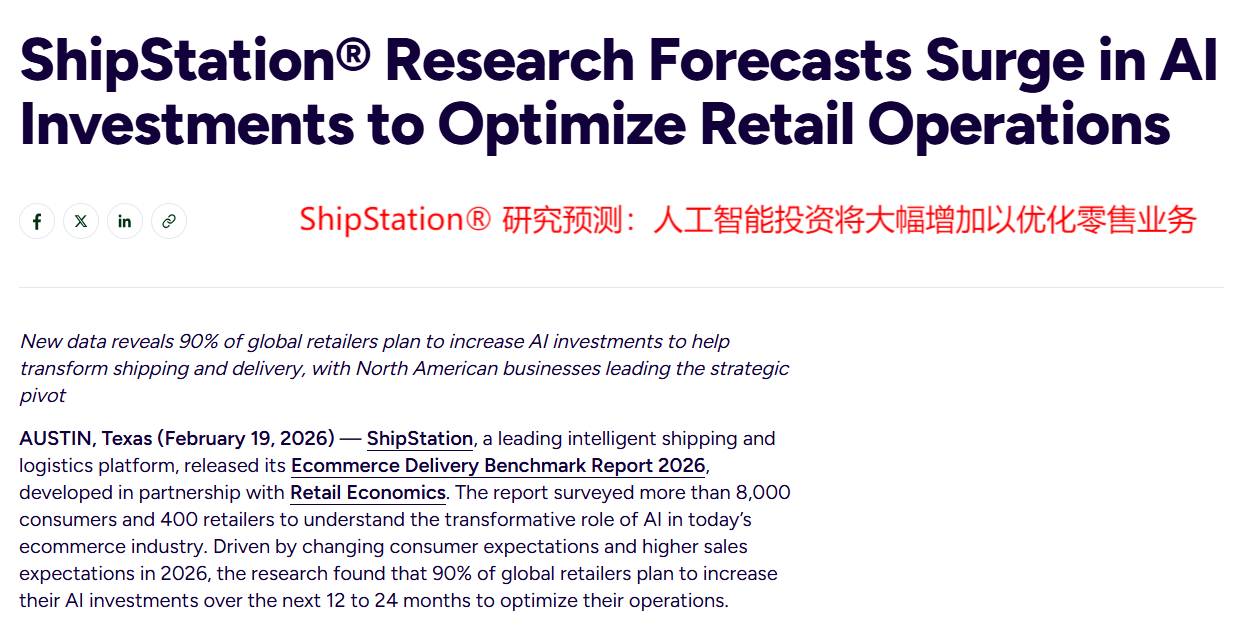
Image source:shipstation
However, although everyone is rushing in, the starting speed is still quite different. The style on both sides of the Atlantic is completely different: North American retailers are obviously more aggressive, with 61% of companies actively expanding AI application scenarios, and 28% of "top students" have already deeply integrated AI into multiple functional departments, playing at scale.
In contrast, Europe is also chasing, but the pace is a bit more steady. The proportion of retailers expanding AI usage is 50%, and only 17% can achieve deep application across multiple departments.
Behind this difference, there is actually a kind of anxiety. Consumers' appetites are getting higher and higher, but merchants' "serving speed" is a bit unable to keep up. Take the North American market as an example: 59% of consumers wish they could receive their packages within two days of placing an order, but in reality, only 40% of retailers can make "two-day delivery" a standard.
This gap between expectation and reality is the core driving force behind everyone's desperate efforts in AI logistics.
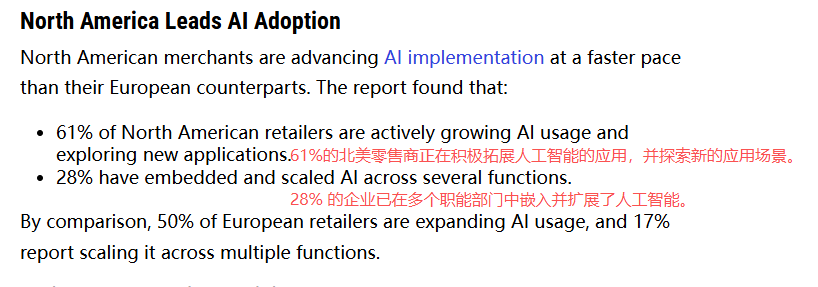
Image source:fleetequipmentmag
Emerging markets are not idle either,AI implementation is "rolling" into the details
This wave of AI logistics is not limited to Europe and America. On the other side of the globe, India's logistics company Velocity, which has just received new funding, is not idle either. It immediately announced it would invest 10 million rupees in a major upgrade for its AI platform Velocity Shipping. The goal is clear: to help D2C brands make shipping and fulfillment more reliable. Today's consumers are not so easily fooled; if the experience is bad, they'll leave immediately.
Velocity Shipping's system is already doing a lot of the "dirty work," such as using AI to optimize package tracking so you don't have to check "where's my package" every day; planning the optimal route to reduce detours for trucks; and even learning to warn in advance, detecting possible issues on the delivery route ahead of time. All of this is actually to protect that precious repurchase rate.

Image source:techinasia
Giants are pouring billions, Amazon'sAI ambitions can no longer be hidden
AI is no stranger in Tuke e-commerce. From product selection, operations to customer service, its shadow is everywhere. Against this backdrop, the actions of e-commerce giants are even more straightforward. Last month, Amazon dropped a bombshell: announcing a $50 billion investment in OpenAI, with an initial payment of $15 billion and more to be added depending on the situation.
This is no small sum. Amazon CEO Andy Jassy did not hide his excitement, bluntly stating that this investment "will bring substantial returns for a long time."
In fact, it's clear to anyone paying attention that Amazon is not just interested in OpenAI's models, but also in the huge potential of AI throughout the entire e-commerce chain.
Some industry forecasts even point out that future hot-selling SKUs may be directly created by AI algorithms—crawling internet trends in real time, reverse engineering the supply chain, and directly producing a new product. Your competitor may no longer be the guy across the desk, but an tireless "algorithm king."
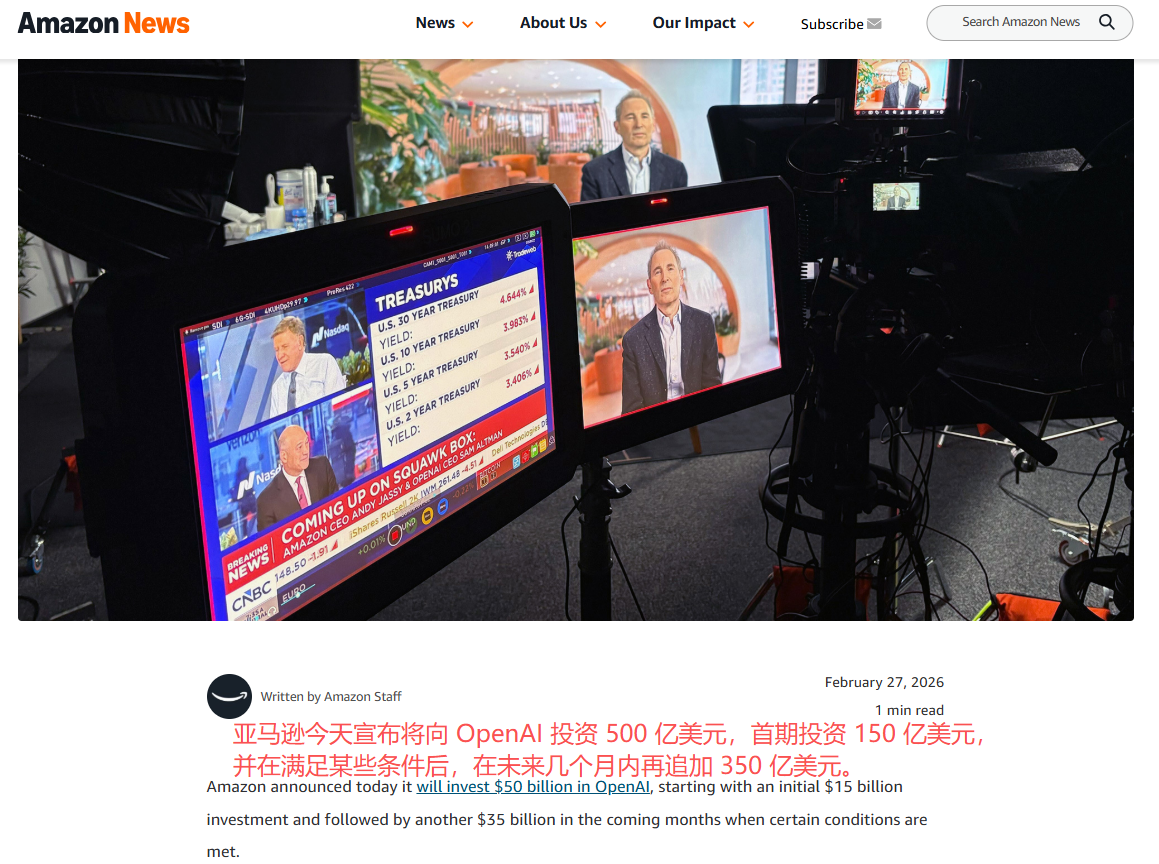
Image source:About Amazon
Of course, the road to AI is not all smooth sailing. The report also reminds us that there are still many obstacles to technology implementation. For example, small and medium-sized retailers with annual revenue below $125 million are most troubled by high development costs and incompatibility with their old systems; while giants with annual revenue over $625 million worry about not being able to recruit top talent and about consumers' "distrust" of new technology.
In short, the traditional operating model is clearly no longer sustainable. Whether it's the mature European and American markets or the rapidly growing emerging markets, the depth of AI technology application is quietly determining the survival space for merchants. As giants invest real money, more links will surely be reshaped by AI in the future. Those sellers who are the first to complete the intelligent transformation will be the ones who can firmly sit at the next round's table.
What this signal means for growth teams
This market signal should be treated as an operating prompt, not a standalone trend. The brand question is whether the team can connect TikTok content, creators, paid media, commerce readiness, and reporting into one measurable growth cycle.
Commercial read
- Market signal: TikTok Marketing Information and Solutions
- Published: March 12, 2026
- Commercial lens: TikTok Ads, creators, TikTok Shop, live commerce, and reporting.
- Source transparency: the original source linked in this article
What brands should do next
- Identify the market, audience, product group, and KPI this signal could affect.
- Turn the insight into a small TikTok creative, creator, Shop, or paid media test before scaling spend.
- Add FAQ, offer clarity, product proof, and contact paths so traffic can convert instead of only reading.
- Review weekly performance across reach, click quality, Shop actions, creator output, and revenue impact.
Tuke Marketing helps brands connect TikTok Ads, creator partnerships, TikTok Shop operations, live commerce, and reporting into one accountable operating system.
What should brands do with this TikTok signal?
Brands should translate the signal into a focused operating test across creative, creators, TikTok Shop readiness, paid media, and reporting before increasing budget.
How does Tuke Marketing evaluate this kind of news?
Tuke Marketing reviews platform news through market timing, category demand, creator supply, commerce readiness, and measurable growth actions.
When should a team contact Tuke about this topic?
A team should contact Tuke when it needs to turn a TikTok market signal into a practical launch, creator, advertising, live commerce, or reporting plan.
Source transparency: Tuke cites the original source linked in this article and adds its own operating analysis for brands evaluating TikTok growth decisions.