
In today's fiercely competitive e-commerce landscape, a “latecomer” is rewriting the global retail pattern at an astonishing speed.
It’s not Amazon, nor Walmart, but Tuke Shop, backed by the short video giant TikTok.
In just five years, Tuke Shop has risen from launch to become the fastest-growing e-commerce platform in the world.
The latest data shows that by 2025, its active buyers have surpassed 400 million, with annual transaction volume approaching $100 billion, successfully ranking among the top five global e-commerce platforms, second only to Amazon, Walmart, Shopee, and eBay.
Industry insiders predict that at this pace, Tuke Shop’s ranking will continue to climb in 2026.
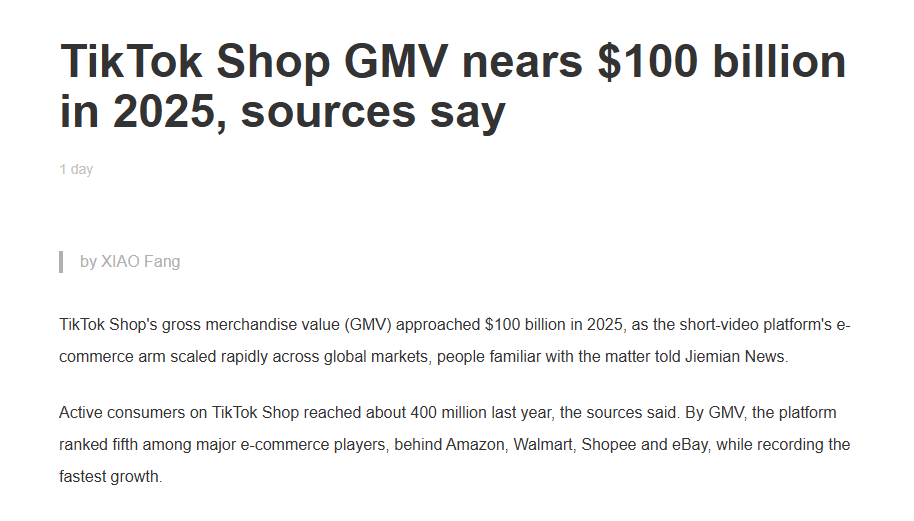
Image source:jiemian
Why can Tuke Shop grow so fast?
The answer lies in two words: content.
Unlike the traditional e-commerce “people search for goods” model, Tuke Shop relies on its parent platform’s powerful short video and livestream ecosystem to create an “goods find people” interest-based e-commerce logic.
Users don’t come with a clear shopping goal, but are inspired while browsing short videos and watching livestreams, then place orders with one click.
This “see and buy instantly” experience is especially popular among young consumers.
A survey jointly launched by Tuke Shop and Global Data shows that over 80% of users have discovered new products on the platform, 70% have learned about new brands, and nearly 80% have made purchases in livestream rooms.
“We’re not selling goods, we’re sharing a lifestyle.” summarized a brand founder who started out on Tuke Shop.
The infectious power of content, combined with the trust built through social interaction, makes product recommendations more natural and efficient.
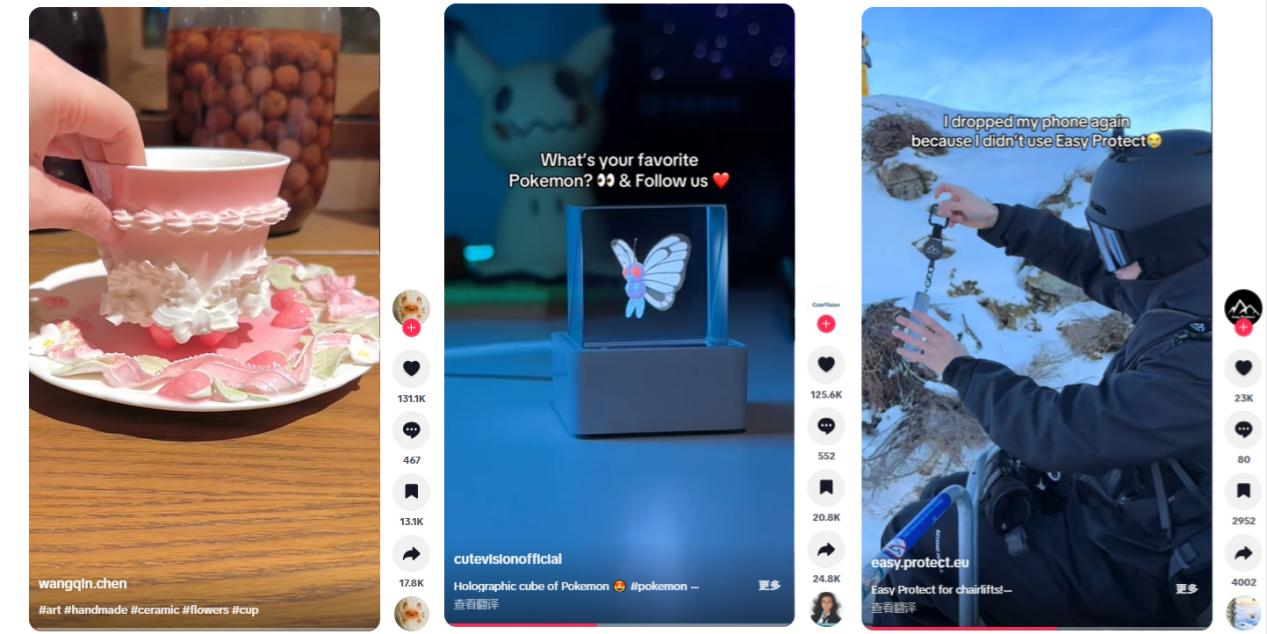
Image source:TikTok
It’s not just TikTok, global e-commerce is shifting to “content + social”
The explosion of Tuke Shop is no accident; behind it is a rapidly expanding social e-commerce market.
According to Future Market Insight, as Gen Z becomes the main consumer force, shopping methods that integrate short videos, livestreams, and community interaction are becoming mainstream. In 2025, the global social e-commerce market size will be about $1.6 billion, and is expected to soar to $22 billion by 2035, with a compound annual growth rate of 30%.
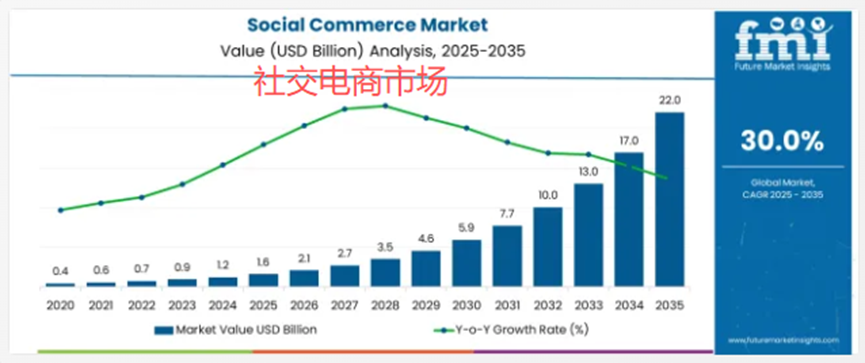
Image source:Future Market Insight
Other platforms are also following this trend:
Amazon launched a TikTok-like short video shopping feature “Inspire” in 2022, and connected shopping links with multiple social platforms;
Shopee continues to enhance its livestream and short video features;
Walmart launched the creator platform Walmart Creator, encouraging content-driven sales;
eBay has partnered with Facebook to expand sales opportunities in social scenarios.
This means that content-driven e-commerce has grown from an “add-on” to a core force reshaping retail.

Image source:Amazon
The Battle for the Future: Traffic, Content, and Ecosystem
The rise of Tuke Shop reveals a clear trend: the dimensions of e-commerce competition have changed.
In the past, platforms competed on supply chain, logistics, and price; now, whoever can capture users’ attention and build trust based on content holds the key to growth.
For merchants and entrepreneurs, this also means the opening of a new round of opportunities. In the content e-commerce ecosystem, individual creators, niche brands, and even small and medium-sized enterprises all have the chance to reach global consumers through viral content and achieve rapid growth.
Of course, challenges come along as well. Content creation capability, localized operations, cross-border logistics and services all require continuous investment. But it’s undeniable that interest-based content recommendation mechanisms are making the global consumer market flatter, more dynamic, and more explosive.

Image source: Internet
Looking back, Zhang Yiming’s words “Short videos will change the world” have now echoed in the e-commerce field. Tuke Shop has covered in a few years what traditional platforms took many years to achieve, relying not only on traffic, but also on a business logic that reconstructs “people, goods, and scenarios.”
The integration of content and e-commerce is still deepening, and the story of global retail has just turned a new page. For platforms, merchants, and consumers alike, a more vivid, instant, and closely connected shopping era has arrived.
What this signal means for growth teams
This market signal should be treated as an operating prompt, not a standalone trend. The brand question is whether the team can connect TikTok content, creators, paid media, commerce readiness, and reporting into one measurable growth cycle.
Commercial read
- Market signal: TikTok Marketing Information and Solutions
- Published: January 13, 2026
- Commercial lens: TikTok Ads, creators, TikTok Shop, live commerce, and reporting.
- Source transparency: the original source linked in this article
What brands should do next
- Identify the market, audience, product group, and KPI this signal could affect.
- Turn the insight into a small TikTok creative, creator, Shop, or paid media test before scaling spend.
- Add FAQ, offer clarity, product proof, and contact paths so traffic can convert instead of only reading.
- Review weekly performance across reach, click quality, Shop actions, creator output, and revenue impact.
Tuke Marketing helps brands connect TikTok Ads, creator partnerships, TikTok Shop operations, live commerce, and reporting into one accountable operating system.
What should brands do with this TikTok signal?
Brands should translate the signal into a focused operating test across creative, creators, TikTok Shop readiness, paid media, and reporting before increasing budget.
How does Tuke Marketing evaluate this kind of news?
Tuke Marketing reviews platform news through market timing, category demand, creator supply, commerce readiness, and measurable growth actions.
When should a team contact Tuke about this topic?
A team should contact Tuke when it needs to turn a TikTok market signal into a practical launch, creator, advertising, live commerce, or reporting plan.
Source transparency: Tuke cites the original source linked in this article and adds its own operating analysis for brands evaluating TikTok growth decisions.