
When many people still thought Pinduoduo was just the domestic e-commerce platform for “bargain hunting,” its overseas counterpart Tuke has quietly entered the first tier of global e-commerce!
The latest data shows that Tuke’s monthly active users have soared to 246 million, firmly securing the third spot among global e-commerce apps, second only to Amazon and Shopee. From launch to joining the world’s top three, Tuke took only three years—a miracle of “China speed.”
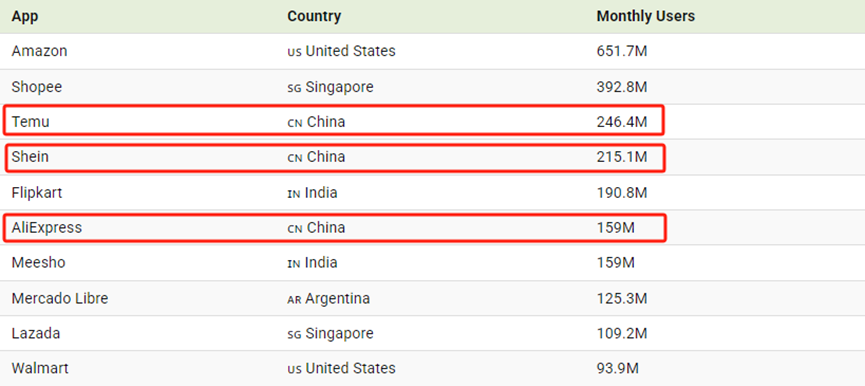
Image source:visual capitalist
Three Years of Rapid Growth: Replicating the “Pinduoduo Model” Globally
Tuke’s rise is almost a perfect overseas replication of the mature Chinese e-commerce playbook.
In 2022, Tuke’s first stop was North America, where it launched its “ultimate cost-effectiveness” strategy. By directly connecting domestic supply chains with overseas consumers, it greatly reduced intermediary costs, making product prices highly competitive and quickly capturing a large number of price-sensitive users.
Moreover,Tuke also successfully exported familiar domestic social viral growth tactics. Whether it’s “group buying for discounts” or invitation incentives similar to “bargain hunting,” these growth strategies honed in the Chinese internet have also gone viral in overseas markets, with user and download numbers growing exponentially. Within just a few months of launch, Tuke topped the free shopping app charts in the US app stores.
The real breakthrough happened in2023. Tuke spent heavily on advertising during the Super Bowl, known as “America’s Spring Festival Gala,” reaching over 100 million viewers and instantly boosting brand awareness.
After that,Tuke began rapid global expansion, from Japan and South Korea to Southeast Asia, from Western Europe to Latin America. Its sites quickly covered dozens of major markets worldwide, flexibly adopting a combination of full and semi-managed models to attract a large number of merchants.

Image source:YouTube
Steady at Home, Advancing Rapidly Overseas
WhileTuke is expanding overseas, its base Pinduoduo is also performing steadily in the domestic market.
While other internet giants are caught in costly battles over food delivery and community group buying, leading to profit pressure, Pinduoduo appears more focused and restrained.
The latest financial report shows that both its revenue and profit continue to grow steadily, making it one of the few domestic e-commerce platforms to achieve positive profit growth.
This stability comes from its continued focus on core areas. Pinduoduo is investing heavily in building agricultural product supply chains, empowering agriculture and industrial belts through financial subsidies, traffic support, and agricultural research competitions, creating a digital pathway from production to sales.
This seemingly“conservative” vertical deep cultivation has instead maintained the basic growth foundation amid fierce industry competition.
At this point, Pinduoduo’s strategic map is becoming clearer: on one end, overseas, leveraging China’s strong supply chain advantages to rapidly replicate proven cost-effectiveness and social gameplay for explosive growth; on the other end, domestically, focusing on agriculture and other long-term value fields, going deeper and stronger to ensure stable and resilient performance.
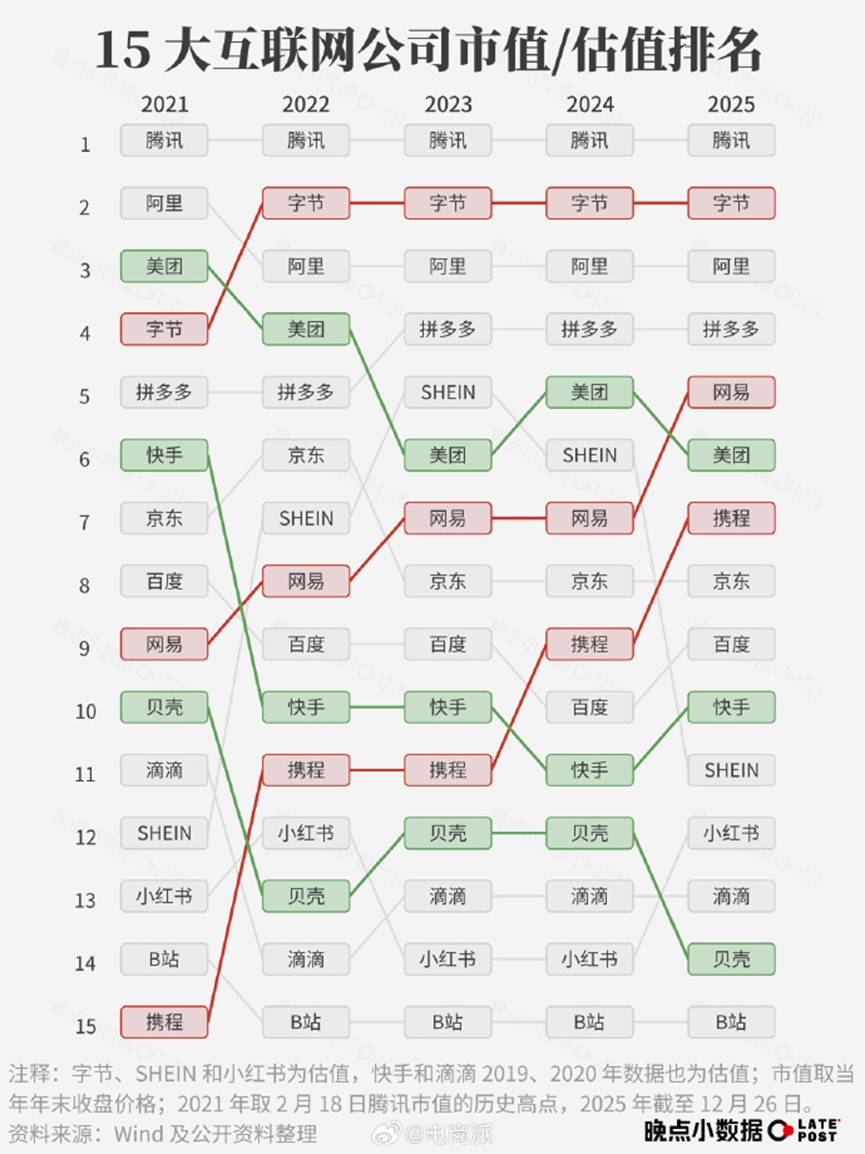
Image source: LatePostlatepost
Under the Halo, the Real Test Is Just Beginning
Despite the impressive achievements, the road ahead is not smooth.Tuke’s global journey faces many real challenges: increasingly complex compliance policies in different markets, the need for deeper localization capabilities, and improvements needed in logistics and after-sales service. At the same time, how to balance growth and profitability globally will be a tough challenge in the next stage.
“In the next three years, we will have the opportunity to build another Pinduoduo.” The management’s bold statement has already been made.
This not only shows confidence but also signals even tougher challenges ahead. What is certain is that global e-commerce competition has entered a new stage, and the platforms that can ultimately endure will be those with both the patience for deep industry cultivation and strong global operational capabilities.
The story of Pinduoduo andTuke is not just a business legend of a single company, but also an important model for Chinese e-commerce’s innovation in going global. Every step of its exploration lights the way for those who follow, and the new global narrative for Chinese e-commerce has only just begun.
What this signal means for growth teams
This market signal should be treated as an operating prompt, not a standalone trend. The brand question is whether the team can connect TikTok content, creators, paid media, commerce readiness, and reporting into one measurable growth cycle.
Commercial read
- Market signal: TikTok Marketing Information and Solutions
- Published: January 9, 2026
- Commercial lens: TikTok Ads, creators, TikTok Shop, live commerce, and reporting.
- Source transparency: the original source linked in this article
What brands should do next
- Identify the market, audience, product group, and KPI this signal could affect.
- Turn the insight into a small TikTok creative, creator, Shop, or paid media test before scaling spend.
- Add FAQ, offer clarity, product proof, and contact paths so traffic can convert instead of only reading.
- Review weekly performance across reach, click quality, Shop actions, creator output, and revenue impact.
Tuke Marketing helps brands connect TikTok Ads, creator partnerships, TikTok Shop operations, live commerce, and reporting into one accountable operating system.
What should brands do with this TikTok signal?
Brands should translate the signal into a focused operating test across creative, creators, TikTok Shop readiness, paid media, and reporting before increasing budget.
How does Tuke Marketing evaluate this kind of news?
Tuke Marketing reviews platform news through market timing, category demand, creator supply, commerce readiness, and measurable growth actions.
When should a team contact Tuke about this topic?
A team should contact Tuke when it needs to turn a TikTok market signal into a practical launch, creator, advertising, live commerce, or reporting plan.
Source transparency: Tuke cites the original source linked in this article and adds its own operating analysis for brands evaluating TikTok growth decisions.