
01
How does an inconspicuous cooler unlock a $10 billion market?
According to Grand View Research, the global outdoor products market reached $52.8 billion in 2024 and is expected to continue growing at a compound annual growth rate of 6.1%, surpassing $75.3 billion by 2030.
In this market dominated by giants such as The North Face, Arc'teryx, and Patagonia, a Texas-based brandYETIhas taken a different path. By focusing on the seemingly inconspicuous niche of coolers, it created a revenue legend of $1.83 billion in 2024.

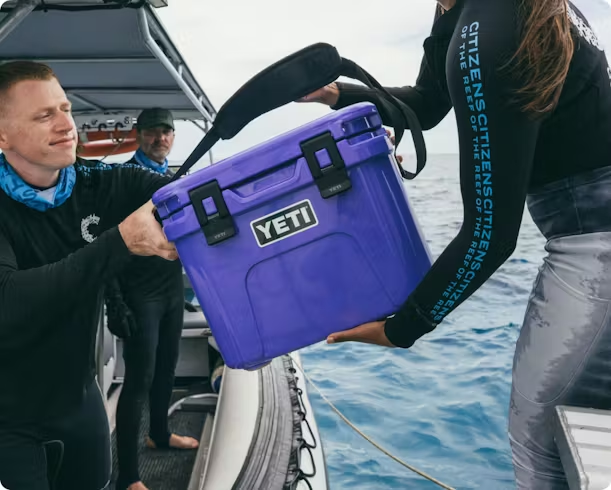
Image source: YETI
And its starting point was simply the garage of Texas brothers Roy and Ryan Seiders in 2006.
These brothers, passionate about fishing and hunting, were fed up with cheap coolers frequently breaking in high temperatures (even causing hundreds of dollars’ worth of catch to go to waste), so they decided to create an “indestructible” product.
Their first cooler, the “Tundra,” used rotomolded one-piece construction, strong enough to withstand being run over by a truck, and even passed the Grizzly Bear Committee’s bear-resistance certification.
Therefore, even though the product was priced as high as $325 (while similar products were only $60), it quickly gained a stellar reputation among professional outdoor enthusiasts.

Tundra Cooler Image source: Amazon
By 2011, just five years after its founding, YETI’s sales soared to $29 million, surpassed $1.63 billion in 2022, and its market value stabilized at $3.4 billion.
Today, the YETI brand has expanded into multiple fields, with its product line extending from professional tools to lifestyle scenarios, covering camping, commuting, tailgate parties, and even pet supplies. Among them, the Rambler stainless steel cup contributed nearly 60% of revenue in 2024.

Rambler Stainless Steel Cup Image source: Amazon
02
The Secret to Breaking Out: From Fisherman’s Tool to Social Currency
In its early days, YETI established itself with a “hardcore product + professional community” strategy, but the high price and professional attributes of coolers naturally defined a niche boundary.
What truly transformed YETI into a sought-after brand was a tightly linked “identity symbolization” project—turning tools into social currency and users into brand evangelists.
1. Tying to “Professional Endorsement” to Unlock Hardcore Circles
When the founding team drove trucks to sell to Texas fishing tackle shops, they deliberately avoided big-box stores like Walmart, instead penetrating thousands of specialty outdoor retailers. Today, these channels contribute about 40% of YETI’s revenue and maintain its high premium barrier.

Image source: YETI
2. Turning Products into “Totems of Outdoor Life”
Every YETI cooler comes with a complimentary hat and T-shirt. Users wear them and take photos while fishing or camping, and the brand logo gradually becomes an identity marker in the outdoor community. The official brand then launched the #BuiltForTheWild campaign, encouraging users to share their wilderness adventure stories. By 2025, this hashtag had accumulated over 320,000 pieces of content across major social media platforms.

#BuiltForTheWild topic on some platforms
03
Multi-Platform Marketing: Not Chasing Traffic, But Building “Trust”
YETI’s social media strategy always revolves around one core principle: user trust is above all else. It is this strategy that has allowed it to stand out from fierce traffic competition.
1. TikTok
On TikTok, YETI’s official account @yeti has built a communication hub centered on outdoor scenarios, with nearly 700,000 followers and over 120 million total video views.
The brand rarely posts content directly showcasing products, but instead continuously shares high-intensity outdoor activity clips, such as whitewater fly fishing, extreme skiing, and campfire gatherings.
By showing products in real use under harsh conditions, these videos allow viewers to naturally perceive the durability and reliability of the products, deepening the professional image the brand aims to create.

Image source: TikTok
In addition, YETI is also very selective about its influencers. Instead of choosing general entertainment influencers, they focus on more specialized figures in vertical fields, such as athletes, professional anglers, and outdoor adventurers.
These endorsements from professionals are clearly more convincing to ordinary users than traditional hard-sell ads.
TikTok influencer @kaitvanhoff is a great example. She is an outdoor enthusiast with 15,100 followers. In her collaboration video with YETI, she showcased the YETI cooler’s capacity and practicality through a camping vlog, and the video ultimately received 716,900 views, with a flood of positive feedback in the comments.

Image source: TikTok
2. Facebook
On Facebook, where the user age range is broader, YETI’s tasks are also more diverse. They need to explain product functions clearly and show how products are used in various life scenarios.
For example, on the official account @YETI (1.31 million followers), they use short videos to demonstrate different ways to use the Rambler cup in various situations, and also use images and text to explain the rotomolding process and insulation test data in detail.
This combination of “emotional lifestyle scenes + rational technical explanations” not only attracts ordinary users who pursue a lifestyle, but also meets the needs of professional users who want to understand product performance—a win-win approach.

Image source: Facebook
04
Going Global Is Not Just “Competing Elsewhere,” But Rebuilding Value
From YETI’s marketing philosophy, it’s clear that in today’s era of product overabundance, what consumers lack is not choices, but promises they can trust.
For Chinese companies seeking to go global, it’s not about simply moving the supply chain, but about reassessing value.
Instead of thinking about how to be cheaper or louder, consider: Who does your product solve a problem for that no one else can? When you truly achieve this, trust and business will naturally follow.
What this signal means for growth teams
This market signal should be treated as an operating prompt, not a standalone trend. The brand question is whether the team can connect TikTok content, creators, paid media, commerce readiness, and reporting into one measurable growth cycle.
Commercial read
- Market signal: TikTok marketing tips - short video marketing methods
- Published: July 11, 2025
- Commercial lens: TikTok Ads, creators, TikTok Shop, live commerce, and reporting.
- Source transparency: the original source linked in this article
What brands should do next
- Identify the market, audience, product group, and KPI this signal could affect.
- Turn the insight into a small TikTok creative, creator, Shop, or paid media test before scaling spend.
- Add FAQ, offer clarity, product proof, and contact paths so traffic can convert instead of only reading.
- Review weekly performance across reach, click quality, Shop actions, creator output, and revenue impact.
Tuke Marketing helps brands connect TikTok Ads, creator partnerships, TikTok Shop operations, live commerce, and reporting into one accountable operating system.
What should brands do with this TikTok signal?
Brands should translate the signal into a focused operating test across creative, creators, TikTok Shop readiness, paid media, and reporting before increasing budget.
How does Tuke Marketing evaluate this kind of news?
Tuke Marketing reviews platform news through market timing, category demand, creator supply, commerce readiness, and measurable growth actions.
When should a team contact Tuke about this topic?
A team should contact Tuke when it needs to turn a TikTok market signal into a practical launch, creator, advertising, live commerce, or reporting plan.
Source transparency: Tuke cites the original source linked in this article and adds its own operating analysis for brands evaluating TikTok growth decisions.