
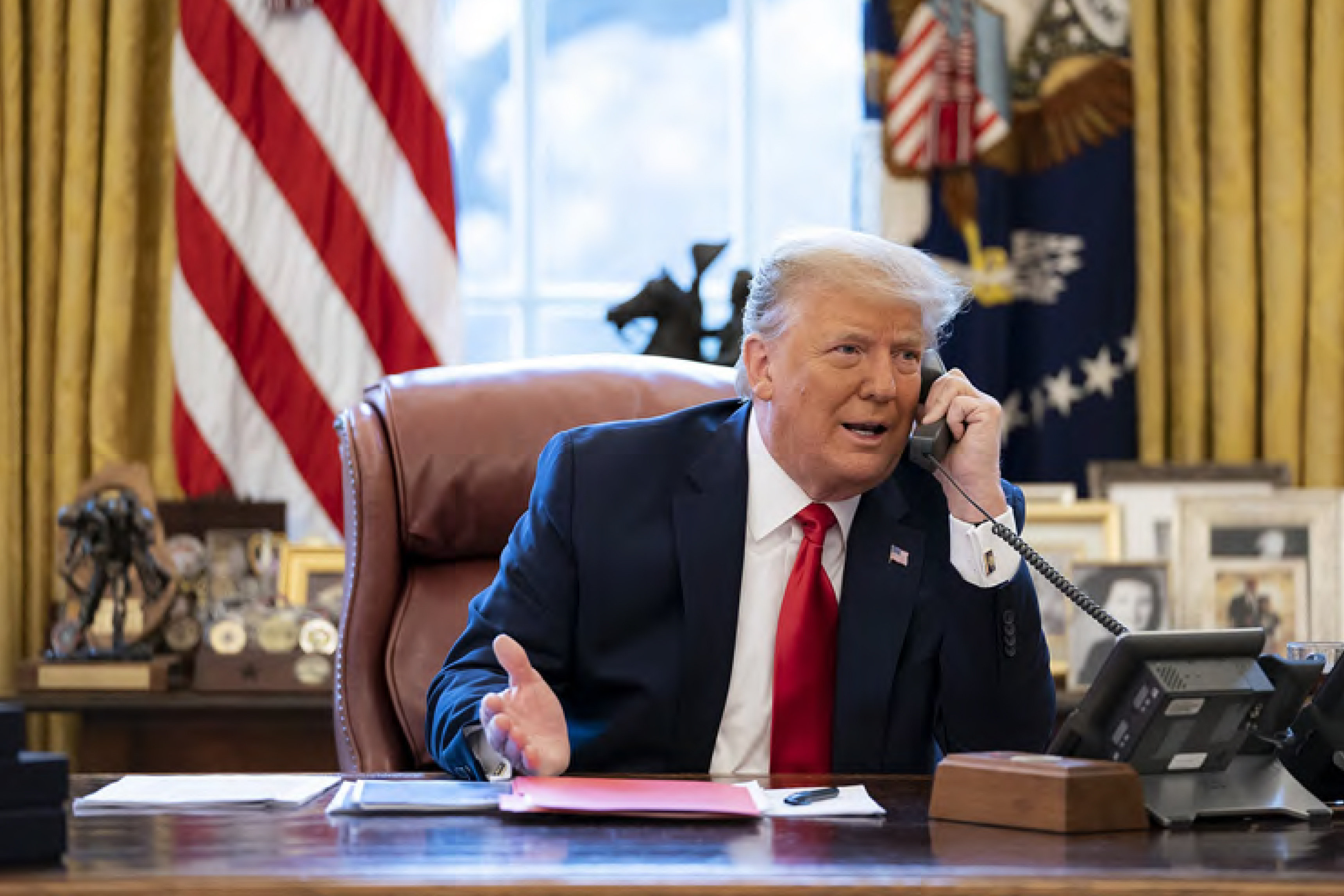
Trump's statement, "There are currently no plans to postpone the July 9th resumption of tariff increases," hangs over the heads of Amazon's Chinese sellers like a guillotine, with only one week left on the countdown before it falls. In the preceding months, the shadow of tariffs had already quietly transformed into a string of ever-increasing dollar price tags on the platform.

Image source: apnews
A price surge storm triggered by policy drivers is sweeping across the Amazon platform. Office and study supplies, electronics, furniture, cookware—these traditional strong categories of Chinese manufacturing are bearing the brunt.
Mid-June data reveals that the median price of 1,407 "Made in China" products rose by 2.6%, far outpacing the U.S. inflation rate over the same period. Among them, furniture increased by 3.5%, and electronics by 3.1%.
What hurts sellers the most is the real loss of consumers and money. After price hikes, a large number of users directly chose to "abandon purchase." But this round of price increases is not due to greedy manipulation by sellers, but rather a helpless self-rescue under the layer-by-layer transmission of cost increases.

Image source: ainvest
In June, the U.S. imposed a 50% tariff on aluminum products and restrictions on some steel, directly pushing up the production and transportation costs of related cookware, electronics, and furniture. When upstream raw material prices are forcibly raised by policy, the spillover of cost pressure at the factory end has become inevitable.
And the third-party sellers, who account for 62% of Amazon platform sales, are right at the eye of the storm. When their low-margin, high-volume model encounters drastic cost changes, the low-profit structure is like a paper dam—raising prices is almost the only choice: if they don't, profits drop to zero; if they do, orders plummet.
Data shows that when overseas product prices rise by more than 10%, 66% of consumers will turn to local brands, and 20% even explicitly state they will "only buy American goods." Subtle changes in consumer decisions have already been reflected in platform orders: office supply orders have plummeted 13% year-on-year, sports goods dropped 12%, and large appliances and cosmetics categories both fell by 10%. The categories with the steepest order declines highly overlap with those with the sharpest price increases.

Image source: Reuters
Sellers are squeezed into a narrow survival gap: on one side, costs keep rising and are hard to digest; on the other, consumers vote with their feet after price hikes. As the July 9th tariff restart approaches, this gap is getting tighter and tighter—the "last straw" of tariffs that will break the camel's back is already in the final countdown.
Sellers who survive the storm often do one thing right: diversify risks in advance. While most are still struggling in price wars, those with foresight have already started deploying Southeast Asian production capacity, cultivating local warehouses in Europe, or turning to emerging markets such as Japan and South Korea. These arrangements cannot completely offset the impact of tariffs, but they can serve as life-saving rafts when the big waves hit.

Image source: Internet
Amid policy changes, price wars are no longer the core logic of survival. Stores obsessed with short-term low-price battles will eventually be strangled by both costs and traffic. Global trade rules are being reshaped, and the battlefield for cross-border sellers has shifted from single-platform price games to multidimensional competition in supply chain depth, localization, and brand building.
When the countdown alarm hits zero, the real survival battle has just begun. The "volume-price gap" formed by cost pressure and weak consumption will continue, but what truly determines life and death is always the path sellers choose in the face of the storm—wait passively for fate, or break through in advance?
What this signal means for growth teams
This market signal should be treated as an operating prompt, not a standalone trend. The brand question is whether the team can connect TikTok content, creators, paid media, commerce readiness, and reporting into one measurable growth cycle.
Commercial read
- Market signal: TikTok Marketing Information and Solutions
- Published: July 7, 2025
- Commercial lens: TikTok Ads, creators, TikTok Shop, live commerce, and reporting.
- Source transparency: the original source linked in this article
What brands should do next
- Identify the market, audience, product group, and KPI this signal could affect.
- Turn the insight into a small TikTok creative, creator, Shop, or paid media test before scaling spend.
- Add FAQ, offer clarity, product proof, and contact paths so traffic can convert instead of only reading.
- Review weekly performance across reach, click quality, Shop actions, creator output, and revenue impact.
Tuke Marketing helps brands connect TikTok Ads, creator partnerships, TikTok Shop operations, live commerce, and reporting into one accountable operating system.
What should brands do with this TikTok signal?
Brands should translate the signal into a focused operating test across creative, creators, TikTok Shop readiness, paid media, and reporting before increasing budget.
How does Tuke Marketing evaluate this kind of news?
Tuke Marketing reviews platform news through market timing, category demand, creator supply, commerce readiness, and measurable growth actions.
When should a team contact Tuke about this topic?
A team should contact Tuke when it needs to turn a TikTok market signal into a practical launch, creator, advertising, live commerce, or reporting plan.
Source transparency: Tuke cites the original source linked in this article and adds its own operating analysis for brands evaluating TikTok growth decisions.