
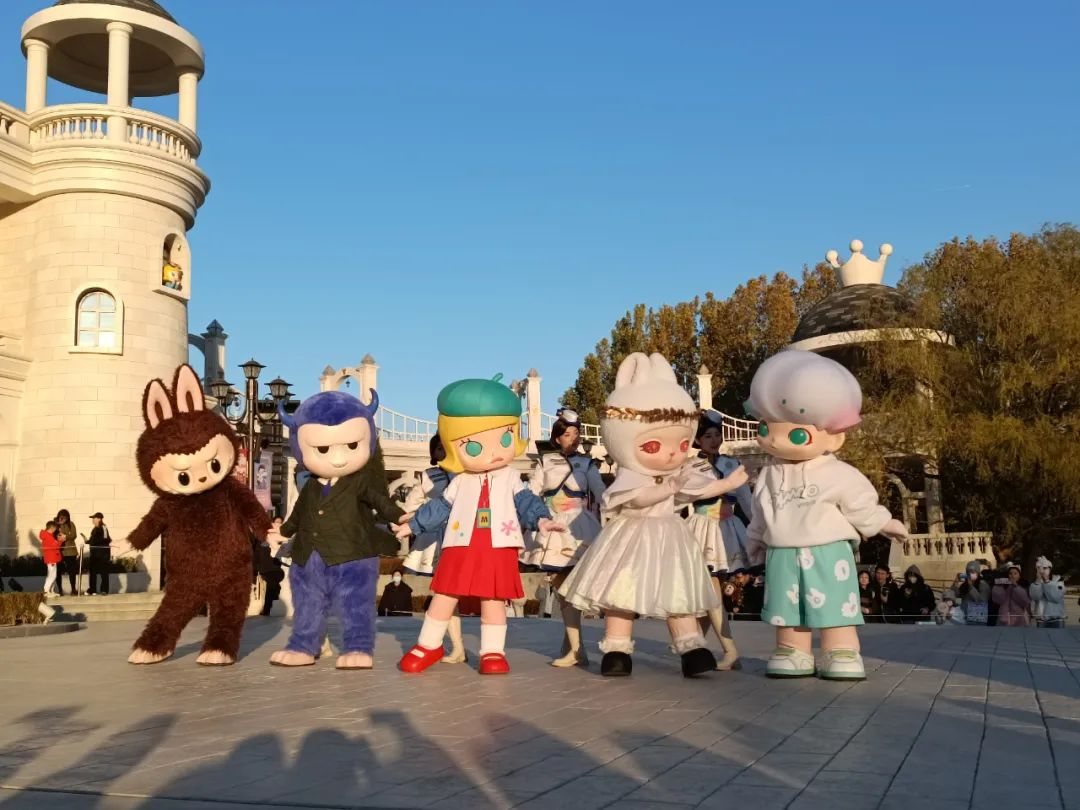
From Sanlitun in Beijing to Oxford Street in London, from the bustling crowds in Thai shopping malls to American trendsetters showing off Labubu in short videos, Chinese trendy toys are sweeping the globe at an unprecedented speed. And at the heart of this explosive wave is still the “ugly-cute and addictive” Labubu.
Just last week, at an auction in Beijing, a 131cm tall Labubu was sold for a sky-high price of 1.08 million yuan, sparking a frenzy of reports from both Chinese and international media.
This auction was like a global declaration about trendy culture, consumer power, and the influence of Chinese IP! Pop Mart has once again put a Chinese brand in the spotlight on the world stage.

Pop Mart founder Wang Ning, Image source: Internet
A “blind box” unlocks a hundred-billion market
Pop Mart didn’t explode overnight; its rise has a clear trajectory.
In the past five years, the company’s revenue has soared from less than 1 billion yuan to over 6 billion yuan, expanding from its first store in Beijing’s CBD to more than 500 stores worldwide. IPs like Labubu, Molly, and Dimoo have become “spiritual totems” in the wallets of young people.
Labubu’s current popularity feels more like a global, phenomenal cultural carnival.
Global celebrities such as Lisa, Rihanna, and Dua Lipa are all showing off Labubu, and many netizens joke: “Ugly things always have a certain charm.” From the diverse and inclusive aesthetics of trends to the organic spread on social platforms, Chinese IP is breaking out from niche circles into mainstream culture.

Image source: Internet
Long lines at global stores, overseas youth are “hooked” too
Data shows that Pop Mart has opened more than 70 directly operated stores overseas. Especially in Southeast Asian markets like Thailand, Malaysia, and Singapore, Labubu sells out instantly upon release, with some customers even queuing overnight for limited editions.
In April this year, the first Labubu-themed store in Thailand achieved sales of over 10 million yuan on its opening day, comparable to the daily turnover of a medium-sized shopping mall.
In Europe and America, Pop Mart has entered trendsetting landmarks like Selfridges in the UK and SOHO in New York, USA, and is promoting online sales through platforms such as Amazon and Walmart. More importantly, they are not relying on established overseas brands as “assistants,” but are entering mainstream retail systems as an original Chinese brand.
This is an upgrade of “Made in China,” and even more, an export of China’s cultural soft power.

Image source: Internet
Behind the “ugly-cute economy” is the industrial capability of Chinese IP
If in the past Chinese brands relied more on “white-label exports” and OEM manufacturing, then trendy toy brands like Pop Mart represent an integrated model of original Chinese design, Chinese industrial chains, and Chinese marketing systems.
IP incubation, trend design, fast-turnover production lines, blind box sales mechanisms, online lottery systems... In recent years, Pop Mart has built a complete closed-loop ecosystem for trendy toys. Each season’s new products go from concept to mass production in just three months, allowing rapid response to global market trends.
This efficient response mechanism is precisely the hardest part for overseas trendy toy brands to replicate.
A deeper transformation is that Pop Mart has driven the rise of a batch of Chinese trendy toy startup brands. 52TOYS, TOP TOY, Trendy Factory and others are all focusing on original IP and global market layouts, forming a huge “Chinese trendy toy export army.”

Image source: Internet
Chinese brands are defining a new global trend narrative
If Pop Mart’s first breakout was a carnival of capital and consumption, then this time, the explosive “Labubu auctioned for a million yuan” is beginning to take on the attributes of a cultural phenomenon, transmitting Chinese aesthetics, creativity, and cultural values to the world and gaining global recognition.
Pop Mart’s path also provides countless Chinese brands with a new paradigm:
Not going global with low prices, but entering the market with high premiums;
Not relying on OEM, but leading with IP;
Not following trends, but creating them.
Perhaps in a few years, when we talk about the “world’s trend center,” the answer will no longer be Tokyo, Seoul, or New York, but Shenzhen, Guangzhou, or Beijing.

Image source: Internet
Conclusion
Pop Mart’s renewed popularity is no accident, but the inevitable result of Chinese new consumer brands evolving from manufacturing to cultural export.
Trends never ask about origins.
This time, it is Chinese manufacturing, Chinese design, and Chinese creativity standing at the center of global trends!
What this signal means for growth teams
This market signal should be treated as an operating prompt, not a standalone trend. The brand question is whether the team can connect TikTok content, creators, paid media, commerce readiness, and reporting into one measurable growth cycle.
Commercial read
- Market signal: TikTok Marketing Information and Solutions
- Published: June 16, 2025
- Commercial lens: TikTok Ads, creators, TikTok Shop, live commerce, and reporting.
- Source transparency: the original source linked in this article
What brands should do next
- Identify the market, audience, product group, and KPI this signal could affect.
- Turn the insight into a small TikTok creative, creator, Shop, or paid media test before scaling spend.
- Add FAQ, offer clarity, product proof, and contact paths so traffic can convert instead of only reading.
- Review weekly performance across reach, click quality, Shop actions, creator output, and revenue impact.
Tuke Marketing helps brands connect TikTok Ads, creator partnerships, TikTok Shop operations, live commerce, and reporting into one accountable operating system.
What should brands do with this TikTok signal?
Brands should translate the signal into a focused operating test across creative, creators, TikTok Shop readiness, paid media, and reporting before increasing budget.
How does Tuke Marketing evaluate this kind of news?
Tuke Marketing reviews platform news through market timing, category demand, creator supply, commerce readiness, and measurable growth actions.
When should a team contact Tuke about this topic?
A team should contact Tuke when it needs to turn a TikTok market signal into a practical launch, creator, advertising, live commerce, or reporting plan.
Source transparency: Tuke cites the original source linked in this article and adds its own operating analysis for brands evaluating TikTok growth decisions.