
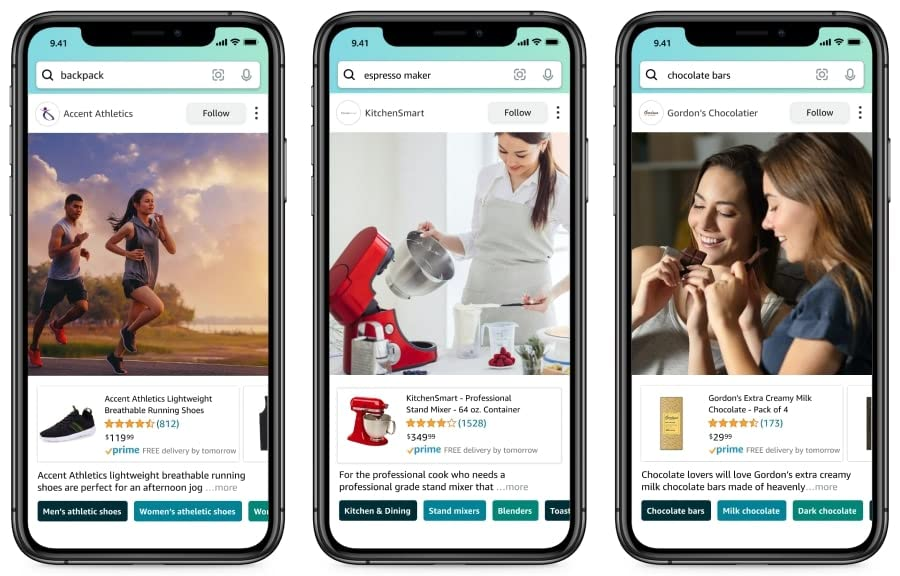
Since its launch, Amazon's Posts program has been regarded as an important attempt by the platform to move into the field of social commerce. This feature allows brands to showcase lifestyle images and videos similar to Instagram, presenting consumers with scenario-based product experiences, and even supports paid promotion to search results pages.
However, after years of testing, Amazon has finally announced that it will officially shut down the service on July 31, citing "declining impressions" and the need to adjust platform page design.


Image source: Google
Essentially, the failure of the Posts program stems from a mismatch between user behavior and platform positioning. Amazon's core users usually come with a clear shopping purpose, rather than browsing or discovery as the main motivation like social media users. Although the platform tried to stimulate users' browsing interest through content, the actual effect fell far short of expectations.
This also confirms a key issue: the "socialization" of e-commerce platforms is not simply a copy of the social media model, but needs to be more in line with users' shopping logic.
Adjustment of Seller Marketing Strategies
For brand sellers who rely on the Posts program, this change means that the original free content exposure channel will disappear. In the past, sellers could use Posts to showcase brand stories or product usage scenarios, and even gain extra traffic at low cost. Now, Amazon clearly recommends that sellers turn to sponsored advertising solutions, which means paid ads may become the core means of brand exposure.
However, this adjustment is not entirely negative. The closure of the Posts program also prompts sellers to re-examine the focus of their content marketing strategies. For example, they can optimize product detail pages, strengthen the visual presentation of main images, videos, and A+ pages to fill the content gap left by the absence of Posts.
Sellers can also explore off-site traffic, accumulating followers on social platforms such as Instagram and TikTok, and then directing traffic to Amazon stores to form a more stable private domain conversion path.


Image source: Google
The Boundary Between E-commerce and Social Media
Amazon's closure of the Posts program reflects its reevaluation of the "social commerce" model. Although social content can enhance user stickiness, the core competitiveness of e-commerce platforms still lies in an efficient transaction closed loop.
This decision may suggest that the platform should prioritize user habits. Instead of forcibly changing users' browsing behavior, it is better to optimize the existing shopping path. Innovation can also be used to match scenarios, as Amazon may explore content forms that better fit e-commerce logic in the future, such as live shopping or short video reviews, rather than simply imitating social media.


Image source: Google
Farewell to Experimentation, Embracing New Opportunities
The end of the Posts program is not only Amazon's timely stop-loss on ineffective trial and error, but also provides new directions for sellers and the platform to think about. For sellers, it is necessary to quickly adapt to changes and invest resources in more certain marketing channels; for the platform, how to balance content innovation and transaction efficiency remains a long-term issue.
In the increasingly fierce competition in e-commerce, only products and services that truly meet users' real needs can win sustained growth. In the future, Amazon may launch more mature social tools, but before that, focusing on conversion rates and user experience is the optimal solution for all parties.
What this signal means for growth teams
This market signal should be treated as an operating prompt, not a standalone trend. The brand question is whether the team can connect TikTok content, creators, paid media, commerce readiness, and reporting into one measurable growth cycle.
Commercial read
- Market signal: TikTok marketing tips - short video marketing methods
- Published: June 12, 2025
- Commercial lens: TikTok Ads, creators, TikTok Shop, live commerce, and reporting.
- Source transparency: the original source linked in this article
What brands should do next
- Identify the market, audience, product group, and KPI this signal could affect.
- Turn the insight into a small TikTok creative, creator, Shop, or paid media test before scaling spend.
- Add FAQ, offer clarity, product proof, and contact paths so traffic can convert instead of only reading.
- Review weekly performance across reach, click quality, Shop actions, creator output, and revenue impact.
Tuke Marketing helps brands connect TikTok Ads, creator partnerships, TikTok Shop operations, live commerce, and reporting into one accountable operating system.
What should brands do with this TikTok signal?
Brands should translate the signal into a focused operating test across creative, creators, TikTok Shop readiness, paid media, and reporting before increasing budget.
How does Tuke Marketing evaluate this kind of news?
Tuke Marketing reviews platform news through market timing, category demand, creator supply, commerce readiness, and measurable growth actions.
When should a team contact Tuke about this topic?
A team should contact Tuke when it needs to turn a TikTok market signal into a practical launch, creator, advertising, live commerce, or reporting plan.
Source transparency: Tuke cites the original source linked in this article and adds its own operating analysis for brands evaluating TikTok growth decisions.