
The U.S. T86 duty-free customs clearance policy, which has been in use for six years, may become history today.
According to a report by Cailian Press on April 1, the Trump administration is very likely to sign an executive order today to officially abolish the T86 customs clearance model for low-value goods. Once this policy is implemented, cross-border e-commerce parcels with a single ticket value of less than $800 will no longer enjoy duty-free and fast customs clearance benefits.

Image source: Sina
Since its launch in 2019, the T86 customs clearance model has become the main channel for small and medium sellers to enter the U.S. market. Its core advantage lies in simplifying the declaration process and exempting tariff collection, which greatly reduces the cross-border transportation cost of small batches of goods. However, data from U.S. Customs shows that the number of parcels entering under the duty-free policy has surged from 140 million to 1 billion over the past decade, with many cases of underreported value and split parcels, leading to increased regulatory pressure and ultimately triggering this policy adjustment.

Image source: Tuchong Creative
Global Reciprocal Tariffs Coming Simultaneously
As the T86 policy faces cancellation, the White House also announced that it will impose "reciprocal tariffs" on global trading partners.
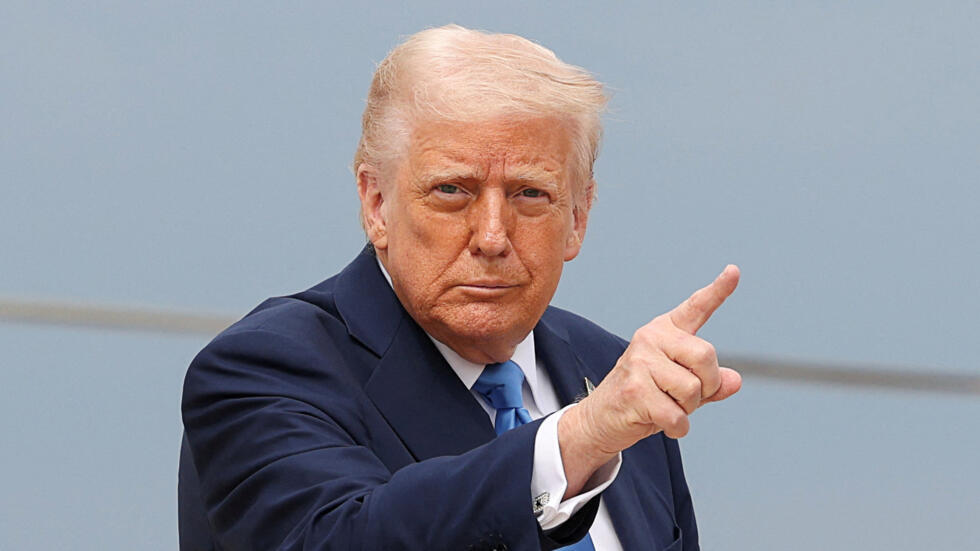
According to the latest news, U.S. President Trump will officially sign the executive order at 4 p.m. local time on April 2 (4 a.m. Beijing time the next day), and the new tariffs will "take effect immediately" after the announcement.

Image source: Cailian Press
White House Press Secretary Karoline Leavitt revealed that Trump has made a final decision on the tariff levels and noted that he has repeatedly referred to April 2 as America's "Liberation Day."
There are also reports that the U.S. Trade Representative (USTR) is preparing another option, which is to impose comprehensive tariffs on some countries, with rates possibly not as high as 20%. In response, a White House aide said any reports before the April 2 event are "just speculation."
But it is worth noting that Trump remains open to adjusting the tariff rates before the announcement, saying he is "willing to listen to requests from foreign governments and businesses to lower the rates." The market reacted strongly, with investors worried that a surge in global supply chain costs could further drive up inflation, causing U.S. stocks to continue to fluctuate recently. Leavitt tried to reassure the market, saying: "Just like during Trump's first term, Wall Street will be fine."

Image source: RFI
Logistics Companies Take Emergency Measures
Even before the U.S. officially released an announcement, the industry had already started a "major earthquake."
Shenzhen Siyunda International Logistics has issued a notice announcing the suspension of handling U.S. standard line cargo, and will temporarily store parcels collected after March 29 in the warehouse, arranging transfer after the policy is clarified today. The company clearly stated that if T86 is canceled, it will adopt a more costly customs clearance method and settle freight charges according to the new quotation table.

Image source: Shenzhen Siyunda International Logistics
A logistics company in East China took action as early as last Tuesday, announcing the suspension of all U.S. mail collection and delivery from March 27, retaining only the Canadian line. The announcement directly pointed out that "the major uncertainty of the new U.S. tariff policy on April 2" is the main reason for the business suspension.

Image source: A logistics company in Shanghai
Sellers Caught in a Dilemma
Anxiety among cross-border sellers is spreading, and a recent warning email titled "Global Trade Policy Update" from the Amazon platform has further tightened nerves across the industry.
One practitioner helplessly said: "If the $800 duty-free threshold is really canceled, independent sites and small and medium sellers will only have two options left. Either pass the tariff cost on to consumers, resulting in price increases, or directly give up the U.S. market."
What worries sellers even more is that the cancellation of T86 will also bring a series of chain reactions. According to industry forecasts, after T86 is canceled, the customs clearance fee per ticket for freight forwarders will increase by 20 yuan, and the decline in clearance efficiency may lead to parcel backlogs or even destruction.
And this is already the second policy adjustment in the U.S. this year. As early as February 4, the U.S. announced the cancellation of T86, but due to a backlog of over one million parcels at JFK Airport in New York, the policy was urgently suspended three days later.

The White House issued an announcement to restore the T86 policy
Industry insiders analyzed that, unlike the hasty suspension in February, this policy adjustment may be more sustainable. After learning from the last lesson, U.S. Customs has formulated detailed contingency plans for customs clearance efficiency, greatly reducing technical obstacles to the implementation of the new policy. In addition, the EU plans to abolish the duty-free policy for goods under 150 euros, and emerging markets such as Mexico and Vietnam are also raising regulatory thresholds simultaneously, making the global policy shift a foregone conclusion.

The EU plans to abolish the duty-free policy for parcels valued under 150 euros
Industry Transformation Is Imperative
Behind the policy upheaval lies the deep transformation of cross-border e-commerce from "barbaric growth" to "compliant operation."
Industry experts pointed out: "Canceling small-value duty-free is an inevitable trend. Sellers need to shift to new models such as stocking in overseas warehouses, while also expanding into diversified markets like Southeast Asia and Latin America."
As of 11 a.m. Beijing time on April 2, the U.S. government has not yet released the final announcement. However, cross-border practitioners' conference calls and emergency plan adjustments are still ongoing. This industry upheaval triggered by policy may have only just begun.
What this signal means for growth teams
This market signal should be treated as an operating prompt, not a standalone trend. The brand question is whether the team can connect TikTok content, creators, paid media, commerce readiness, and reporting into one measurable growth cycle.
Commercial read
- Market signal: TikTok Marketing Information and Solutions
- Published: April 3, 2025
- Commercial lens: TikTok Ads, creators, TikTok Shop, live commerce, and reporting.
- Source transparency: the original source linked in this article
What brands should do next
- Identify the market, audience, product group, and KPI this signal could affect.
- Turn the insight into a small TikTok creative, creator, Shop, or paid media test before scaling spend.
- Add FAQ, offer clarity, product proof, and contact paths so traffic can convert instead of only reading.
- Review weekly performance across reach, click quality, Shop actions, creator output, and revenue impact.
Tuke Marketing helps brands connect TikTok Ads, creator partnerships, TikTok Shop operations, live commerce, and reporting into one accountable operating system.
What should brands do with this TikTok signal?
Brands should translate the signal into a focused operating test across creative, creators, TikTok Shop readiness, paid media, and reporting before increasing budget.
How does Tuke Marketing evaluate this kind of news?
Tuke Marketing reviews platform news through market timing, category demand, creator supply, commerce readiness, and measurable growth actions.
When should a team contact Tuke about this topic?
A team should contact Tuke when it needs to turn a TikTok market signal into a practical launch, creator, advertising, live commerce, or reporting plan.
Source transparency: Tuke cites the original source linked in this article and adds its own operating analysis for brands evaluating TikTok growth decisions.