
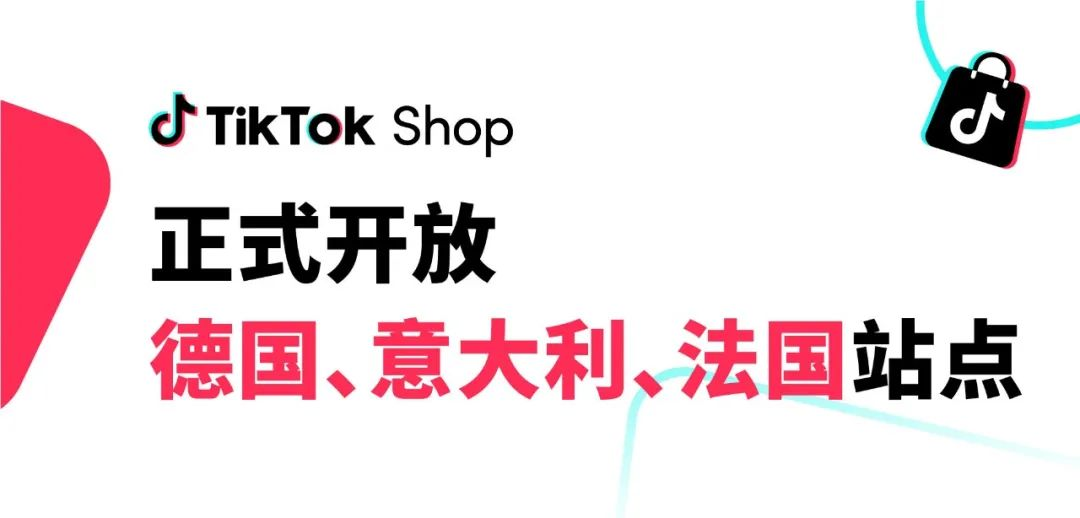
Making money in the European market is not that easy, but it's not that hard either. Germans are picky about cost performance, the French are passionate about fashion, and Italians prefer a sense of design. Decentralized operations will only drag down the cash flow of small and medium-sized merchants. The newly launched TikTok policy of "one store selling to five countries" is essentially using the Spanish site as a springboard to open up the traffic pools of Germany, France, Italy, and Ireland all at once. But those who can truly benefit are the players who know how to "adapt one batch of goods to the needs of multiple countries and use one set of content to break through cultural differences."


Image source: TikTok shop
Choose the Right "Springboard Site" to Roll Out in the EU Market at Low Cost
TikTok's new policy allows a single entity to open sub-stores in multiple countries, but "where to start" directly determines operating costs and success rates.
Market selection and risk control are the primary tasks for brands entering the market. The European market has strict CE certification requirements. For example, Germany requires children's toys to pass the Blue Angel environmental certification, while the US sets high thresholds for large furniture and e-cigarette categories. Brands need to plan localization capabilities in advance. For example, the German site requires a local tax number and VAT qualification, while the US site requires merchants to obtain a USPS logistics waybill within 48 hours.


Image source: blauer-engel.de
The sports equipment brandLICHICOprecisely targeted the US market, binding with a local overseas warehouse upon entry, shortening delivery time to 3 days, and avoided low-price competition with a high unit price treadmill of $169, becoming the TOP1 category on TikTok US.


Image source: TikTok
Lightweight + Localization: Creating the Formula for Bestsellers
The core of product selection strategy is to balance logistics costs and user needs. Cross-border logistics costs in Europe are high, so lightweight and small items are the key to breaking through. Categories with a unit price of $20-50 and weighing less than 2kg (such as jewelry and beauty tools) can reduce the proportion of shipping costs and fit TikTok users' impulse consumption habits.
The beauty brandTarte Cosmeticsunderstands this well. Its main product line, with an average price of $32, covers everything from affordable $8 lipsticks to high-end $202 gift boxes. Through a precise tiered strategy, it sold 108,900 pieces in 30 days during Black Friday, with total sales exceeding $3.3 million.


Image source: TikTok
Localization adaptation is the lever to drive conversion. For example, German consumers are extremely sensitive to cost performance and functionality, so 3C products must be equipped with German manuals; French users value fashionable packaging design, which must comply with EU REACH environmental standards; the Italian market favors handicrafts and light luxury design, and the local food and beverage category is growing rapidly.
Brands need to adjust product details according to the target market. For example, the straightening brush brandTYMO Beautydeveloped adjustable temperature functions for different hair types for US users, and directly addressed pain points with "buyer show vs seller show" comparison videos, achieving a GMV of over $5 million during Black Friday promotions.


Image source: TikTok
Content "Hook" Design: Let Users Pay Proactively
TikTok is essentially content-driven consumption, but European users are much more resistant to "hard ads" than those in Southeast Asia. Truly high-quality content must capture users' attention within 3 seconds.
For example, theTarte Cosmeticsbrand collaborated with influencer @Alle Brean. The video directly shows the pain point of cracked and faded lipstick at the beginning, demonstrates the product's multifunctional use as lipstick + eyeshadow within 10 seconds, and ends with a "limited-time 30% off" hook. A single video directly drove $1.92 million in sales.


Image source: EchoTik (top) TikTok (bottom)
The Bonus Belongs to the "Detail-Oriented"
TikTok is not a game of easy money, but an extreme test of "localization granularity."
The battle for Europe is essentially a marathon of refined operations. Bestsellers may be fleeting, but only those who dilute compliance costs, maximize content conversion, and perfect their supply chain can truly reap the rewards.
What this signal means for growth teams
This market signal should be treated as an operating prompt, not a standalone trend. The brand question is whether the team can connect TikTok content, creators, paid media, commerce readiness, and reporting into one measurable growth cycle.
Commercial read
- Market signal: TikTok marketing tips - short video marketing methods
- Published: April 2, 2025
- Commercial lens: TikTok Ads, creators, TikTok Shop, live commerce, and reporting.
- Source transparency: the original source linked in this article
What brands should do next
- Identify the market, audience, product group, and KPI this signal could affect.
- Turn the insight into a small TikTok creative, creator, Shop, or paid media test before scaling spend.
- Add FAQ, offer clarity, product proof, and contact paths so traffic can convert instead of only reading.
- Review weekly performance across reach, click quality, Shop actions, creator output, and revenue impact.
Tuke Marketing helps brands connect TikTok Ads, creator partnerships, TikTok Shop operations, live commerce, and reporting into one accountable operating system.
What should brands do with this TikTok signal?
Brands should translate the signal into a focused operating test across creative, creators, TikTok Shop readiness, paid media, and reporting before increasing budget.
How does Tuke Marketing evaluate this kind of news?
Tuke Marketing reviews platform news through market timing, category demand, creator supply, commerce readiness, and measurable growth actions.
When should a team contact Tuke about this topic?
A team should contact Tuke when it needs to turn a TikTok market signal into a practical launch, creator, advertising, live commerce, or reporting plan.
Source transparency: Tuke cites the original source linked in this article and adds its own operating analysis for brands evaluating TikTok growth decisions.