
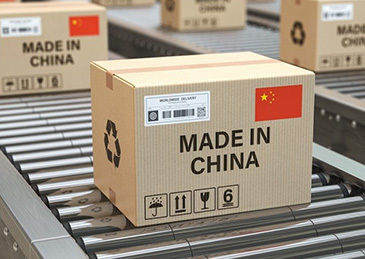
Recently, a "boycott of Chinese sellers" campaign initiated by US domestic sellers has continued to escalate, causing a shock in the cross-border e-commerce industry. According to Amazon platform data at the end of 2024, Chinese sellers have accounted for over 50% of the top 10,000 core sellers, and soared to 62% in the fourth quarter, reaching a record high.
Meanwhile, 41% of new sellers added to the Walmart platform last year came from China, with active sellers contributing 28%. This growth trend has directly triggered collective anxiety among US sellers. Some leading merchants have formed alliances and submitted five targeted reform proposals to the US government, attempting to use policy pressure to curb the competitive advantage of Chinese sellers.

Image source: Yahoo Finance
The Focal Points of Conflict Behind the "Boycott Incident"
US sellers' dissatisfaction centers on three aspects: cost differences, supply chain efficiency, and competition rules.
On the tax front, the tax-free policy for small packages under $800 (i.e., T86 policy) gives Chinese sellers a pricing advantage. According to US sellers’ statistics, for similar products, Chinese sellers can reduce costs by 15%–25% due to the tax exemption, while US domestic companies must bear a 21% corporate income tax and high insurance costs. In addition, Chinese sellers rely on manufacturing clusters in the Yangtze River Delta and Pearl River Delta, forming a "design-production-logistics" rapid response system within 7 days, while US sellers rely on cross-border procurement, with new product launch cycles generally exceeding 30 days. Some aggressive competitive tactics (such as malicious negative reviews, exploiting rule loopholes) have further intensified the conflict. Although such behavior is rare, it has become the trigger for the boycott.

Image source: Yahoo Finance
The "Five Proposals" of US Sellers and Policy Game
Facing competitive pressure, the US sellers' alliance submitted five reform proposals to the Trump administration, attempting to restrict Chinese sellers through policy means:
- Abolish the tax-free policy for packages under $800 (T86 policy): Block Chinese sellers from evading taxes through direct mail of small parcels;
- Mandatory registration of US entities and tax payment: Eliminate the cost advantage of offshore operations;
- Unified liability insurance standards: Require overseas sellers to provide million-dollar insurance, equal to US domestic sellers;
- Disclosure of seller nationality and tariff information: Guide consumers to make "informed choices";
- Set a 90-day patent review period: Strictly investigate the risk of infringement of Chinese goods.
At present, the industry generally believes that the abolition of the T86 policy is almost a foregone conclusion. Amazon has officially warned sellers to pay attention to policy changes. Federal agencies will submit a review report on April 1, and the Trump administration may sign an executive order on April 2. If the policy is implemented, Chinese sellers may face an additional 10%–60% tariff, superimposed on the existing 20% tariff, and the comprehensive cost of some products may increase by 30%–40%.

Image source: Hugo Cross-border
Breakthrough Paths and Future Trends for Cross-border Sellers
Facing the dual pressure of policy and competition, Chinese sellers need to build resilience in three aspects:
1. Compliance Upgrade: Register US companies in advance, purchase liability insurance, and adapt to tax and regulatory requirements. For example, some leading companies have reduced the impact of tariffs by stocking goods in overseas warehouses, with logistics costs dropping by 15% compared to direct mail models;
2. Supply Chain Restructuring: Shift production capacity to Southeast Asia or cooperate with local suppliers to shorten supply cycles. Walmart platform data shows that sellers using "overseas warehouse + local delivery" have reduced order fulfillment times from 15 days to 3 days, and the return rate has dropped by 12%;
3. Value Competition Replaces Price War: Strengthen brand building and technological innovation. Brand sellers represented by Anker and SHEIN have increased product premiums by 30%–50% through R&D investment and patent layout, offsetting policy costs.

Image source: Internet
Conclusion
Trade protectionism may win US sellers a breathing space, but the underlying logic of the global e-commerce market is still "consumers pursue high cost performance." For Chinese sellers, crisis is also an opportunity. Only by relying on supply chain resilience and accelerating brand upgrading can they remain invincible in turbulent times.
(Note: All data in this article comes from public reports and industry research. Please refer to official releases for specific policy changes.)
What this signal means for growth teams
This market signal should be treated as an operating prompt, not a standalone trend. The brand question is whether the team can connect TikTok content, creators, paid media, commerce readiness, and reporting into one measurable growth cycle.
Commercial read
- Market signal: TikTok Marketing Information and Solutions
- Published: March 25, 2025
- Commercial lens: TikTok Ads, creators, TikTok Shop, live commerce, and reporting.
- Source transparency: the original source linked in this article
What brands should do next
- Identify the market, audience, product group, and KPI this signal could affect.
- Turn the insight into a small TikTok creative, creator, Shop, or paid media test before scaling spend.
- Add FAQ, offer clarity, product proof, and contact paths so traffic can convert instead of only reading.
- Review weekly performance across reach, click quality, Shop actions, creator output, and revenue impact.
Tuke Marketing helps brands connect TikTok Ads, creator partnerships, TikTok Shop operations, live commerce, and reporting into one accountable operating system.
What should brands do with this TikTok signal?
Brands should translate the signal into a focused operating test across creative, creators, TikTok Shop readiness, paid media, and reporting before increasing budget.
How does Tuke Marketing evaluate this kind of news?
Tuke Marketing reviews platform news through market timing, category demand, creator supply, commerce readiness, and measurable growth actions.
When should a team contact Tuke about this topic?
A team should contact Tuke when it needs to turn a TikTok market signal into a practical launch, creator, advertising, live commerce, or reporting plan.
Source transparency: Tuke cites the original source linked in this article and adds its own operating analysis for brands evaluating TikTok growth decisions.