
In February 2024, Amazon Brazil introduced two key policies in quick succession: a commission reduction of up to 3% for 17 core categories including mobile phones, home goods, and apparel, and a reduction in FBA logistics fees for products valued below 79 reais (approximately 110 RMB). These two measures directly reduce sellers' overall operating costs by about 5%, marking a strategic upgrade for Amazon in the Brazilian market. According to official disclosures, the new policies will cover 78,000 sellers on the platform and involve 18.4 million products.

Image source: FORESTSHIPPING
This decision is based on the sustained growth momentum of Brazil's e-commerce market. According to data from the Brazilian E-commerce Association, in 2024, the country's e-commerce transaction volume exceeded 204.27 billion reais (about 281 billion RMB), a year-on-year increase of 10.5%, setting a record of 414.9 million orders. 91.3 million online shoppers contributed an average order value of 492.4 reais (about 678 RMB), with consumers under 30 accounting for 48%, demonstrating huge market potential.

Image source: ABComm
Logistics Infrastructure Supports Market Expansion
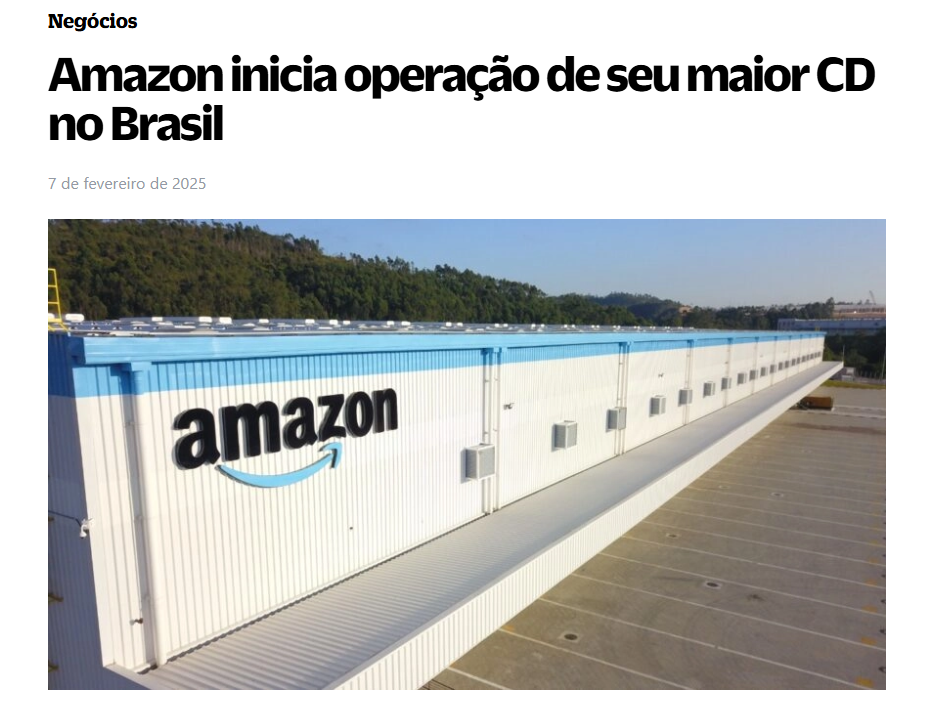
To meet business development needs, Amazon's 75,000-square-meter intelligent logistics center in São Paulo state has officially been put into operation. The facility is equipped with an automated sorting system, with a daily processing capacity of up to 500,000 items. Combined with the existing 12 regional delivery stations, delivery times in the São Paulo metropolitan area have been compressed to within 24 hours. Logistics Director Carlos Silva revealed that the construction of an overseas warehouse in Salvador, in the northeast, has entered the site selection stage, and future efforts will focus on improving delivery efficiency in remote areas.

Image source: braziljournal
Competitive Landscape Among the Top Three
Currently, Brazil's e-commerce market presents a diversified competitive landscape. Local platform Mercado Livre leads with a 12.4% market share, and its logistics network covers 95% of postal code areas. Shopee, leveraging a social e-commerce strategy, holds an 8.6% market share, mainly attracting the 18-25-year-old demographic. Amazon Brazil ranks third with a 7% share but is facing strong competition from TEMU—a platform under Pinduoduo—which achieved a market share jump from 3.7% to 5% within five months of entering the market, especially occupying a 9.2% share in product categories under $30.

Image source: Conversion
Policy Dividends and Compliance Challenges Coexist
Since 2024, the Brazilian government has allowed international cross-border shopping platforms to benefit from reduced import taxes on purchases over $50. This is a direct boon for Chinese sellers. Categories such as 3C electronics and small home appliances have significantly enhanced price competitiveness. For example, Chinese sports headphones are priced 25%-30% lower than local brands. However, this is accompanied by strict compliance requirements: the CPF/CNPJ tax registration system, which will be mandatory from July 1, INMETRO certification for electronic products, and component testing standards for textiles—all of which create entry barriers for cross-border sellers.

Image source: EqualOcean News
Market Prospects and Strategic Layout
Industry forecasts show that Brazil's e-commerce market will continue to expand at a compound annual growth rate of 12%, with transaction volume expected to exceed 250 billion reais (about 344 billion RMB) in 2025. Amazon is accelerating the layout of its logistics hub in the Manaus Free Trade Zone, which, once completed, will cover the markets of five northern states. Coupled with the platform's ongoing seller policy optimization, the advantages of the Chinese supply chain in 3C electronics, household daily necessities, and fashion accessories may be further unleashed.

Image source: Internet
Currently, Brazil's e-commerce market is at a stage where infrastructure is being improved, consumption is upgrading, and policy adjustments are overlapping, presenting a triple opportunity. For Chinese sellers, it is necessary to seize the short-term dividends brought by Amazon's cost reduction policies, but also to build long-term competitiveness, including localization compliance, supply chain responsiveness, and cross-cultural operations. This competition in Latin American e-commerce is essentially a contest of efficiency and localization capabilities.
(Note: All data in this article comes from public information. Please refer to official announcements for specific situations. The exchange rate is calculated at 1 real = 1.376 RMB.)
What this signal means for growth teams
This market signal should be treated as an operating prompt, not a standalone trend. The brand question is whether the team can connect TikTok content, creators, paid media, commerce readiness, and reporting into one measurable growth cycle.
Commercial read
- Market signal: TikTok Marketing Information and Solutions
- Published: March 6, 2025
- Commercial lens: TikTok Ads, creators, TikTok Shop, live commerce, and reporting.
- Source transparency: the original source linked in this article
What brands should do next
- Identify the market, audience, product group, and KPI this signal could affect.
- Turn the insight into a small TikTok creative, creator, Shop, or paid media test before scaling spend.
- Add FAQ, offer clarity, product proof, and contact paths so traffic can convert instead of only reading.
- Review weekly performance across reach, click quality, Shop actions, creator output, and revenue impact.
Tuke Marketing helps brands connect TikTok Ads, creator partnerships, TikTok Shop operations, live commerce, and reporting into one accountable operating system.
What should brands do with this TikTok signal?
Brands should translate the signal into a focused operating test across creative, creators, TikTok Shop readiness, paid media, and reporting before increasing budget.
How does Tuke Marketing evaluate this kind of news?
Tuke Marketing reviews platform news through market timing, category demand, creator supply, commerce readiness, and measurable growth actions.
When should a team contact Tuke about this topic?
A team should contact Tuke when it needs to turn a TikTok market signal into a practical launch, creator, advertising, live commerce, or reporting plan.
Source transparency: Tuke cites the original source linked in this article and adds its own operating analysis for brands evaluating TikTok growth decisions.