
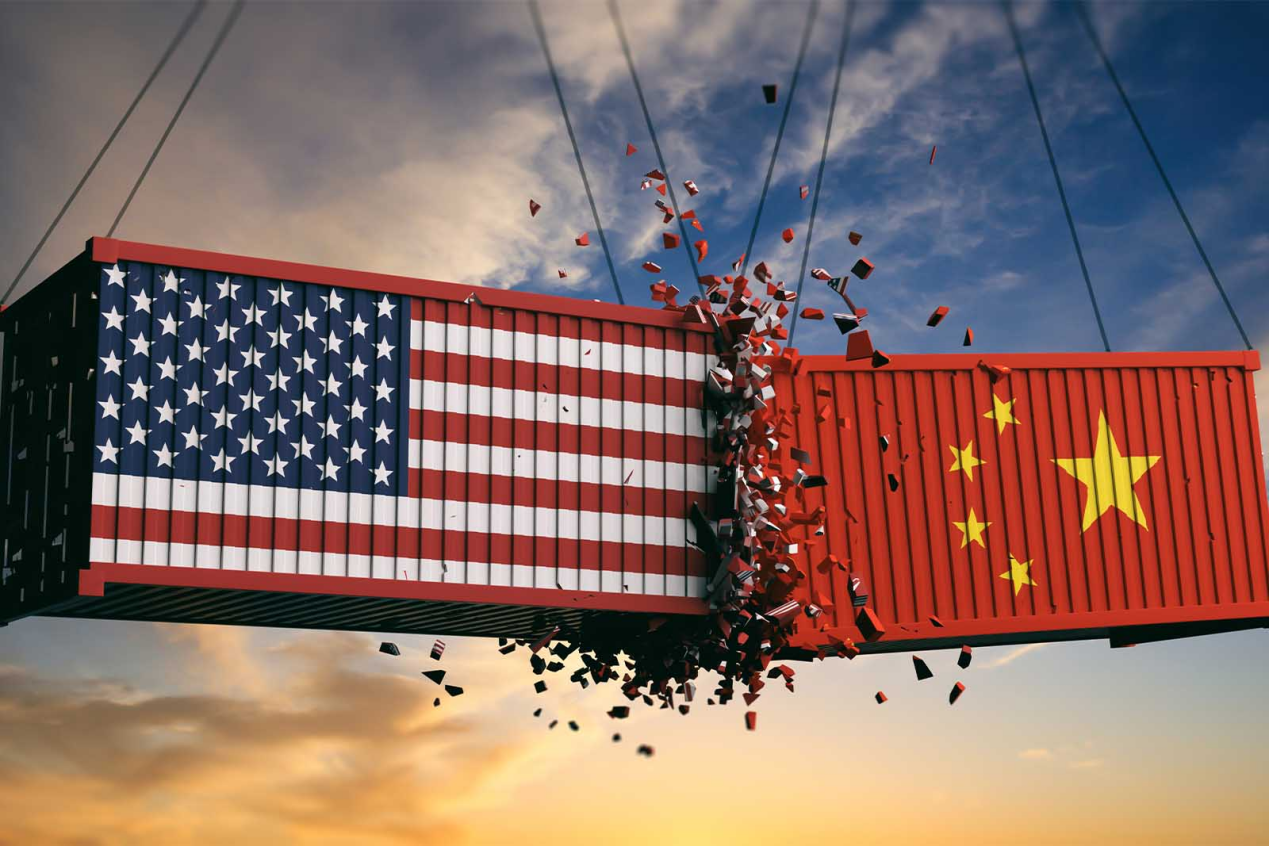
For more than a month, the China-US trade war has felt like riding a roller coaster.
As soon as Trump wielded the tariff stick, China immediately responded with a list of counter-tariffs.
The scene is like two masters dueling: you stab me, I must return the blow.

Image source: Internet
Trump’s “triple strike”, Chinese companies crunch numbers at midnight
It all started on February 1. Trump signed an executive order announcing a 10% tariff on Chinese goods. Many sellers breathed a sigh of relief at the time: “At least it’s not the rumored 60%.”
Mexico and Canada didn’t escape either; the 25% tariff was reinstated just like that.

The White House officially announced the tariff increase
But just 26 days later, Trump issued a new notice: starting March 4, another 10% would be added, bringing the total tariff rate directly to 20%.

Image source: BBC
The White House’s justification sounded righteous: “To stop fentanyl from flowing into the US.” But anyone can see this is just window dressing for the trade war. Some analysts pointed out: On April 2, the US will also implement “reciprocal tariffs”—this move is pure setup.
The ones suffering most are cross-border e-commerce sellers. Originally, a $100 product now requires an extra $20 just for tariffs. Some small business owners stayed up late with calculators, only to find that even if they grit their teeth and raise prices by 10%, they’ll still lose 30% of their orders.

White House official release (excerpt)
China’s countermeasure list revealed, targeting the “arteries” of the US economy
China also released a “precision strike” list, directly targeting the lifeblood of the US economy. Coal and liquefied natural gas were hit with a 15% tariff, while crude oil, agricultural machinery, large-displacement SUVs, and pickup trucks were hammered with a 10% increase.
Anyone can see these are aimed at America’s core industries. For example, pickup trucks: last year, the US sold nearly 3 million, making them the “national car.” Now, every imported Dodge Ram to China will cost nearly $5,000 more in tariffs.
Even harsher is the energy sector. Last year, the US exported $12 billion worth of liquefied natural gas to China. This tariff hike has turned long-term contracts into hot potatoes for traders.
This round of countermeasures wasn’t decided on a whim. Laws like the “Tariff Law” and “Foreign Trade Law” are clearly written, and the tariff list is precise down to the ten-digit customs code.

Announcement from the State Council Tariff Commission
The long-term battle begins—these signals are deadlier than tariffs
Don’t be fooled by the current excitement; the truly deadly trends are these two:
First, Trump clearly intends to use tariffs as a “long-term weapon.” There may be new moves on April 2, forcing China to make concessions on issues like fentanyl control. This “death by a thousand cuts” approach is far more torturous than a one-time tariff hike.
Second, the global supply chain is undergoing a major reshuffle. After the RCEP agreement took effect, tariff incentives in ASEAN, Japan, and South Korea became too attractive. Some business owners have calculated: moving part of the production line to Vietnam and then exporting to Japan and South Korea via RCEP actually costs less than stubbornly bearing US tariffs.

Image source: Internet
In conclusion
At this stage, the tariff war is no longer a simple “you raise tariffs, I retaliate.”
Behind it lies America’s $1.8 trillion fiscal hole, and a chokehold on China’s manufacturing upgrade.
For ordinary businesses, complaining about policy is useless—changing routes overnight is the real business. After all, in the crossfire of a trade war, the survivor may not be the biggest ship, but it will definitely be the one that turns the fastest.
(Note: The information in this article is compiled from various public news reports. For policy details, please refer to official releases.)
What this signal means for growth teams
This market signal should be treated as an operating prompt, not a standalone trend. The brand question is whether the team can connect TikTok content, creators, paid media, commerce readiness, and reporting into one measurable growth cycle.
Commercial read
- Market signal: TikTok Marketing Information and Solutions
- Published: March 6, 2025
- Commercial lens: TikTok Ads, creators, TikTok Shop, live commerce, and reporting.
- Source transparency: the original source linked in this article
What brands should do next
- Identify the market, audience, product group, and KPI this signal could affect.
- Turn the insight into a small TikTok creative, creator, Shop, or paid media test before scaling spend.
- Add FAQ, offer clarity, product proof, and contact paths so traffic can convert instead of only reading.
- Review weekly performance across reach, click quality, Shop actions, creator output, and revenue impact.
Tuke Marketing helps brands connect TikTok Ads, creator partnerships, TikTok Shop operations, live commerce, and reporting into one accountable operating system.
What should brands do with this TikTok signal?
Brands should translate the signal into a focused operating test across creative, creators, TikTok Shop readiness, paid media, and reporting before increasing budget.
How does Tuke Marketing evaluate this kind of news?
Tuke Marketing reviews platform news through market timing, category demand, creator supply, commerce readiness, and measurable growth actions.
When should a team contact Tuke about this topic?
A team should contact Tuke when it needs to turn a TikTok market signal into a practical launch, creator, advertising, live commerce, or reporting plan.
Source transparency: Tuke cites the original source linked in this article and adds its own operating analysis for brands evaluating TikTok growth decisions.