
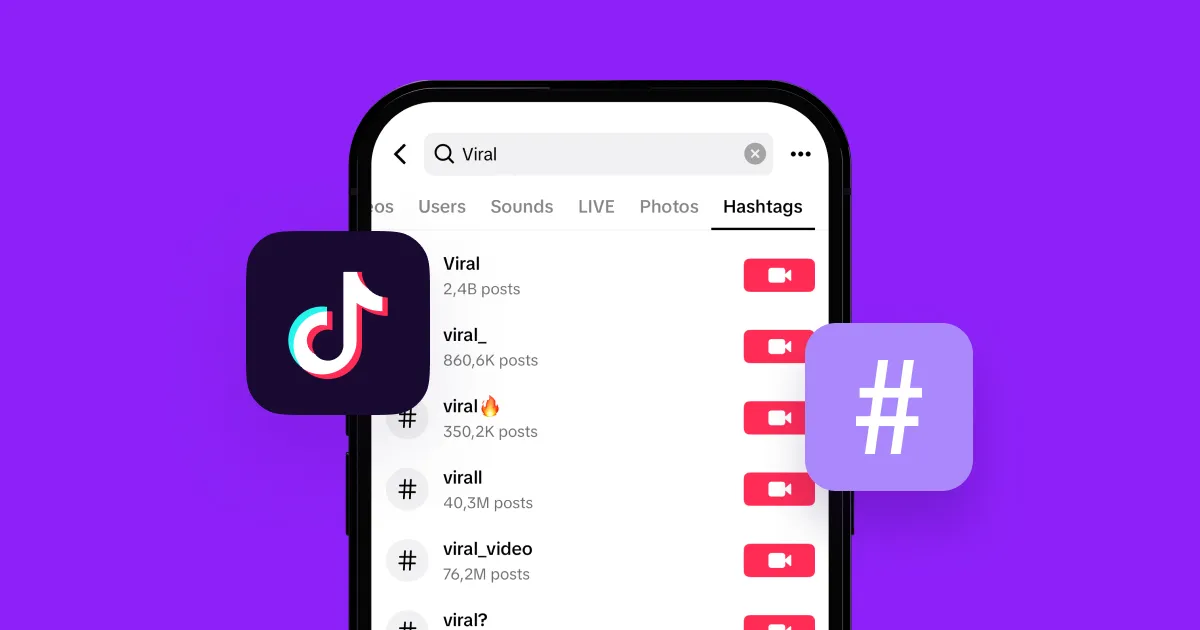
On TikTok, hashtags are like the “compass” of traffic.
If used correctly, your video can go viral; if used incorrectly, even the best content may sink without a trace.
But many brands fall into a trap: either piling on dozens of irrelevant hashtags, or only using self-indulgent brand hashtags, resulting in views stuck in the triple digits.
Today, Tuke will break down 3 practical strategies to teach you how to use hashtags to unlock TikTok’s traffic secrets!

Image source: Internet
1. Choosing Hashtags: The “Core + Trend + Long-tail” Trio
Many brands mistakenly believe that the more hashtags, the greater the exposure, but TikTok’s algorithm values precise matching between hashtags and content. The ideal hashtag combination = 1-2 core hashtags + 1-2 trending hashtags + 3-5 long-tail hashtags.
Core hashtags: Directly related to the brand or product, such as #NikeRunning (Nike running series);
Trending hashtags: Tap into platform hot topics, such as #SummerVibes (seasonal hot topic);
Long-tail hashtags: Refine scenarios or audiences, such as #WorkoutMom (fitness moms community).
Case Study: Red Bull’s Energy Hashtag Matrix
When promoting energy drinks, Red Bull uses the core brand hashtag #RedBullGivesYouWings (brand slogan), adds trending hashtags like #ExtremeSports challenge, and refines with long-tail hashtags like #SnowboardTricks to reach extreme sports enthusiasts. This combination allows Red Bull’s content to precisely reach target users while leveraging hot topics for greater exposure, with related videos exceeding 230 million views.

Image source: TikTok
2. Combining Hashtags: Brand Challenges + User Co-creation, Triggering UGC Viral Growth
Simply using brand hashtags rarely breaks out, but through the “challenge hashtag + user co-creation” model, you can spark ordinary users’ enthusiasm and create viral content.
Mainly divided into three steps:
1. Design simple and easy-to-copy challenges, such as dance moves or creative product usage;
2. Use reward mechanisms (such as cash or products) to encourage users to post content with hashtags;
3. Brand accounts interact in a timely manner, liking and commenting on quality UGC (user-generated content).
Case Study: e.l.f. Cosmetics’ “Epic Challenge”
Beauty brand e.l.f. launched the #EyesLipsFace challenge, encouraging users to create 15-second makeup videos with brand products and the brand’s theme song. In just 3 days, the hashtag surpassed 1 billion views, ultimately attracting over 5 million participants and even propelling the song onto the Billboard music chart. This zero-ad-spend campaign relied solely on hashtag virality to bring e.l.f. over 120,000 new customers.

Image source: TikTok
3. Optimizing Hashtags: Dynamic Testing + Cross-platform Reuse, Continuously Squeezing Out Traffic
Hashtag strategy is not a one-time thing. Brands need to regularly monitor hashtag popularity, eliminate inefficient hashtags, and reuse trending keywords from other platforms.
A/B Testing Method: Publish the same content with different hashtag groups and compare views and engagement rates;
Cross-platform Traffic: “Transplant” high-traffic keywords from Instagram, YouTube, etc. to TikTok;
Avoid Pitfalls: Avoid banned words (such as absolute terms), and reduce duplicate hashtags (such as using both #Fitness and #FitnessGoals).
Case Study: Gymshark’s “Hashtag Iteration Technique”
Fitness brand Gymshark used the generic hashtag #GymLife to promote new workout leggings at first, but views stagnated. Later, A/B testing revealed that the long-tail hashtag #SquatProofLeggings (anti-embarrassment leggings) resonated more with female users, so they immediately adjusted their strategy. At the same time, they synced the Instagram hot topic #FitCheck (outfit check-in) to TikTok, and related video views soared by 600%, with the product selling out.

Image source: TikTok
The Essence of Hashtags is “Content Router”
TikTok hashtags aren’t mystical; they’re precise distribution tools based on user interests.
Brands need to abandon the “big and comprehensive” mindset and instead use “sniper logic”: focus on core scenarios, bundle trending traffic, and inspire user co-creation.
Just like Nike replaced the usual #JustDoIt with #PlayInside (stay-at-home workouts) during the pandemic, fitting the home scenario while conveying brand spirit, ultimately achieving both brand and sales goals.
Remember, the core of hashtag strategy is not chasing hot topics, but turning hot topics into your brand’s home field.
What this signal means for growth teams
This market signal should be treated as an operating prompt, not a standalone trend. The brand question is whether the team can connect TikTok content, creators, paid media, commerce readiness, and reporting into one measurable growth cycle.
Commercial read
- Market signal: TikTok marketing tips - short video marketing methods
- Published: February 27, 2025
- Commercial lens: TikTok Ads, creators, TikTok Shop, live commerce, and reporting.
- Source transparency: the original source linked in this article
What brands should do next
- Identify the market, audience, product group, and KPI this signal could affect.
- Turn the insight into a small TikTok creative, creator, Shop, or paid media test before scaling spend.
- Add FAQ, offer clarity, product proof, and contact paths so traffic can convert instead of only reading.
- Review weekly performance across reach, click quality, Shop actions, creator output, and revenue impact.
Tuke Marketing helps brands connect TikTok Ads, creator partnerships, TikTok Shop operations, live commerce, and reporting into one accountable operating system.
What should brands do with this TikTok signal?
Brands should translate the signal into a focused operating test across creative, creators, TikTok Shop readiness, paid media, and reporting before increasing budget.
How does Tuke Marketing evaluate this kind of news?
Tuke Marketing reviews platform news through market timing, category demand, creator supply, commerce readiness, and measurable growth actions.
When should a team contact Tuke about this topic?
A team should contact Tuke when it needs to turn a TikTok market signal into a practical launch, creator, advertising, live commerce, or reporting plan.
Source transparency: Tuke cites the original source linked in this article and adds its own operating analysis for brands evaluating TikTok growth decisions.