
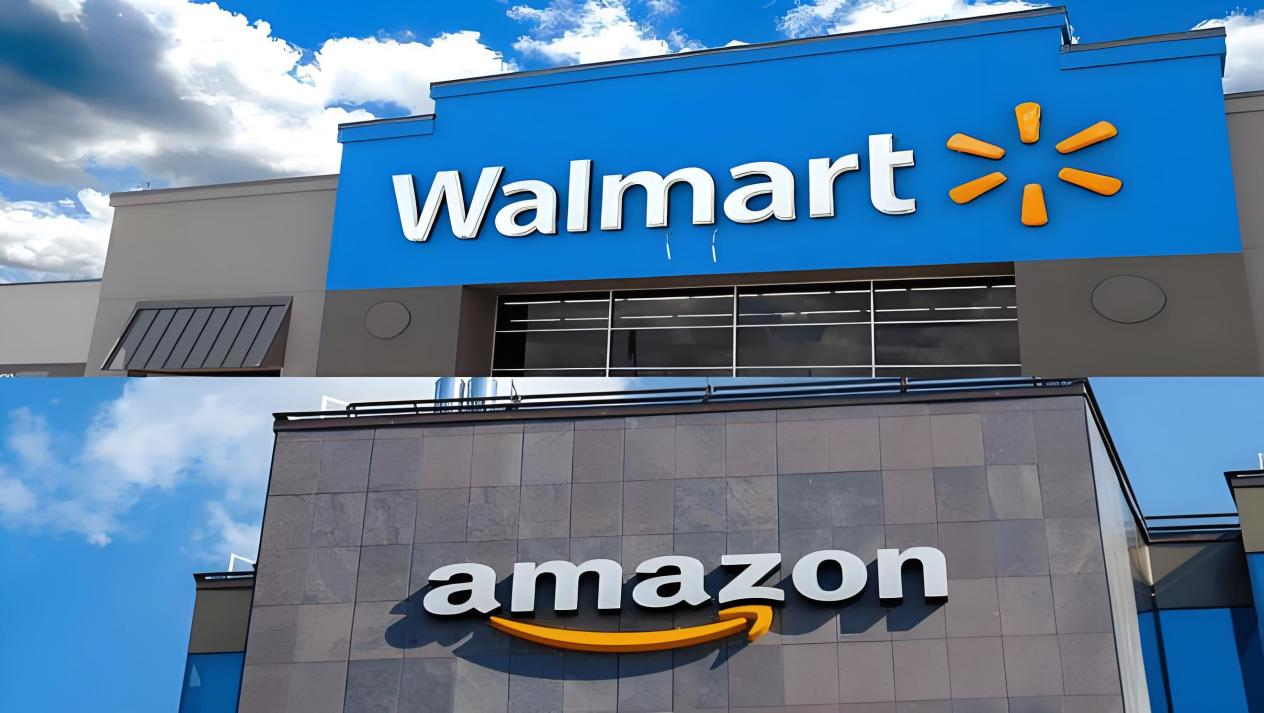
In 2025, artificial intelligence (AI) has sparked an unprecedented wave of enthusiasm in the global e-commerce industry. As the two giants in the global cross-border e-commerce sector, Amazon and Walmart are not only ramping up their investments, but also fiercely competing in technology research and development, market applications, and user experience.

Image source: Internet
1. Giants Take the Lead, AI Investment Race Fully Launched
It is reported that Amazon plans to increase its capital expenditure to $100 billion this year, with a significant portion allocated to AI research and applications.
In fact, Amazon's investment in AI is nothing new. At the end of last year, it launched the AI large model codenamed "Olympus," a technological breakthrough that enabled significant progress in image, text, and video content processing. Entering 2025, Amazon has introduced the DeepSeek R1 foundational model to further enrich its AI platform, providing users with smarter services and personalized recommendations.

Image source: Internet
On the other hand, Walmart is not to be outdone, having launched an AI coding assistant tool designed specifically for developers to improve code delivery efficiency and reduce errors. According to statistics, in 2024 Walmart saved 4 million work hours with the help of AI tools, greatly improving developer productivity. This year, the technology will be further expanded to cover all development teams in North America and India, and is expected to have a profound impact on Walmart's digital transformation.
From the current trend, the competition between Amazon and Walmart in the AI field is no longer limited to the development of single functions, but is permeating the entire industry chain, striving to achieve intelligent upgrades in every aspect from supply chain management, consumer experience, product recommendations to back-end operations.

Image source: Internet
2. AI+E-commerce Booming, Reshaping Industry Structure
AI technology is profoundly changing the development trajectory of the e-commerce industry. From intelligent recommendations, targeted advertising, dynamic pricing to virtual shopping assistants, AI has become the new engine driving the growth of e-commerce. In addition to Amazon and Walmart, other international e-commerce platforms are also accelerating their AI technology deployment.
At the beginning of this year, eBay announced a partnership with OpenAI to jointly develop the AI virtual shopping assistant "Operator," aiming to help users find desired products more quickly and accurately, thereby enhancing the shopping experience and platform sales. The well-known US secondhand e-commerce platform Poshmark also launched a feature called "Smart List AI," which provides sellers with intelligent product listing generation services, significantly reducing operational costs for sellers.

Image source: Internet
In addition to traditional e-commerce giants, social e-commerce platforms are also accelerating the application of AI technology, especially emerging platforms such as TikTok Shop, which are combining short videos and live-streaming sales with AI recommendation algorithms to provide consumers with a more precise shopping experience and help merchants achieve higher conversion rates.

Image source: Internet
Conclusion
It is foreseeable that in the future, AI will become the new engine of the e-commerce industry, reshaping the global e-commerce market structure. Whether it is Amazon, Walmart, or other e-commerce giants such as eBay and Poshmark, all are accelerating their layout in the AI field, vying for the right to speak in the era of intelligent e-commerce.
This technology race is not only a contest of traffic and user experience, but also the key to reconstructing the future business ecosystem.
For e-commerce platforms, whoever can seize the dividends of AI development first will likely gain an absolute advantage in future global e-commerce competition. For consumers, AI will bring a more convenient, personalized, and efficient shopping experience, ushering in a new era for the e-commerce industry.
What this signal means for growth teams
This market signal should be treated as an operating prompt, not a standalone trend. The brand question is whether the team can connect TikTok content, creators, paid media, commerce readiness, and reporting into one measurable growth cycle.
Commercial read
- Market signal: TikTok Marketing Information and Solutions
- Published: February 26, 2025
- Commercial lens: TikTok Ads, creators, TikTok Shop, live commerce, and reporting.
- Source transparency: the original source linked in this article
What brands should do next
- Identify the market, audience, product group, and KPI this signal could affect.
- Turn the insight into a small TikTok creative, creator, Shop, or paid media test before scaling spend.
- Add FAQ, offer clarity, product proof, and contact paths so traffic can convert instead of only reading.
- Review weekly performance across reach, click quality, Shop actions, creator output, and revenue impact.
Tuke Marketing helps brands connect TikTok Ads, creator partnerships, TikTok Shop operations, live commerce, and reporting into one accountable operating system.
What should brands do with this TikTok signal?
Brands should translate the signal into a focused operating test across creative, creators, TikTok Shop readiness, paid media, and reporting before increasing budget.
How does Tuke Marketing evaluate this kind of news?
Tuke Marketing reviews platform news through market timing, category demand, creator supply, commerce readiness, and measurable growth actions.
When should a team contact Tuke about this topic?
A team should contact Tuke when it needs to turn a TikTok market signal into a practical launch, creator, advertising, live commerce, or reporting plan.
Source transparency: Tuke cites the original source linked in this article and adds its own operating analysis for brands evaluating TikTok growth decisions.