
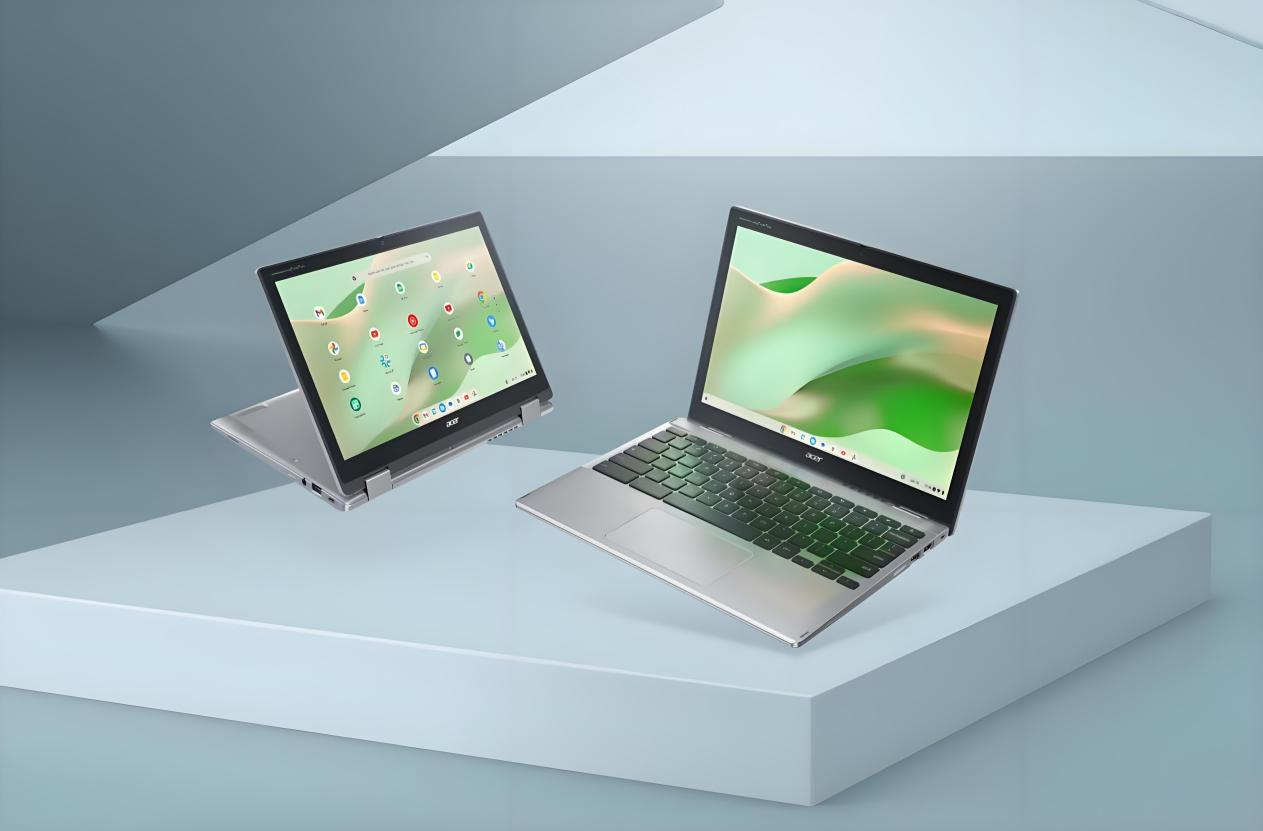
A small Taiwanese company that started with only $35,000 in initial capital, 7 employees, and couldn't even make a calculator, has, after 40 years of persistence and transformation, become the world's fourth largest PC manufacturer!
Moreover, thanks to its successful layout in multiple fields such as e-sports, monitors, and projectors, it has gradually become a brand spanning several technology industries, with its influence covering many countries.
This company isAcer.

Image source: Acer official website
Acer's brand founder, Stan Shih, was born into a poor family in Changhua, Taiwan.
Reportedly, Stan Shih showed an interest in technology from a young age. He was admitted to National Chiao Tung University in Taiwan, earned a degree in electronic engineering, and entered the Institute of Electronics for further study as the top student.
After graduation, he worked at Universal Electronics and Rongtai Electronics in Taiwan, accumulating rich industry experience.
In 1976, Stan Shih decided to co-found "Multitech International" with five shareholders, which was the predecessor of the Acer brand. At that time, the company had only 7 employees and $35,000 in capital, mainly engaged in the research and production of calculators.
As time went by, the Acer brand gradually expanded its product line, launching innovative products such as the "Dragon" Chinese computer, and its reputation in the market steadily increased.
By 1987, the company was officially renamed Acer Incorporated and successfully went public in 1988.

Image source: Internet
However, the growth of the Acer brand was not all smooth sailing.
According to records, in the early 1990s, Acer faced a severe financial crisis. There were conflicts in the company's top management philosophies, and the rise of brands such as Dell and HP made market competition increasingly fierce, causing Acer to fall into difficulties for a time.
Faced with these challenges, Stan Shih did not lose heart. Relying on his persistence in technological research and development and keen insight into market demand, he proposed the "smiling curve" theory, believing that the company should focus on R&D design and brand marketing to obtain higher added value.
In addition, he promoted reforms in the management structure, dividing the company into marketing-oriented and manufacturing-oriented business groups, which improved autonomy and flexibility, reduced management costs, and accelerated operational efficiency.
These measures helped the Acer brand successfully weather the crisis, gradually transform, and resume growth.

Dell, HP and other brands Image source: Internet
It is understood that after entering the 21st century, in order to gain a foothold in the market, the Acer brand has also been striving to innovate and bring consumers a better experience.
For example, in 2003, the Acer brand launched the Aspire home computer series, allowing consumers to use computers at home, making it more convenient. In 2007, it also launched home and business laptops to meet the multiple needs of consumers.

Image source: Internet
To accelerate its conquest of the global market, the Acer brand has adopted both online+offline strategies.
Online, Acer uses Amazon and other platforms as core sales channels. In recent years, it has also increased its investment in TikTok, collaborating with influencers to release creative short videos and regularly holding TikTok challenge events.
Offline, Acer actively cooperates with globally renowned retailers, especially in the United States where it has established long-term partnerships with large chain stores such as Best Buy, with dedicated display areas.
This marketing model enables the Acer brand to more efficiently cover different consumer groups worldwide, further increasing exposure and enhancing consumers' purchasing experience and brand trust.

Image source: TikTok
Conclusion
How long does it take for a small business to become a global PC giant?
The Acer brand has provided a reference answer.
When established companies let go of their burdens and embrace change with a "second entrepreneurship" mindset, the story of turning the tide against the wind may have just begun.
For Chinese companies striving in overseas markets, believe that success is already not far away!
What this signal means for growth teams
This market signal should be treated as an operating prompt, not a standalone trend. The brand question is whether the team can connect TikTok content, creators, paid media, commerce readiness, and reporting into one measurable growth cycle.
Commercial read
- Market signal: TikTok marketing tips - short video marketing methods
- Published: February 13, 2025
- Commercial lens: TikTok Ads, creators, TikTok Shop, live commerce, and reporting.
- Source transparency: the original source linked in this article
What brands should do next
- Identify the market, audience, product group, and KPI this signal could affect.
- Turn the insight into a small TikTok creative, creator, Shop, or paid media test before scaling spend.
- Add FAQ, offer clarity, product proof, and contact paths so traffic can convert instead of only reading.
- Review weekly performance across reach, click quality, Shop actions, creator output, and revenue impact.
Tuke Marketing helps brands connect TikTok Ads, creator partnerships, TikTok Shop operations, live commerce, and reporting into one accountable operating system.
What should brands do with this TikTok signal?
Brands should translate the signal into a focused operating test across creative, creators, TikTok Shop readiness, paid media, and reporting before increasing budget.
How does Tuke Marketing evaluate this kind of news?
Tuke Marketing reviews platform news through market timing, category demand, creator supply, commerce readiness, and measurable growth actions.
When should a team contact Tuke about this topic?
A team should contact Tuke when it needs to turn a TikTok market signal into a practical launch, creator, advertising, live commerce, or reporting plan.
Source transparency: Tuke cites the original source linked in this article and adds its own operating analysis for brands evaluating TikTok growth decisions.