
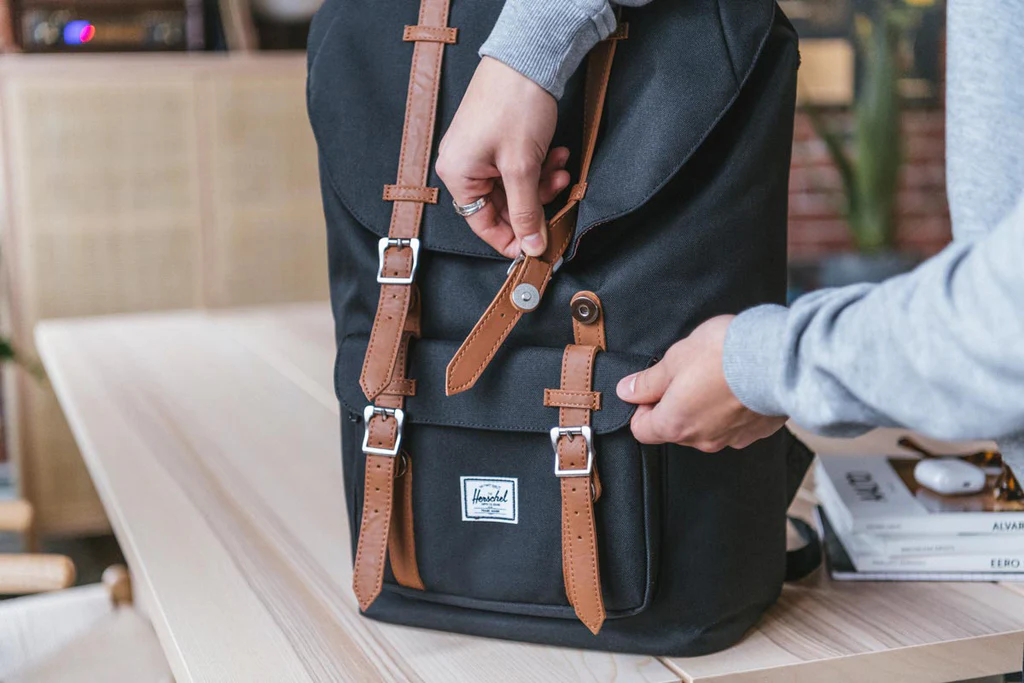
You may not have heard of the brand Herschel, but you’ve definitely seen their backpacks.
On the subway, on campus, even while traveling, that classic flap design and leather-buckle backpack is simply “everywhere.” When people think of backpacks, many immediately picture Herschel.
From an inconspicuous small town in Canada to today’s global “internet sensation,” Herschel has completed a stunning transformation in just ten years.With so many choices in the backpack industry, how did Herschel manage to stand out?
Today, let’s talk about how Herschel went step by step from “niche design” to “global phenomenon brand.”

The Perfect Combination of Vintage and Modern
Herschel’s design can definitely be called its secret weapon. From the very beginning, it didn’t take the “conventional route.”
Most backpacks are either highly functional or focus on a sporty look; almost no one thought to combine vintage style with modern flair. But Herschel did just that.
Its classic Little America backpack not only features a simple design and unique color combinations, but is also full of retro vibes. The flap, leather buckles, and drawstring closure—old-school design paired with modern colors—instantly caught the attention of young consumers.

Besides looking great, Herschel backpacks are also “smart.” They balance practicality, with built-in laptop compartments and multimedia pockets, making them perfect for work, school, or travel.
The soul of Herschel’s design is“Aesthetics and practicality coexist”, and this has won the hearts of countless young consumers. Stylish and spacious, it’s simply a must-have item for young people’s lives.

More Than Just a Backpack—It’s a Lifestyle
Just being “good-looking” and “practical” isn’t enough to give Herschel such success. Its lasting popularity among backpack brands comes from the deep cultural meaning it gives to its products, successfully building an emotional connection with consumers.
From the start, the brand has conveyed a sense of freedom and adventure:“Put on a Herschel and go explore the unknown world.” For young people today who value individuality and self-expression, this brand is not just a backpack—it’s an expression of their lifestyle and attitude.
Of course, Herschel isn’t just about fashion and function—it’s also “eco-friendly.”
As environmental awareness grows, Herschel launched the Eco series, making backpacks from recycled plastic bottles. Each backpack is made from 11 to 22 recycled bottles, with almost every part—from the outer material to the lining and zippers—using recycled resources, and the texture is still excellent.
In this way, Herschel not only contributes to environmental protection but also meets consumers’ demand for sustainable fashion, further enhancing the brand’s sense of social responsibility and market competitiveness.

Herschel’s new Eco series bags made from eco-friendly materials
From Backpacks to Full-Category Expansion—Building a Complete Ecosystem
Herschel’s success doesn’t stop there. Its market expansion is also remarkable.
The brand’s positioning is very clear—it’s not just a backpack, but a part of life. From classic models to multifunctional series, Herschel has gradually expanded its product line. Besides backpacks, there are suitcases, apparel, and accessories, covering almost every aspect of young people’s lives.
Herschel also targeted overseas markets early on, breaking boundaries through social media platforms and quickly attracting a large number of loyal fans. Whether it’s fashion photos on Instagram or brand stories on Facebook, Herschel has built a global brand image through online marketing and user interaction.
Today, its backpacks are found in 72 countries worldwide, becoming favorites among trendsetters everywhere.

Image source: TikTok


Herschel’s independent site gets 1.8 million monthly visits, with 410,000 organic visits per month
In summary, Herschel’s success is no accident—it’s the result of unique design, deep brand culture, sharp market insight, and global strategy working together. From an inconspicuous small town to a global backpack brand, Herschel provides a perfect “going global” case study.
If you also have a brand dream and want to go from niche to global, you might find some inspiration from Herschel’s success: find a market gap, dig deep into brand culture, keep innovating, and go global—you could be the next “internet-famous brand.”
What this signal means for growth teams
This market signal should be treated as an operating prompt, not a standalone trend. The brand question is whether the team can connect TikTok content, creators, paid media, commerce readiness, and reporting into one measurable growth cycle.
Commercial read
- Market signal: TikTok marketing tips - short video marketing methods
- Published: November 25, 2024
- Commercial lens: TikTok Ads, creators, TikTok Shop, live commerce, and reporting.
- Source transparency: the original source linked in this article
What brands should do next
- Identify the market, audience, product group, and KPI this signal could affect.
- Turn the insight into a small TikTok creative, creator, Shop, or paid media test before scaling spend.
- Add FAQ, offer clarity, product proof, and contact paths so traffic can convert instead of only reading.
- Review weekly performance across reach, click quality, Shop actions, creator output, and revenue impact.
Tuke Marketing helps brands connect TikTok Ads, creator partnerships, TikTok Shop operations, live commerce, and reporting into one accountable operating system.
What should brands do with this TikTok signal?
Brands should translate the signal into a focused operating test across creative, creators, TikTok Shop readiness, paid media, and reporting before increasing budget.
How does Tuke Marketing evaluate this kind of news?
Tuke Marketing reviews platform news through market timing, category demand, creator supply, commerce readiness, and measurable growth actions.
When should a team contact Tuke about this topic?
A team should contact Tuke when it needs to turn a TikTok market signal into a practical launch, creator, advertising, live commerce, or reporting plan.
Source transparency: Tuke cites the original source linked in this article and adds its own operating analysis for brands evaluating TikTok growth decisions.