
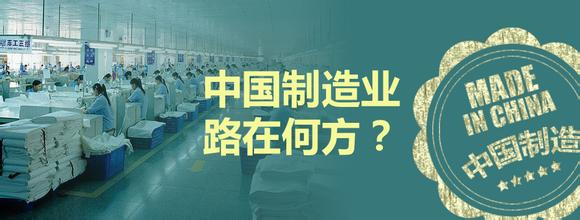
In recent years, with the accelerated changes in the global economy, the traditional manufacturing landscape is being disrupted. The era of gaining advantages through low-cost OEM production has gradually passed, and more and more manufacturing enterprises are beginning to realize thatsimple production is no longer sufficient to support long-term development. The global market’s requirements for products are no longer just “well-made,” but rather “brand creation” and “added value creation.”
So, how can companies transform from OEM to independent brands? How can they secure a place in the global market? Cross-border e-commerce and innovation-driven strategies have become the core pathways for manufacturing enterprises to go global.

From OEM to Own Brand: The Breakthrough Path for Manufacturing Enterprises
The first pain point for manufacturing enterprises is often their reliance on the OEM model. Although this model can bring certain revenues, the profit margins are limited and are always subject to the control of external brands. When the global market changes, OEM enterprises face tremendous pressure.
To cope with this challenge, more and more companies are choosing to shift towards their own brands, hoping to gain higher profits and market discourse power through product innovation and branding.
Take Anker as an example, this company was originally a manufacturer for international brands, focusing on producing charging devices and other electronic accessories. However, with the explosion of the global smart device market, Anker realized that relying solely on OEM was not enough to cope with market changes.
Thus, it began to launch its own products through independent research and development, design, and brand building, and leveraged cross-border e-commerce platforms such as Amazon to bring its brand to the global market. Today, Anker has become a globally renowned consumer electronics brand with annual sales reaching billions of dollars.
This case directly hits the pain point of manufacturing enterprises:how to transform from OEM and how to build an independent brand. Anker’s success shows that cross-border e-commerce platforms provide companies with opportunities for global exposure, while branding and innovation are the core elements to break the low value-added OEM model.

Cross-border E-commerce Empowers Brands to Go Global: Shortening the Sales Chain
For many manufacturing enterprises, another pain point lies in the complexity and inefficiency of sales channels.
In traditional foreign trade models, products must go through multiple layers of channels from manufacturers to end customers, including exporters, importers, and distributors, each layer squeezing profit margins. This not only reduces the company’s income, but also makes it difficult for manufacturers to interact directly with customers and obtain market feedback.
The rise of cross-border e-commerce has effectively solved this problem. Through e-commerce platforms, manufacturing enterprises can directly face global consumers, eliminating intermediate links, thereby improving profit margins and shortening the sales chain.
SHEIN is a very typical example.
This Chinese fast fashion e-commerce company sells a large number of garments directly to global consumers through its own platform and cross-border e-commerce, eliminating the role of middlemen and winning the international market with highly competitive prices.
More importantly, SHEIN has achieved an ultra-fast closed loop of design, production, and sales through data-driven supply chain management, successfully securing a place in the global fashion industry.
SHEIN’s model demonstrates thatmanufacturing enterprises can break the “multi-layer” problem of traditional foreign trade through cross-border e-commerce, delivering products directly to consumers’ hands, thereby gaining higher profitability and market control.

Digital Transformation: The Key to Enhancing Competitiveness
In the wave of globalization and digitalization, manufacturing enterprises not only need to transform their sales channels, but also need to upgrade their production and management models.Intelligent manufacturing anddigital management have become the core means to enhance enterprise competitiveness.
Through digital transformation, manufacturing enterprises can not only improve production efficiency, but also respond more flexibly to market demands and shorten product iteration cycles.
Galanz is a typical case of successful upgrading through digital transformation.
As a traditional home appliance manufacturer, Galanz started with OEM microwave ovens and occupied a certain market share globally. However, as market competition intensified, Galanz realized that only through intelligent manufacturing and digital management could it further expand its brand influence and establish itself in the global home appliance market.
By building smart factories and promoting digital transformation, Galanz has not only improved production efficiency, but can also provide customized products and services to global consumers through cross-border e-commerce platforms.
This model directly answersanother core question for manufacturing enterprises: how to maintain competitiveness in the international market?
Digital transformation has brought more efficient production methods and more precise market responses, allowing Galanz to maintain innovative vitality in the fiercely competitive home appliance market.

Brand Building: The Winning Formula in the International Market
Whether through cross-border e-commerce platforms or digital transformation,brand building is a key link that cannot be ignored in the process of manufacturing enterprises going global. Many manufacturing enterprises, although they have excellent products, cannot obtain higher pricing power in the international market due to lack of brand awareness.
Haier, as a representative of China’s manufacturing industry, has successfully established a strong brand image in the international market through years of brand building.
In the early days, Haier entered the European and American markets through mergers and acquisitions of overseas brands, but did not stop there. Through continuous technological innovation and brand upgrading, Haier successfully transformed into a global leading home appliance manufacturer.
Today, Haier is not only synonymous with home appliances, but also a representative of smart home and innovative technology. The key to its success is that Haier not only sells products to the international market, but also wins the trust of global consumers through localized operations, brand building, and innovative R&D.
Haier’s success provides a direction for manufacturing enterprises:products are just the foundation, brand is the key. Only through continuous brand building can manufacturing enterprises truly gain the initiative in the international market.

Conclusion: The Breakthrough Path for Manufacturing to Go Global
Manufacturing is in an era of accelerated integration of globalization and digitalization. Cross-border e-commerce, branding, and digital transformation have become important paths for enterprises to break through.
Only those enterprises that can break free from the constraints of OEM, disrupt traditional sales chains, and enhance competitiveness through innovation, branding, and digital management can achieve long-term development in the global market.
For every manufacturing enterprise,the path to going global is not just about “selling products,” but more about “taking the brand abroad”. By leveraging cross-border e-commerce platforms, utilizing intelligent manufacturing technologies, and capturing the needs of global consumers, manufacturing enterprises can transform from OEM factories to brand players in the global market,truly achieving the leap from manufacturing to “smart manufacturing”.
What this signal means for growth teams
This market signal should be treated as an operating prompt, not a standalone trend. The brand question is whether the team can connect TikTok content, creators, paid media, commerce readiness, and reporting into one measurable growth cycle.
Commercial read
- Market signal: TikTok marketing tips - short video marketing methods
- Published: October 8, 2024
- Commercial lens: TikTok Ads, creators, TikTok Shop, live commerce, and reporting.
- Source transparency: the original source linked in this article
What brands should do next
- Identify the market, audience, product group, and KPI this signal could affect.
- Turn the insight into a small TikTok creative, creator, Shop, or paid media test before scaling spend.
- Add FAQ, offer clarity, product proof, and contact paths so traffic can convert instead of only reading.
- Review weekly performance across reach, click quality, Shop actions, creator output, and revenue impact.
Tuke Marketing helps brands connect TikTok Ads, creator partnerships, TikTok Shop operations, live commerce, and reporting into one accountable operating system.
What should brands do with this TikTok signal?
Brands should translate the signal into a focused operating test across creative, creators, TikTok Shop readiness, paid media, and reporting before increasing budget.
How does Tuke Marketing evaluate this kind of news?
Tuke Marketing reviews platform news through market timing, category demand, creator supply, commerce readiness, and measurable growth actions.
When should a team contact Tuke about this topic?
A team should contact Tuke when it needs to turn a TikTok market signal into a practical launch, creator, advertising, live commerce, or reporting plan.
Source transparency: Tuke cites the original source linked in this article and adds its own operating analysis for brands evaluating TikTok growth decisions.