
A post-90s young man was selected by the 'godfather of DJI' and generated RMB 3.4 billion in one year! Kicked the former US giant out of the game
Another piece of America'sfig leafwasChinesecompanies tore down
Not long ago, when people talked about robot vacuums, the top spots were almost firmly occupied by overseas big brands. No one expected that domestic brands would come from behind and rewrite the global market landscape.
According to IDC data, in the second quarter of 2025, Chinese manufacturers saw a concentrated breakout in the global market.
From Shenzhen,Narwal (Yunjing)with8.5%its market share, successfullyentered the global top 5, directly pushing the former industry giant iRobot off the list.

Image source: IDC
A domestic brand that has been established for just ten years being able to complete such a comeback right under the noses of overseas giants—the story behind it is worth telling in detail.
Studied under the 'godfather of DJI', not fighting head-on in the vacuuming segment
Before outlining the story of Narwal's rapid breakout in the industry, let's start with the birth of the brand.
According to public information, Mr. Zhang, founder of Narwal (Yunjing), is a post-90s graduate of Shanghai Jiao Tong University. He came from a robotics competition background and has long been deeply engaged in this field.
In the early days of entrepreneurship, he also tried projects such as navigation for the blind and pet companion robots, but none of them were implemented.
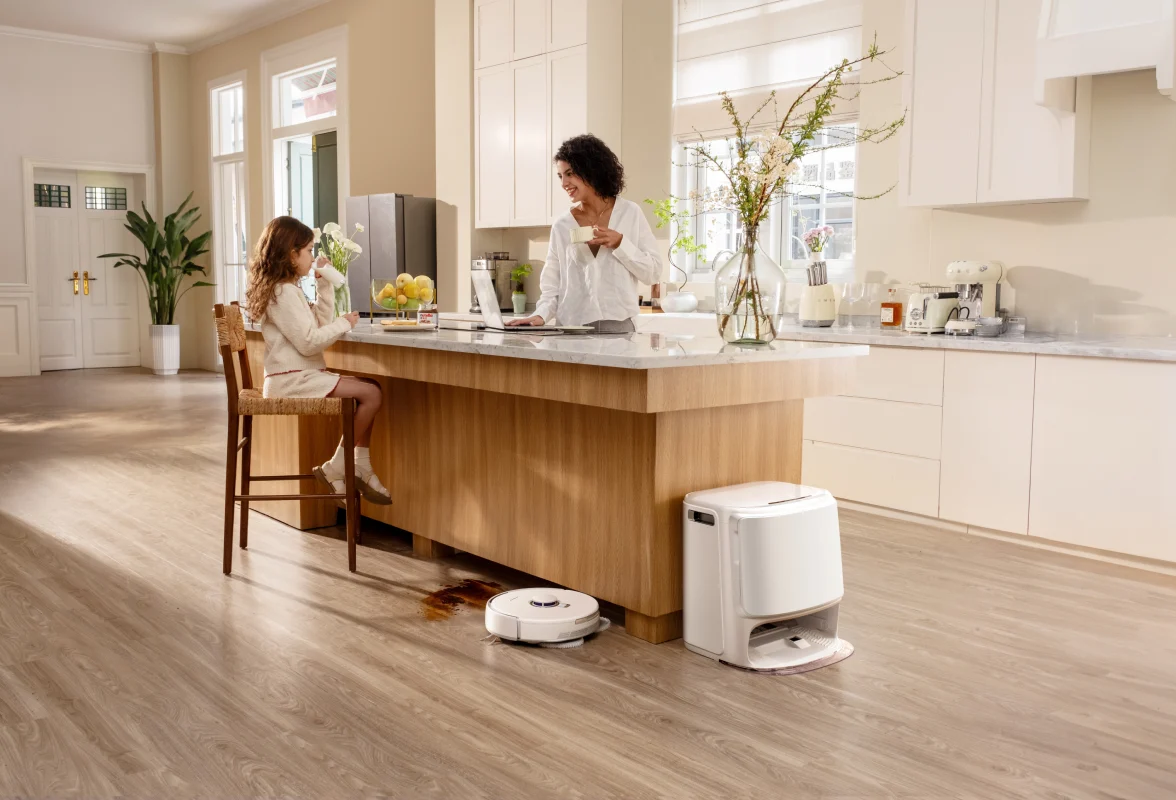
The opportunity to enter the robot vacuum segment came from his mother's daily complaints: mopping is laborious, and washing the mop is dirty and troublesome. This everyday complaint helped him capture a real market opportunity.

Image source: Google
At that time, international big brands such as iRobot designed their products mainly for European and American carpet environments, with vacuuming as the core focus. But most domestic households have tiles or wooden floors, so mopping is the real rigid demand.
If it could free people's hands and enable the machine to automatically clean the mop, it would carve out a differentiated path.
Thus, Mr. Zhang officially founded Narwal Robotics in Shenzhen in 2016. Because his entrepreneurial mentor Professor Li Zexiang was optimistic about this pain point direction, he provided early funding and incubation support.

Image source: Google
So a team of just over ten people continued to tackle the challenge in a cramped office space, focusing on the technical route of self-cleaning mop pads. Over three years, they refined core technologies such as structural design, base station water paths, and stain recognition, laying a solid technical foundation for the brand.
Pioneer of the world's first self-washing mop robot vacuum,First-day sales exceeded ten million
Unlike many peers, Narwal is one of the few brands that first tested the waters through overseas crowdfunding before officially launching in the domestic market.
2019 was a year of explosive sales growth for it; its J1 product (named Narwal T1 overseas) launched in the domestic market on Double 11.

Image source: Google
As the world's first robot vacuum equipped with a base station that automatically washes mops, its first-day sales exceeded ten million, directly disrupting the product paradigm of the time in which the industry emphasized vacuuming while mopping depended on manually hand-washing mop pads, and it quickly went viral.
Subsequently, Narwal continued to iterate its products and continuously improved the automatic water supply and drainage base station, achieving automatic water replenishment and wastewater discharge, eliminating the hassle of manual water changes.
After all, it is not difficult for a single product to sell explosively, but to continuously elevate brand value and keep the entire product line recognized by the market, solid product strength is still needed for support.

Image source: Google
Mopping demand goes global, and overseas markets usher in a window of opportunity
After gaining a firm foothold in the domestic market, going overseas became Narwal's next goal.
As we mentioned earlier, the common perception in early overseas markets was: robot vacuum = vacuuming tool.
But as more and more overseas apartments and detached houses choose ceramic tiles or hard wood floors, the market demand structure began to change, and overseas households' demand for cleaning products with mopping functions continued to rise.

Image source: Google
According to statistics released by Grand View Research:
The global cleaning robot market was valued at USD 7.2 billion in 2025,It is expected to grow from USD 8.8 billion in 2026 to USD 53.2 billion in 2033, with a compound annual growth rate of 29.3% during the period,The growth momentum is strong.

Image source: Grand View Research
Among them, North America dominates the global market, with a revenue share of as high as 31.3% in 2025. High-value premium markets such as Europe, South Korea, and Australia also maintained steady growth.
Since the market opportunity has arrived, and automatic mop washing happens to be Narwal's core advantage, the brand naturally needs to go out and explore.
Started planned overseas expansion and built sales networks through multiple channels
In 2022, Narwal officially launched large-scale overseas expansion, uniformly using the English brand name Narwal, taking a differentiated high-end route, and prioritizing the North American, European, South Korean, and Australian markets.
At the channel level, Narwal adopted a multi-platform parallel layout strategy:
On the one hand, it focused on third-party e-commerce positions centered on Amazon, with key operations on North American, European, and Australian sites, capturing search traffic and on-site advertising, making it the foundation of overseas sales.

Image source: Amazon
On the other hand, it entered local channels such as Otto and MediaMarkt online stores in Europe, Naver local e-commerce in South Korea, and Harvey Norman in Australia, aligning with local consumers' shopping habits instead of putting all traffic on Amazon.
In addition, Narwal built localized independent websites for each core market to accumulate an owned email audience, fully showcase product technology, competitor comparisons, and after-sales policies, and avoid the commissions and rule constraints of third-party platforms.

Image source: Narwal
After improving this sales network, Narwal's revenue also saw significant growth. According to industry media reports,In 2024, the brand's total annual revenueclimbedto 3.4 billion yuan.
Short videos dispel purchase concerns, and TikTok became a powerful seeding tool
Channels are the vehicle for transactions, but to make overseas consumers willing to pay, you also need to do user seeding well.
Especially for results-oriented products such as robot vacuums, it is difficult to intuitively persuade users with images and text; at this time, short videos with real-scene demonstrations are very suitable.
The content ecosystem of social media such as TikTok just amplified Narwal's product advantages and reduced user education costs.
On TikTok, the brand operates the official account @Narwal Robotics.
The account's content mainly consists of real-scene cleaning short videos, mopping ASMR, unboxing reviews, side-by-side comparisons, stain challenges, and major promotion activities such as Black Friday.
When publishing works, it also binds popular cleaning tags such as #cleantok to increase exposure and search reach, showcasing product advantages to potential customers from multiple angles.
Currently, @Narwal Robotics has gained 244,100 followers and accumulated a certain number of loyal fans.

Image source: TikTok
In addition to operating the official account, Narwal also cooperates with a large number of home and lifestyle creators to shoot products in real home scenes.
Among them, the bold and funny TikTok creator @corbinmillet is a typical example.
In the video, he sprinkles flour and cola on the floor to simulate daily stains, and in front of his parents demonstrates the Narwal robot's ability to clean powdery and liquid stains and automatically avoid obstacles.
Since its release, this video has surpassed one million views and reached 140,000 likes.
It is not hard to see that content that directly addresses real-life pain points is more likely to capture users' attention and dispel their purchase concerns.

Image source: TikTok
Conclusion
Looking back at Narwal's development path,it did not rely on any shortcuts, but on sticking with a sufficiently specific need to the very end.
The overseas market sounds grand, but at the practical level it is really just one real-life scenario after another—how to mop the floor, who will wash the mop cloth, and how to install the base station?
When domestic companies enter overseas markets, they do not necessarily have to squeeze into the most crowded track,Identify a neglected essential need, polish the product until no one can find fault with it, and the market will naturally respond.
What this signal means for growth teams
This market signal should be treated as an operating prompt, not a standalone trend. The brand question is whether the team can connect TikTok content, creators, paid media, commerce readiness, and reporting into one measurable growth cycle.
Commercial read
- Market signal: TikTok marketing tips - short video marketing methods
- Published: November 11, 2026
- Commercial lens: TikTok Ads, creators, TikTok Shop, live commerce, and reporting.
- Source transparency: the original source linked in this article
What brands should do next
- Identify the market, audience, product group, and KPI this signal could affect.
- Turn the insight into a small TikTok creative, creator, Shop, or paid media test before scaling spend.
- Add FAQ, offer clarity, product proof, and contact paths so traffic can convert instead of only reading.
- Review weekly performance across reach, click quality, Shop actions, creator output, and revenue impact.
Tuke Marketing helps brands connect TikTok Ads, creator partnerships, TikTok Shop operations, live commerce, and reporting into one accountable operating system.
What should brands do with this TikTok signal?
Brands should translate the signal into a focused operating test across creative, creators, TikTok Shop readiness, paid media, and reporting before increasing budget.
How does Tuke Marketing evaluate this kind of news?
Tuke Marketing reviews platform news through market timing, category demand, creator supply, commerce readiness, and measurable growth actions.
When should a team contact Tuke about this topic?
A team should contact Tuke when it needs to turn a TikTok market signal into a practical launch, creator, advertising, live commerce, or reporting plan.
Source transparency: Tuke cites the original source linked in this article and adds its own operating analysis for brands evaluating TikTok growth decisions.