
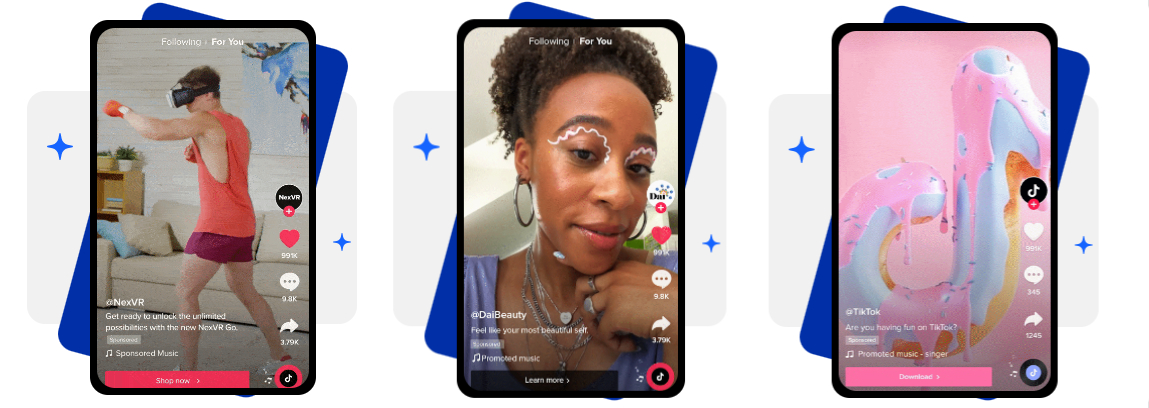
In cross-border e-commerce, the scariest thing is not a small budget, but spending the budget and not even seeing a splash. Many novice sellers are used to starting with “throwing a big budget at ads,” only to see ACOS soar above 50% while orders remain few. This traditional money-burning promotion model is being replaced by a more scientific and more sustainable approach.
Today let's break down this repeatedly validated full model of “product testing—scaling—stop loss,” and help you figure out: how money should be spent, when to increase the bet, and when to pull back.

Step 1: Product testing—validate real market demand at the lowest cost
The essence of product testing is not to find a “perfect product,” but to use the lowest cost to validate whether the market will actually buy. Product testing through TikTok paid traffic usually revolves around four directions: price range, product cards, script creatives, and influencer selling. You don't need to test all of them; just choose 1-2.
How exactly do you do it? Taking TikTok Shop as an example, the industry-standard practice is: test 5 new products per week (US market) or 10 or more (Southeast Asia), stock 30-50 units per product, and prepare 3-5 short videos for each product. In terms of budget, during the cold-start period it is recommended to keep the daily budget at 500-2000 yuan, focus spend on 2-3 core creatives, and quickly screen out high-quality creatives with CTR≥2%.

Image source: TikTok for Business
VTT massager’s product-testing playbook: In March 2025, Shenzhen’s VTT massager entered the Southeast Asian market through TikTok Shop. In the launch phase, the team edited together two 50-second videos from domestic footage for testing, and unexpectedly they went viral directly—views exceeded 10 million, bringing in the first batch of 300 orders.
This case illustrates a key principle: product testing does not require a big budget; one good creative is enough to help you validate demand.
Here are three core metric references for you: In the first stage, products with a click cost above $0.8 can be eliminated directly; in the second stage, those with a conversion rate below 1.2% should also be resolutely abandoned; in the third stage, only products with a repurchase rate above 15% are worth keeping.

Image source: Internet
Step 2: Scaling—once data validates, boldly increase the bet
Once you have identified stable creatives (recommended CTR≥2.5%, CVR≥3%) and a precise audience, you can enter the scaling stage.
But scaling is not simply and crudely adding money; the budget increase must be kept within 20% per day, otherwise it can easily trigger a system re-review, causing a model that was finally running well to be “reset to its original form.”
In terms of budget allocation, it is recommended to tilt most of the budget toward top-performing creatives while reserving about 10% of the budget to continuously test new creatives, preventing creative fatigue in old creatives.
In TikTok GMV Max ads, the core logic of scaling can be summarized as: cold start relies on “precision,” expansion relies on “adjustment,” and decline relies on “replacement.”

Image source: Internet
Step 3: Stop loss—daring to shut down is more important than daring to add money
Even the most brilliant creatives cannot escape “aesthetic fatigue.” When your ads show signals such as continuously declining ROI, increasingly poor conversions, or not spending even after lowering the ROI target, it means your ads have entered a decline phase.
Stop loss is divided into two levels: light stop loss is creative refresh, that is, when the main creatives become “sluggish,” immediately replace them with new high-quality creatives.
For example, if orders originally took off with “influencer recommendation” creatives, now switch to “user unboxing review” creatives to give the system a new stimulus point.
Heavy stop loss is directly shutting down and rebuilding. If after changing to new creatives and adjusting ROI there are still no conversions, don't hesitate—directly shut down this ad campaign and create a new one.
The stop-loss formula is actually very simple: when an ad campaign’s CPA (cost per conversion) exceeds 50% of the product’s gross profit, and there have been no conversions for 4 consecutive hours, shut it down immediately and transfer the budget to campaigns that are still profitable.
The essence of advertising is to serve profit. When a campaign can no longer create value, shutting it down in time is the wisest choice.

Image source: Internet
Final Thoughts
Product testing, scaling, and stop-loss—these three must form a closed loop.
Product testing helps you “find the right direction”—validate market demand with a small budget; scaling helps you “amplify your advantage”—scale up proven winning combinations; stop-loss helps you “preserve profits”—avoid continuously burning money on ineffective plans.
If any step fails, the entire promotion chain will run into problems. I hope this model can help you avoid more pitfalls and make more money in overseas ad buying.
What this signal means for growth teams
This market signal should be treated as an operating prompt, not a standalone trend. The brand question is whether the team can connect TikTok content, creators, paid media, commerce readiness, and reporting into one measurable growth cycle.
Commercial read
- Market signal: TikTok marketing tips - short video marketing methods
- Published: September 28, 2026
- Commercial lens: TikTok Ads, creators, TikTok Shop, live commerce, and reporting.
- Source transparency: the original source linked in this article
What brands should do next
- Identify the market, audience, product group, and KPI this signal could affect.
- Turn the insight into a small TikTok creative, creator, Shop, or paid media test before scaling spend.
- Add FAQ, offer clarity, product proof, and contact paths so traffic can convert instead of only reading.
- Review weekly performance across reach, click quality, Shop actions, creator output, and revenue impact.
Tuke Marketing helps brands connect TikTok Ads, creator partnerships, TikTok Shop operations, live commerce, and reporting into one accountable operating system.
What should brands do with this TikTok signal?
Brands should translate the signal into a focused operating test across creative, creators, TikTok Shop readiness, paid media, and reporting before increasing budget.
How does Tuke Marketing evaluate this kind of news?
Tuke Marketing reviews platform news through market timing, category demand, creator supply, commerce readiness, and measurable growth actions.
When should a team contact Tuke about this topic?
A team should contact Tuke when it needs to turn a TikTok market signal into a practical launch, creator, advertising, live commerce, or reporting plan.
Source transparency: Tuke cites the original source linked in this article and adds its own operating analysis for brands evaluating TikTok growth decisions.