
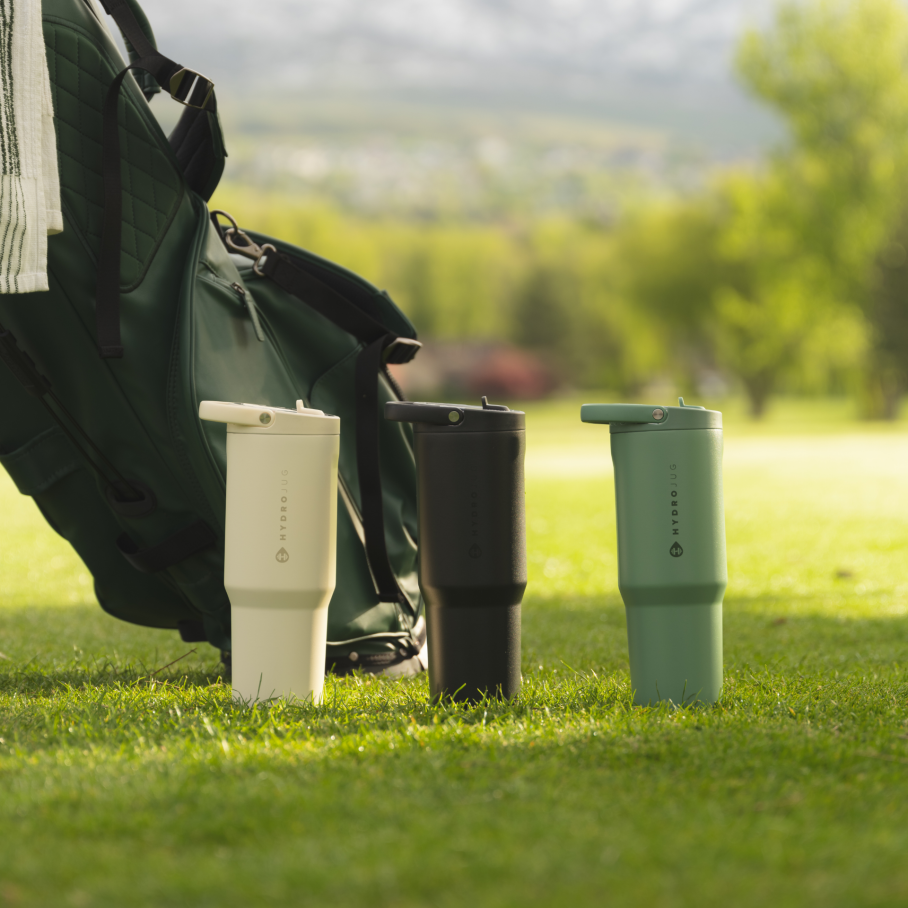
Over the past two years, everyone has probably noticed that many DTC drinkware brands have emerged in the U.S. market. Their average order values are similar, visual styles are similar, and even selling points are similar, but the gap is clearly there.
With the same $30–50 average order value, the same Instagram-style color schemes, and the same emphasis on leak-proof insulation, why are some brands booming while others remain lukewarm?
This question can perhaps be answered by looking at HydroJug.
According to Kalodata statistics,HydroJug's total sales on TikTok's U.S. store have exceeded $16.6742 million, with transaction volume in just the last 30 days reaching $964,900. This is no small achievement, and HydroJug has already established itself in the top tier of the drinkware category.

Image source: HydroJug
Starting from a 'big water jug,' HydroJug has been at it for 8 years.
HydroJug's story is not complicated.
In 2016, Hayden Wadsworth and his brother Jake founded HydroJug. Hayden noticed at the time that a fitness content creator was discussing the lack of water jugs on the market that were truly suitable for high-volume water intake, which sparked the entrepreneurial idea.
In the early stages of the startup, HydroJug started in a garage, and the first batch of products only came in three colors: white, black, and transparent.
Subsequently, the brand gradually expanded from plain large-capacity plastic jugs to accessories, insulated cups, and different usage scenarios. By 2020, HydroJug had sold over 900,000 products. In 2021, the company moved into a 50,000-square-foot warehouse, and the number of employees grew from 30 to 80.

Image source: HydroJug
Now, HydroJug's official website shows that the brand has been established for over 8 years, has sold more than 2 million water bottles cumulatively, has over 500,000 community members, and has an average rating of 4.8. The products have also gradually expanded from the original half-gallon jug to multiple series such as Traveler and Coffee Traveler.
This means HydroJug has completed a relatively obvious category upgrade: from 'a water jug with a large capacity' to a drinkware brand built around hydration, exercise, commuting, and daily life.

Image source: HydroJug
Why is there still room for growth in the water bottle market?
The market HydroJug operates in is not a sudden new track, but it still has relatively clear room for growth.
According to Grand View Research data,The size of the U.S. reusable water bottle market in 2024 was approximately $2.06 billion, and the compound annual growth rate is expected to be 4.5% from 2025—2030, reaching $2.68 billion by 2030.The report argues that consumers' concern about plastic pollution, healthy lifestyles, and increased participation in outdoor activities are all important factors in market growth.

Image source: Grand View Research
From the demand side, American adults drink an average of about 44 ounces of plain water per day, according to CDC statistics based on NHANES data from 2015—2018. In other words, 'maintaining hydration' is itself a long-standing daily need.
The change in the water bottle industry in recent years is that consumers consider more and more factors when purchasing products. Capacity, sealing, and insulation performance are still important, but color, appearance, portability, and whether it fits specific scenarios such as commuting and fitness have gradually become part of product competition.
In 2026, when Good Housekeeping tested the HydroJug, it mentioned thatConsumers nowadays buy trendy water bottles not just for drinking—colors and appearance have also become a form of personal expression.。
So, for HydroJug, the market opportunity is not just that "Americans need water bottles," but that consumers are willing to pay for a water bottle that better aligns with their lifestyle, aesthetic preferences, and usage scenarios.

Image source: Good Housekeeping
No.Stop doingNot a one-time viral hit, but a content system.
HydroJug's growth on TikTok is built first and foremost on the official account's continuous content production.
Based on the data, the official TikTok Shop store has published 973 videos and accumulated over 680,000 units in total product sales. This means the brand hasn't simply treated TikTok as a sales channel for attaching product links, but is continuously putting products into users' information feeds.

Image source: TikTok Shop
More importantly, HydroJug's products themselves are perfectly suited for content showcasing.
Currently on TikTok Shop, Traveler has sold approximately 264,000 units, Everyday Tumbler approximately 100,000 units, and Sport approximately 67,400 units.
What these products have in common is “Large capacity + striking visuals + clear functionalityA water bottle's capacity, whether it fits in a car cup holder, how the straw works, whether it leaks when turned upside down, and how different colors look in a gym or on an office desk—none of these require complex plots and can be shown in just a few seconds.

Image source: kalodata
Therefore, HydroJug is well-suited for the content approach of "scenario-based display + function demonstration."
For example, a video posted by influencer @dear.holls doesn't feature particularly complex content design. Instead, it revolves around the water bottle itself, directly showcasing the cup's appearance and functionality through product demonstration and real-world usage.
In particular, the visual design of the leopard print version naturally stands out more in the feed. Combined with the straightforward usage process, consumers don't need to spend much time to understand what makes this product special.

Image source: TikTok
This video ultimately garnered over 27.73 million views, with transaction volume reaching $151,400. The advertising data was also noteworthy, with ad-driven transactions accounting for 19.26% and a ROAS of 3.62.
For HydroJug, the value of this type of content lies in the fact that it doesn't deliberately turn the product into a polished "ad." Instead, it first lets the water bottle naturally blend into users' content consumption scenarios, then leverages TikTok's traffic mechanics to drive exposure and conversion.

Image source: Kalodata
Another aspect worth focusing on is the brand's utilization of the influencer ecosystem.
According to Modash statistics, over the past 12 months, HydroJug involved approximately 15,000 unique creators, generating more than 30,000 sponsored content pieces, 99.3% of which came from TikTok.
This scale is actually not small, and it shows that HydroJug is not just promoting around a few fixed accounts, but continuously bringing its products into more creators' content.

Image source: Modash
Moreover, this kind of collaboration doesn't end after posting a single video.
Data shows that about 1,100 creators posted HydroJug-related content in at least 3 different months, accounting for 7% of unique creators. For example, @kierra_b_lifestyle collaborated with HydroJug for 11 consecutive months, publishing 73 related posts in total.
For brands, this kind of sustained collaboration makes it easier for products to repeatedly enter consumers' view than one-time exposure.

Image source: Kalodata
In addition, HydroJug's official website is still running its Ambassador program. Participants can get personalized affiliate links, earn a 10% commission on each sale, and also enjoy benefits such as early access to new products, discounts, and brand exposure.
This is actually further connecting 'content exposure' with 'sales conversion'.
For creators, a water bottle is not a product that can only be featured in a single ad. New colors, seasonal limited editions, collabs, different capacities, and different series can all become content material again.

Image source: HydroJug
Of course, HydroJug itself is also continuously leveraging this mechanism to create content moments.
For example, when the brand collaborated with creator Kay Dudley on a limited series, it set up TikTok Early Access, using TikTok Live to let consumers buy new products in advance. The recent Rylee x HydroJug series also used the TikTok early access approach.
This makes TikTok no longer just a 'place to post videos,' but gradually a channel where new product exposure, creator distribution, live streaming, and transactions all happen together.

Image source: HydroJug
Conclusion
From cases like HydroJug, we can see that competition in overseas markets is shifting from pure product competition to a stage of integrated competition of 'product + content + channel.'
There are still plenty of opportunities in overseas markets. Whether it's drinkware, household products, sports products, or other consumer goods, new demands can be found in specific life scenarios.
What really needs to change may not be 'whether to go global,' but how to transform the product capabilities already available domestically into brand expressions that overseas consumers can understand, are willing to accept, and will continue to share.
Only by making products well and then deepening market presence can going global move from one-time sales growth to long-term business development.
What this signal means for growth teams
This market signal should be treated as an operating prompt, not a standalone trend. The brand question is whether the team can connect TikTok content, creators, paid media, commerce readiness, and reporting into one measurable growth cycle.
Commercial read
- Market signal: TikTok marketing tips - short video marketing methods
- Published: August 31, 2026
- Commercial lens: TikTok Ads, creators, TikTok Shop, live commerce, and reporting.
- Source transparency: the original source linked in this article
What brands should do next
- Identify the market, audience, product group, and KPI this signal could affect.
- Turn the insight into a small TikTok creative, creator, Shop, or paid media test before scaling spend.
- Add FAQ, offer clarity, product proof, and contact paths so traffic can convert instead of only reading.
- Review weekly performance across reach, click quality, Shop actions, creator output, and revenue impact.
Tuke Marketing helps brands connect TikTok Ads, creator partnerships, TikTok Shop operations, live commerce, and reporting into one accountable operating system.
What should brands do with this TikTok signal?
Brands should translate the signal into a focused operating test across creative, creators, TikTok Shop readiness, paid media, and reporting before increasing budget.
How does Tuke Marketing evaluate this kind of news?
Tuke Marketing reviews platform news through market timing, category demand, creator supply, commerce readiness, and measurable growth actions.
When should a team contact Tuke about this topic?
A team should contact Tuke when it needs to turn a TikTok market signal into a practical launch, creator, advertising, live commerce, or reporting plan.
Source transparency: Tuke cites the original source linked in this article and adds its own operating analysis for brands evaluating TikTok growth decisions.