
01
A brand worth 4 billion
In the past, buying some food for pets or getting them vaccinated was considered fulfilling the responsibility. But now it's completely different—pet owners are spending money on their furry kids more and more like spending on themselves.
Dogs need joint supplements, cats need probiotics, seasonal allergies require prevention, and aging pets need heart and brain care… The pet supplement category has been literally fed under this backdrop.
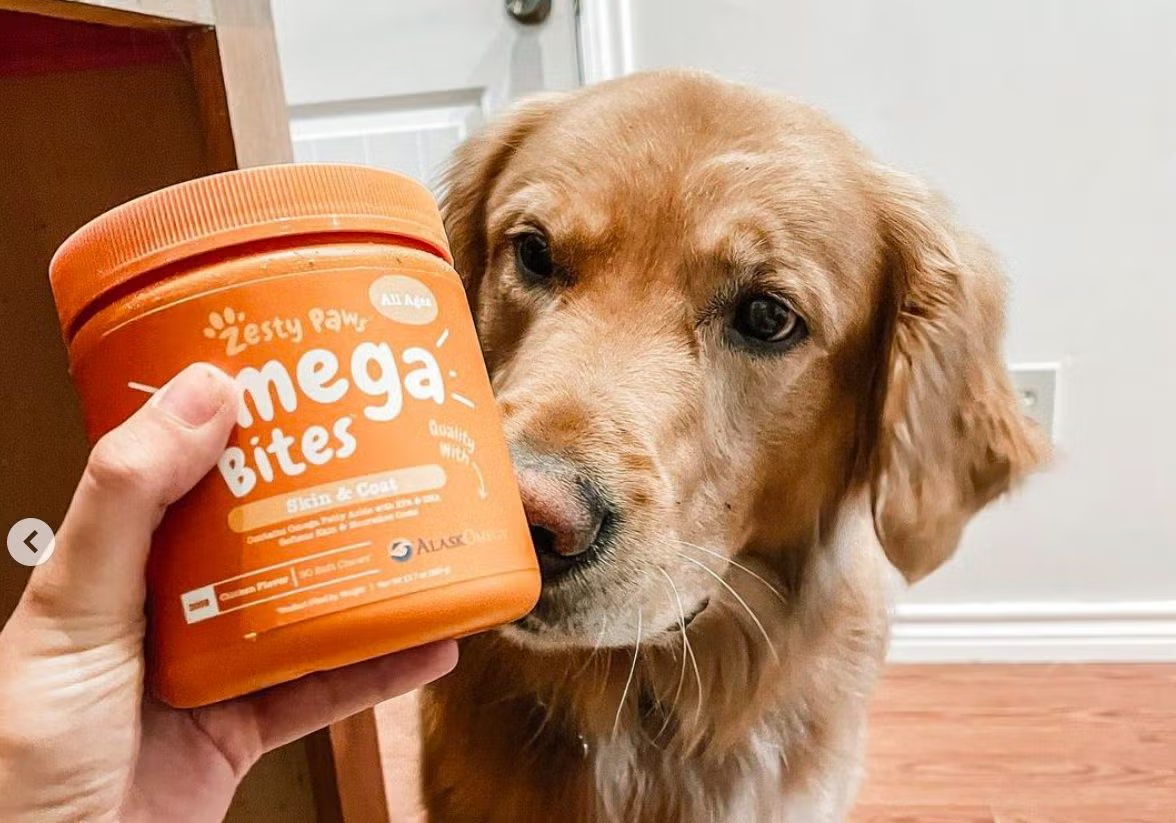
In this category, Zesty Paws is an unavoidable name.

Source: Just Food
This pet nutritional supplement brand, founded in the US in 2015, went from zero to leading online sales nationwide in less than a decade.
According to data disclosed by H&H Group, Zesty Paws' revenue in 2019, 2020, and the first half of 2021 was $42.653 million, $73.088 million, and $48.26 million respectively. In October 2021, H&H Group acquired Zesty Paws for $610 million.
A brand only six years old sold for nearly 4 billion RMB—that itself speaks volumes.

Source: Zesty Paws
After the acquisition, Zesty Paws' growth momentum did not slow down.
In 2025, Zesty Paws achieved 12.8% same-store sales growth for the full year, firmly holding a leading position in the North American pet supplement category. Driven by sustained expansion on e-commerce platforms like Amazon and Chewy, as well as mainstream retail channels such as Walmart, PetSmart, Petco, Tractor Supply, Target, Sam's Club, CVS, and Menards, the brand's growth remains strong.
Meanwhile, offline channels are expanding rapidly—by the end of 2025, Zesty Paws had entered over 20,000 stores across the US, further broadening its reach.

Source: H&H Group 2025 Financial Report
02
A pet is half a 'child'—the category continues to heat up
From a small seller on Amazon to a leading pet supplement brand nationwide, Zesty Paws' rise is no accident. Behind it lies the structural growth of the entire pet nutrition industry.
Let's look at the data. According to third-party platform estimates, the global pet nutritional supplement market size reached $2.8 billion in 2025; the industry projects the market to grow from $2.9 billion in 2026 to $4.6 billion by 2033, with a compound annual growth rate of 6.9%. North America dominates the global market, accounting for 48.1% of revenue.

Source: Grand View Research
Behind these numbers is a common driver: 'pet humanization.' Pets are no longer just animals—they are family members.
Pet owners are willing to invest more in their pets' health and pay a premium for high-quality, science-backed products. On Amazon US, health supplement brands like Zesty Paws top both sales volume and revenue rankings, indicating strong market acceptance and pricing power for supplements.
This shift in consumption trends provides fertile ground for premium brands focused on scientific formulas.

Source: Zesty Paws
03
A 'soft landing' on TikTok—a new solution for content-driven e-commerce
Zesty Paws' growth story so far makes for a good brand case study. But today we focus on its TikTok strategy.
Strictly speaking, they didn't start on TikTok; their base is on Amazon and Chewy. But over the past year or two, their performance on TikTok Shop has been quite outstanding.
The brand's core strategy on TikTok can be summed up in one sentence: turn "pet supplements" into a content business that can be quickly understood, seeded, and ordered via short videos, rather than just brand exposure.

Source: TikTok
First, use products that "externalize pain points" as door openers.
On TikTok Shop, complex nutritional supplements with high unit prices and long decision cycles are often difficult to convert.
Zesty Paws' strategy is to select products with "immediate solution and visual externalization" as pioneering bestsellers, such as Flea and Tick Spray and pet shampoo.
Such products easily show a "before vs after" comparison effect in short videos and live streams, which fits TikTok users' impulse buying habits.

Source: TikTok Shop
Take "Dog Flea and Tick Shampoo" as an example. This product is priced at around $20, typical of fast-moving consumer goods with low unit price and high repurchase rate.
Pet-owning families have a strong need for deworming, and the shampoo can visually show the entire process of "lathering up, rinsing clean, and smooth fur" in short videos, with very direct visual presentation.
Data also validates the effectiveness of this strategy. On TikTok, this shampoo single product achieved total sales of 29,600 units, cumulative GMV over $590,000, and 1,343 linked videos.

Source: TikTok Shop
Among them, one Spanish-language product video garnered 6.5679 million views, with an estimated transaction amount of $45,800; another video showing the before-and-after comparison of flea removal got over 5.5 million views, with a transaction amount exceeding $52,000.
This kind of "immediate solution, visual externalization" product naturally suits TikTok's traffic distribution logic. Users see the effect and place an order immediately, making the decision path extremely short.

Source: kalodata
Second, "pyramid-shaped" KOL matrix and full-scale outreach.
Zesty Paws seized the essence of TikTok affiliate marketing – abandoning the approach of relying solely on top influencers and instead batch-connecting with small and medium pet bloggers (KOCs).
Specifically, the brand sends free samples to pet influencers and offers high commission incentives. For example, the commission rate for a hot product like Flea & Tick Spray is as high as 25%, and another product, Wild Alaskan Salmon Oil, also has an 18% commission, which is quite attractive to influencers.
At the same time, the influencers who receive samples create content in the form of "immersive dog feeding", "unboxing vlogs", etc., letting pets happily eat soft chews on camera, directly dispelling viewers' concerns about "pets refusing to take medicine".

Source: echotik
Third, advertising promotion and full-channel synergy.
On TikTok, a video going viral has a certain element of chance.
Zesty Paws' approach is: once they see that an affiliate's natural traffic video is performing well, the team immediately follows up and uses that video as a Spark Ad for promotion and scaling. This strategy of tightly binding "influencer creativity" with "paid traffic" not only revitalizes long-tail traffic but also efficiently acquires new customers.

Source: kalodata
A typical example comes from influencer @yany.ferrera. She posted a 34-second video using Flea & Tick Spray, which reached 2.02 million views.
After the brand owner saw that the organic traffic data of this video had performed well, they quickly launched it as a Spark Ad, running it continuously for 52 days from April 21 to June 24, 2026.

Source: kalodata
Data shows that after launch, the ad view ratio of the video was 6.15%, but the ad conversion ratio reached 79.89%, meaning that 80% of the conversions generated by this video came from paid traffic.
In addition, the ad spend was $4,658.35, and the ad ROAS reached 2.44, indicating a considerable effect and verifying the effectiveness of the 'organic traffic validation + paid traffic amplification' approach.

Source: kalodata
04
Final Thoughts
The story of Zesty Paws is just a microcosm. Looking at the global market, the pet economy is undergoing an upgrade from 'basic feeding' to 'precision health management'. In this upgrade process, there will definitely be more category opportunities released.
For Chinese companies, the barriers to overseas markets are indeed increasing—platform rules are becoming more complex, competition is fiercer, and consumers are more demanding. But from another perspective, places with high barriers are precisely where moats can be built.
Instead of competing on price in low-value-added categories, consider whether you can also take a path of 'branding + content creation + multi-channel' in your own track. Products can go global, and so can brands. Zesty Paws did it in six years; others are not necessarily incapable.
What this signal means for growth teams
This market signal should be treated as an operating prompt, not a standalone trend. The brand question is whether the team can connect TikTok content, creators, paid media, commerce readiness, and reporting into one measurable growth cycle.
Commercial read
- Market signal: TikTok marketing tips - short video marketing methods
- Published: June 30, 2026
- Commercial lens: TikTok Ads, creators, TikTok Shop, live commerce, and reporting.
- Source transparency: the original source linked in this article
What brands should do next
- Identify the market, audience, product group, and KPI this signal could affect.
- Turn the insight into a small TikTok creative, creator, Shop, or paid media test before scaling spend.
- Add FAQ, offer clarity, product proof, and contact paths so traffic can convert instead of only reading.
- Review weekly performance across reach, click quality, Shop actions, creator output, and revenue impact.
Tuke Marketing helps brands connect TikTok Ads, creator partnerships, TikTok Shop operations, live commerce, and reporting into one accountable operating system.
What should brands do with this TikTok signal?
Brands should translate the signal into a focused operating test across creative, creators, TikTok Shop readiness, paid media, and reporting before increasing budget.
How does Tuke Marketing evaluate this kind of news?
Tuke Marketing reviews platform news through market timing, category demand, creator supply, commerce readiness, and measurable growth actions.
When should a team contact Tuke about this topic?
A team should contact Tuke when it needs to turn a TikTok market signal into a practical launch, creator, advertising, live commerce, or reporting plan.
Source transparency: Tuke cites the original source linked in this article and adds its own operating analysis for brands evaluating TikTok growth decisions.