
"You can keep your phone, but the phone case won'tdo。”
This sentence precisely captures the consumption mentality of today's young people.
In today's world where phone replacement cycles are constantly lengthening, the seemingly insignificant accessory of phone cases has instead become a low-cost outlet for people to express their individuality and gain a sense of novelty.
It is this widespread consumer demand that has supported an astonishingly large market: According toGlobal Growth Insight statistics, the global phone case and cover market size reached $115 billion in 2024, is expected to reach $118.8 billion in 2025, and will further expand to $159.1 billion by 2034.
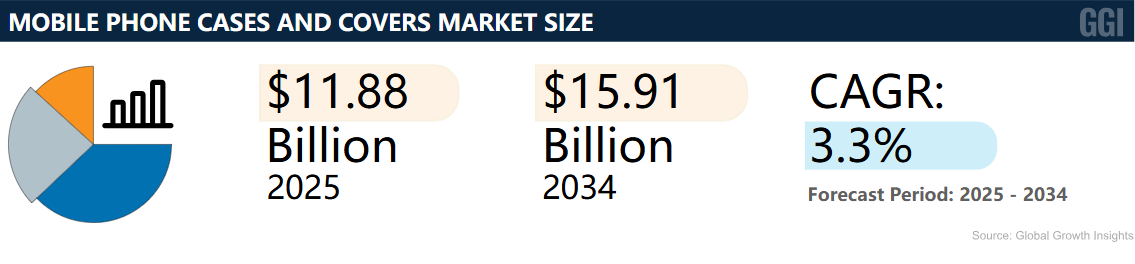
Image source:Global Growth Insight
But the other side of the impressive data is the extremely brutal industry reality: affordable phone cases contribute to55% of the industry's production capacity, and the vast majority of merchants are trapped in the red ocean of "9.9 yuan free shipping", competing on price and luck.
Until a company from Shenzhen managed to sell transparent phone cases at$20, and functional models at over $30, relying on product strength to carve a bloody path out of this low-barrier red ocean.
This company is calledCASEKOO, an overseas brand that has been deeply involved in the phone case industry for nearly a decade and has accumulated 17 million global users. Next, let's review its path to breaking through.
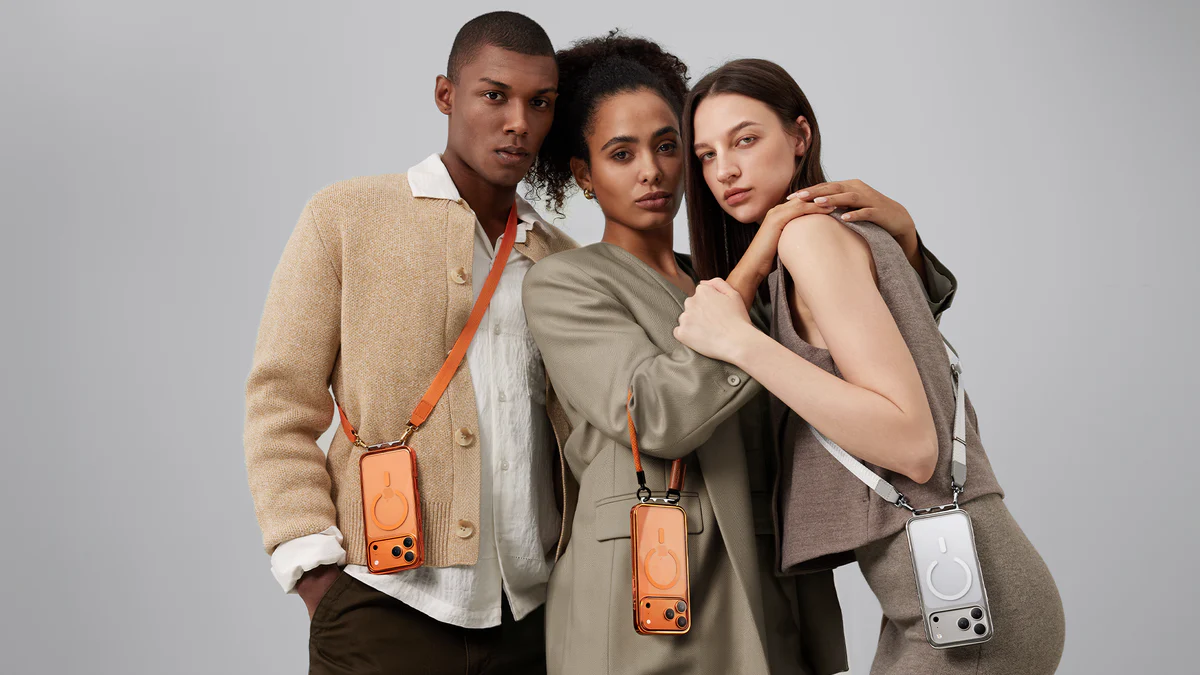
Image source:CASEKOO
A"atypical" entrepreneurial story's beginning
CASEKOO's entrepreneurial story begins with the personal experience of founder Ye Keji.
It is reported that he, a computer science graduate, did not pursue a career in coding after graduation. Instead, in order to overcome his stutter, he proactively engaged in front-line sales. Inthe years of serving cross-border e-commerce sellers on eBay, he witnessed the growth of many brands from zero to one, and the seed of entrepreneurship was quietly planted in his heart.
The real turning point occurred in2016.
As aiPhone enthusiast, Ye Keji accidentally came into contact with mobile phone accessory manufacturers in Shenzhen, and happened to coincide with the window period when Amazon opened its self-service advertising function. With multiple opportunities combined, CASEKOO was officially established in 2017. The team made a counterintuitive decision from the beginning: to avoid the low-price melee below $10, and directly target the group of people willing to spend $30 on a case for a $1,000 phone, which is exactly the overlapping group of Amazon Prime members and Apple users.

Image source:CASEKOO
In order to retain this group of picky users,CASEKOO has put effort into "invisible places". Transparent cases tend to yellow easily, so they developed special filling materials to fill the gaps between TPU molecules, supplemented with anti-oil coating to delay oxidation; to ensure drop resistance, they built airbag structures into the four corners, passing the SGS-certified 1.2-meter 26-degree drop test; for precise magnetic charging alignment, they incorporated a patented Halbach magnetic array with 12 built-in N52 magnets. It is these meticulously polished details that have allowed multiple CASEKOO products to win Amazon Best Seller spots.
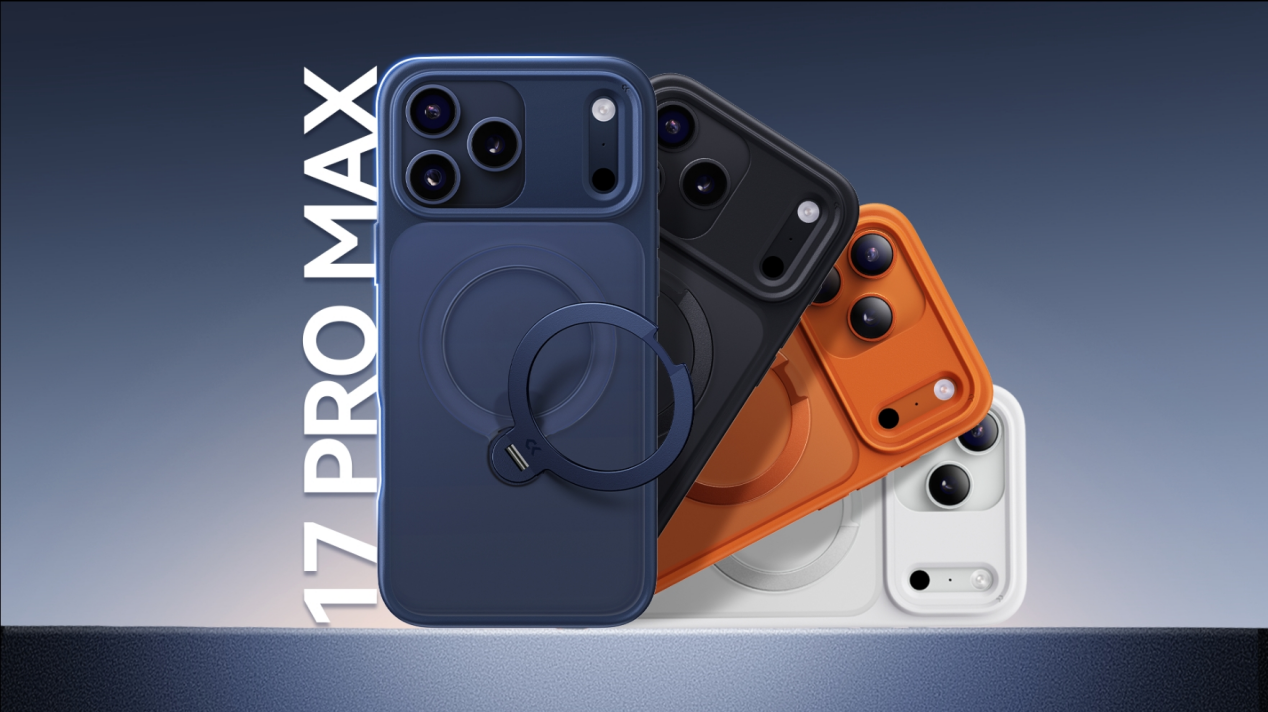
Image source:Amazon
Of course, brand growth hasn't always been smooth sailing.During the sales boom from 2020 to 2021, Ye Keji fell into the trap of blindly expanding SKUs, with a large amount of capital tied up in inventory. Only after stepping into pitfalls did he realize: simply stacking product lines doesn't work.
After that,CASEKOO established a "pyramid product structure": basic models are responsible for volume and stabilizing cash flow; the pattern and collaboration models, which account for only 5% of sales,,such asthe 2023 collaboration series with Hollywood actress Yara Shahidi,,serve as the brand's facade, undertaking the role of shaping brand identity.
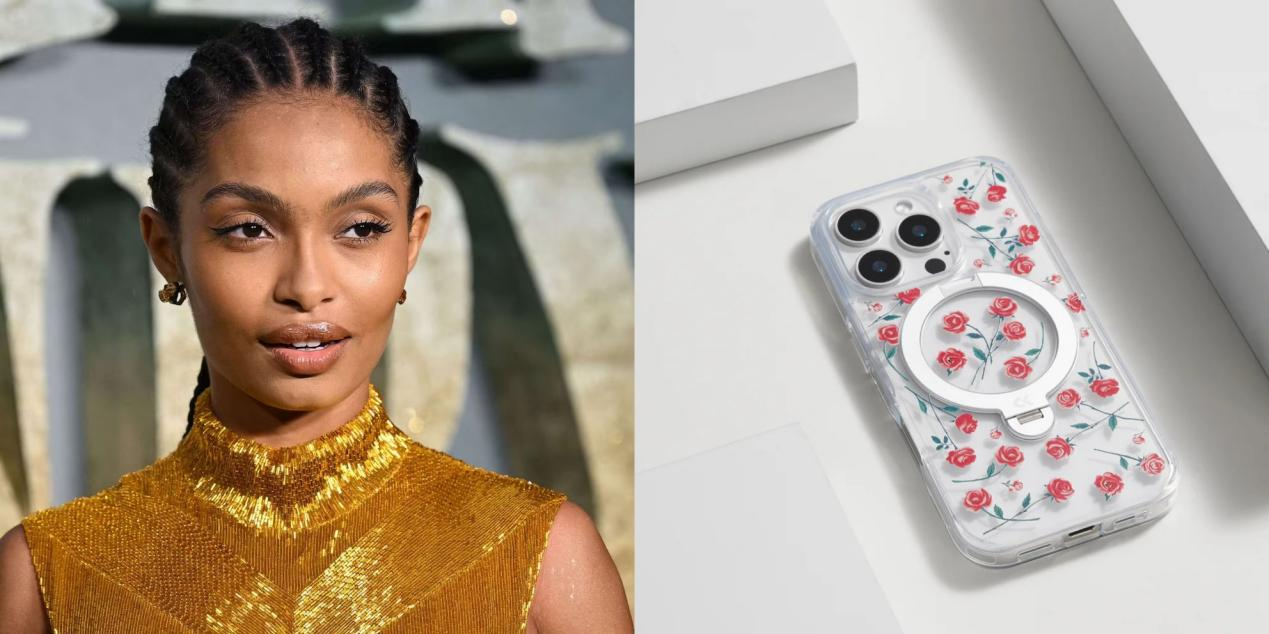
Image source:CASEKOO
By2024, CASEKOO turned back to attack the "more competitive" domestic market, launching the "Old Case Recycling Program": users can exchange any unused phone case for a coupon, and the recycled cases are sent to Aihuishou for eco-friendly processing. In the first week, over 1,000 phone cases were recycled, and Ye Keji also saw the common durability shortcomings in the industry, further validating the advantage of their own hinge process.
As of now,CASEKOO's business territory has covered 20 countries globally, with annual sales exceeding the 100 million yuan mark. Among this, the European and American markets contribute over 60% of revenue, and the repurchase rate on Amazon channels reaches 5 times the industry average. Behind this impressive achievement, a clear channel layout has played an indispensable role.
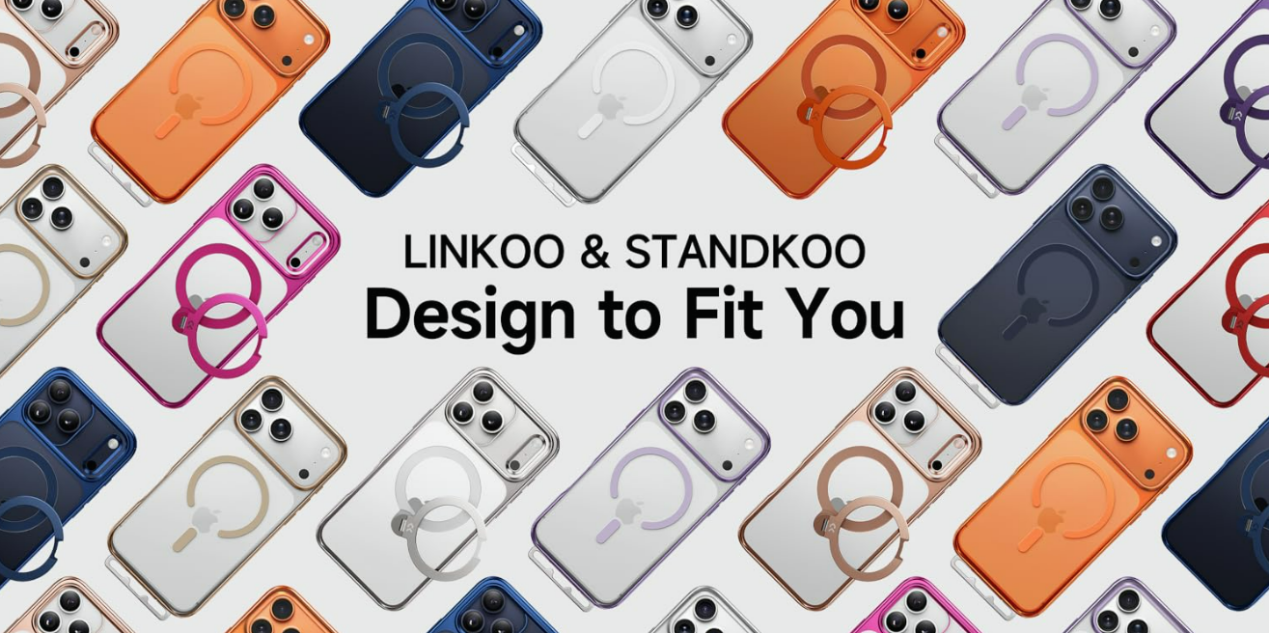
Image source:Amazon
Amazon is still the brand's core sales channel and profit source, but in the eyes of founder Ye Keji, it is more likea "rain-collecting dish", just one of many channels to reach users, not the brand's sole reliance.
The independent website undertakes a completely different mission. From the very beginning, the official site was positioned as the core battleground for brand propositions, mainly handling high-quality search traffic and accumulating brand assets and user stories. The future team plans to gradually increase the revenue share of the independent site and reduce dependence on a single platform. This is almost the necessary path for all overseas brands to mature.
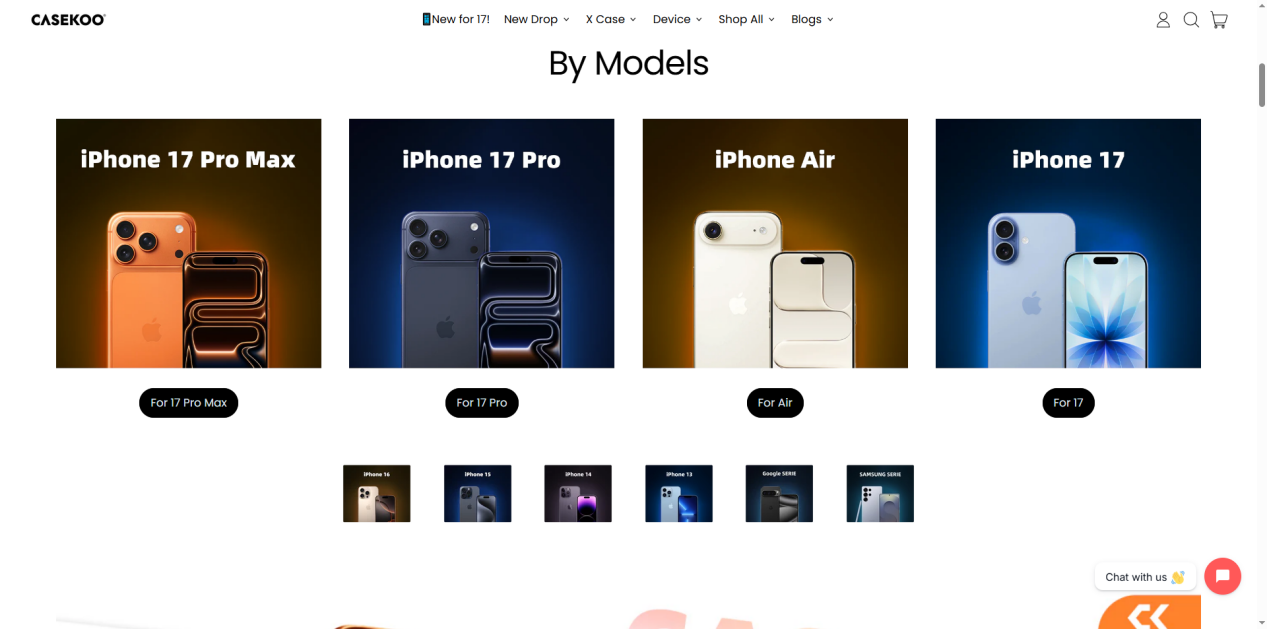
Image source:CASEKOO independent website
Leveraging social media to open new traffic channels
In addition to traditional e-commerce platforms,CASEKOO's performance in social media marketing, especially on TikTok, is equally commendable.
ThisThe brand not only established an official main account@CASEKOO (currently 1.17thousand followers, received likes7.88thousand times), and also operates sub-accounts for different markets such as Japan and the US.。
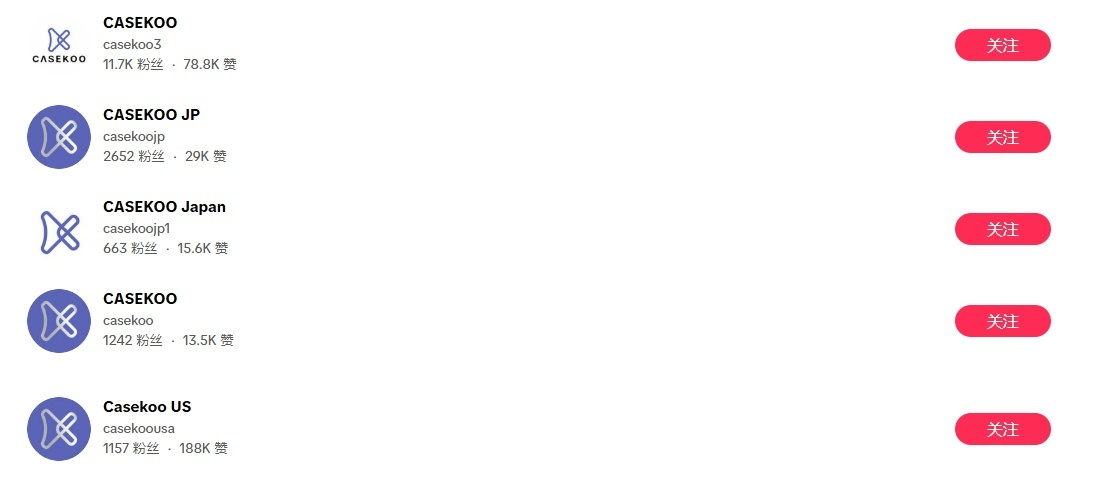
Source:TikTok
The content matrix mainly features product photos and scenario-based displays, continuously outputting brand content.
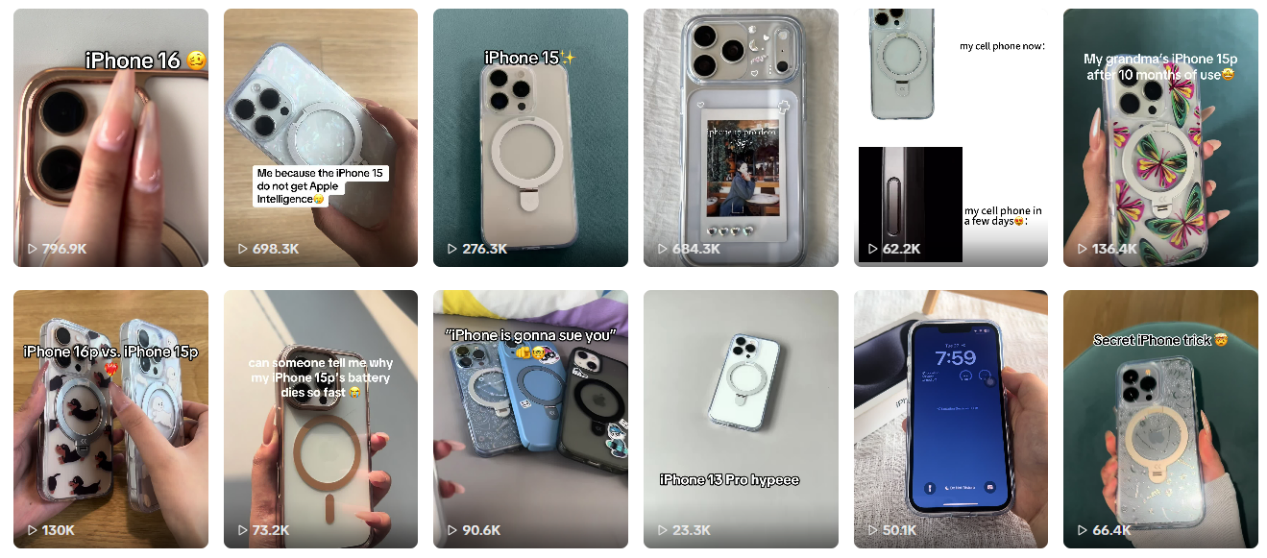
Source:TikTok
But what really brought explosive spread was the collaboration withmid-tier TikTok influencers.
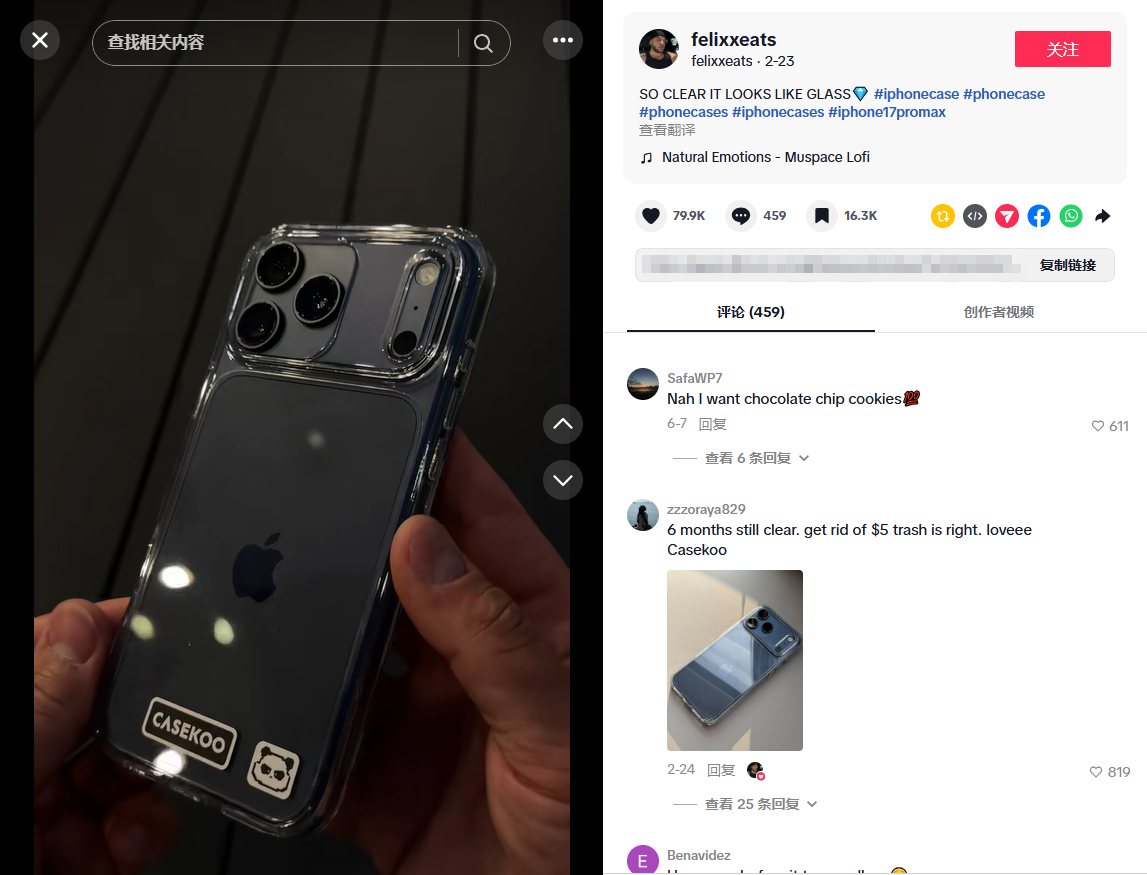
For example, an influencer with6.36万粉丝的吃播达人@felixxeats,他并非传统数码测评博主,却发布了一条CASEKOO iPhone 17 Pro Max防摔透明壳的开箱视频。视频里直观展示了上机效果、支架实用性,还有品牌附赠的贴纸,这条看似简单的内容最终播放量飙升至1330万,获赞7.99thousand, and was pinned by the influencer for a long time.
Source:TikTok
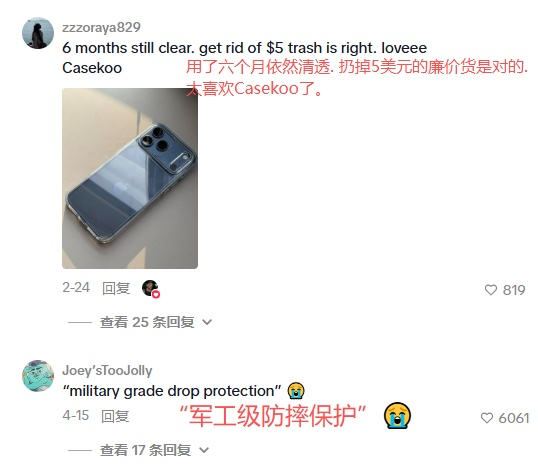
In the comment section, many real users left feedback, some said the case remained transparent and not yellowed after six months of use, others praised the military-grade drop protection. This kind of genuine, long-tail community word-of-mouth is far more convincing than a slogan.
Source:TikTok
If the hardcore functional tests hit the needs of practical users, then the aesthetic content precisely struck the preferences of users who love beauty.
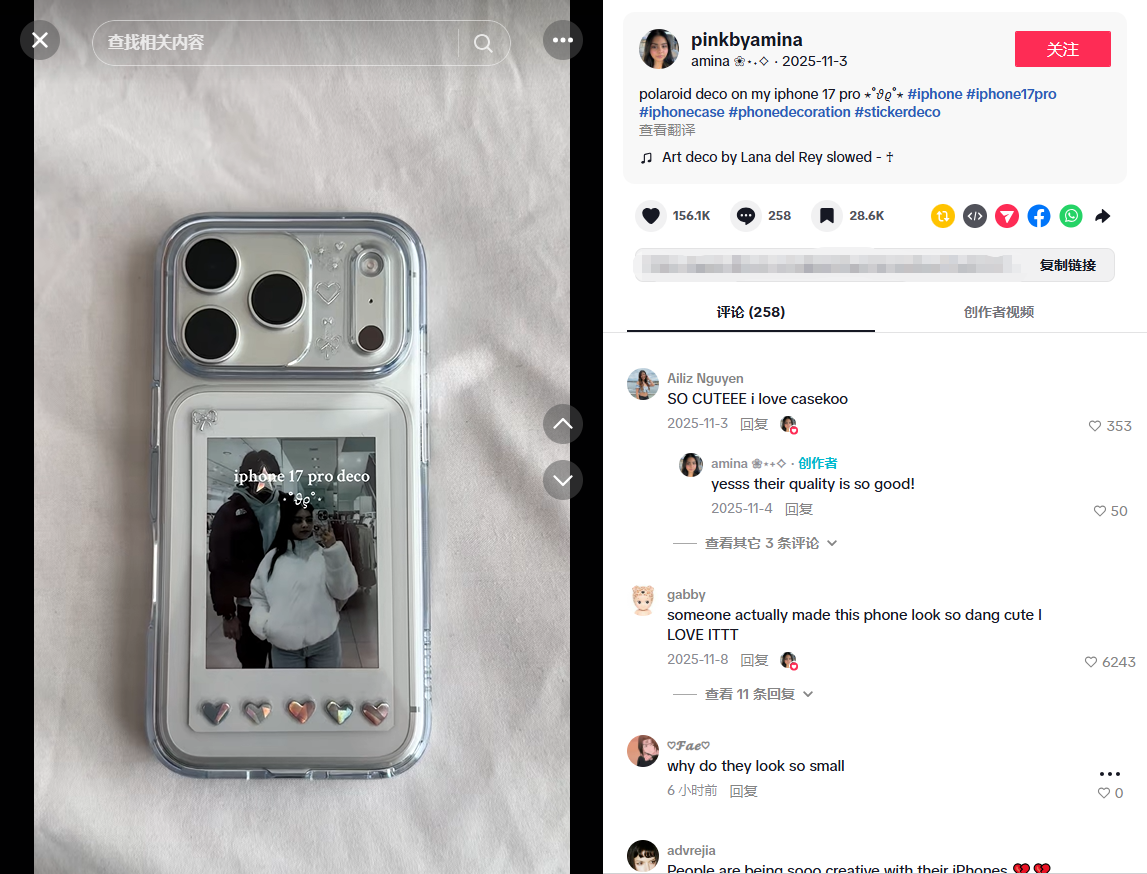
Has1.57万粉丝的美妆生活vlog博主@amina,发布了一条仅6秒的短视频:她在CASEKOO透明壳里放了一张拍立得照片,给iPhone 17 Pro做上了宝丽来风格的装饰。画面简洁,只展示了手机壳背面效果和对镜自拍的整体观感,却拿下了790万播放量、15.61万点赞。
Source:TikTok
The comment section was also buzzing, with users leaving comments"太可爱了,我爱CASEKOO", and others exclaimed, "居然能把这款手机变得这么可爱,我太爱了".
From hardcore drop protection to aesthetic transformation, these two viral contents reached user needs from different dimensions, and also allowed the brand toTikTok实现了远超预期的破圈传播.
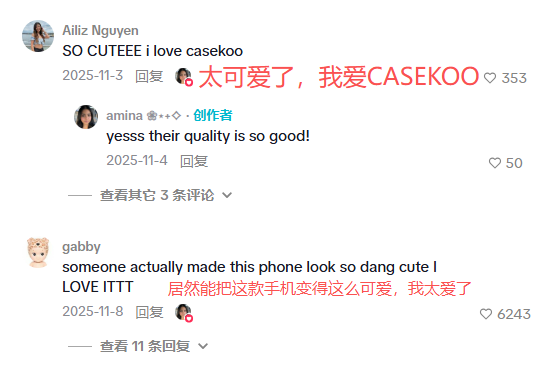
Image source: TikTok
Inspirations from Chinese Smart Manufacturing Going Global: There Is Always a Blue Ocean in the Red Sea
From Shenzhen to the World20 countries, from 9.9 yuan to 20 US dollars, CASEKOO spent nine years verifying one thing: the so-called "product power" is not about piling up configurations, but about carefully polishing those details that users can perceive but cannot articulate.
Looking at the present, there are countless high-quality supply chains and new brands in China standing at the starting line of going global.
The growth logic of overseas markets has become increasingly clear: Amazon is responsible for scaling up volume,TikTok is responsible for content-driven explosion, and independent sites are responsible for brand building and consolidation. Multi-platform coordinated layout is no longer a choice but a must-answer question. Instead of consuming in a single channel, it is better to explore the broad boundaries of the global market with more solid products and more flexible channel combinations.
Demand has never been lacking; what is lacking is careful interpretation. Now is the right time to get in personally.
What this signal means for growth teams
This market signal should be treated as an operating prompt, not a standalone trend. The brand question is whether the team can connect TikTok content, creators, paid media, commerce readiness, and reporting into one measurable growth cycle.
Commercial read
- Market signal: TikTok marketing tips - short video marketing methods
- Published: June 24, 2026
- Commercial lens: TikTok Ads, creators, TikTok Shop, live commerce, and reporting.
- Source transparency: the original source linked in this article
What brands should do next
- Identify the market, audience, product group, and KPI this signal could affect.
- Turn the insight into a small TikTok creative, creator, Shop, or paid media test before scaling spend.
- Add FAQ, offer clarity, product proof, and contact paths so traffic can convert instead of only reading.
- Review weekly performance across reach, click quality, Shop actions, creator output, and revenue impact.
Tuke Marketing helps brands connect TikTok Ads, creator partnerships, TikTok Shop operations, live commerce, and reporting into one accountable operating system.
What should brands do with this TikTok signal?
Brands should translate the signal into a focused operating test across creative, creators, TikTok Shop readiness, paid media, and reporting before increasing budget.
How does Tuke Marketing evaluate this kind of news?
Tuke Marketing reviews platform news through market timing, category demand, creator supply, commerce readiness, and measurable growth actions.
When should a team contact Tuke about this topic?
A team should contact Tuke when it needs to turn a TikTok market signal into a practical launch, creator, advertising, live commerce, or reporting plan.
Source transparency: Tuke cites the original source linked in this article and adds its own operating analysis for brands evaluating TikTok growth decisions.