
Compared to low order volume, many business merchants are more troubled by the persistently high return rate.
Whether it's domestic e-commerce or cross-border shipping, the shipping costs for returns and exchanges are basically borne by the merchants. In addition to the actual logistics losses, the back-and-forth transportation of goods also lengthens delivery times. The sorting, organizing, and re-warehousing after returns to the warehouse will also consume a lot of labor costs.
After layers of fees are added up, a single return order not only yields no profit but also causes the merchant to incur losses.
Women's clothing is the most typical category. The overall return rate online is generally as high as50%-60%, and in scenarios such as live-streaming e-commerce and summer thin clothing, the return rate can even reach 80%-90%. The high cost of shipping insurance and repeated logistics expenses overwhelm the vast majority of women's clothing merchants.
In contrast, the men's wear market is entirely different. Along with the globalThe continuous heating up of the "he economy" has led to a concentrated explosion in male self-image management needs. Nowadays, the average annual growth rate of the global men's clothing market has consistently exceeded that of women's clothing.

Image source:COOFANDY
According toFact.MRThe research data shows:
The global men's clothing market is expected toFrom $600 billion in 2025 to approximately $800 billion in 2035, the absolute growth during this period.for200 billion US dollars,This meansof this sub-categorytotal growth rateGeneral Gundam33.3%, the development prospects are very promising.
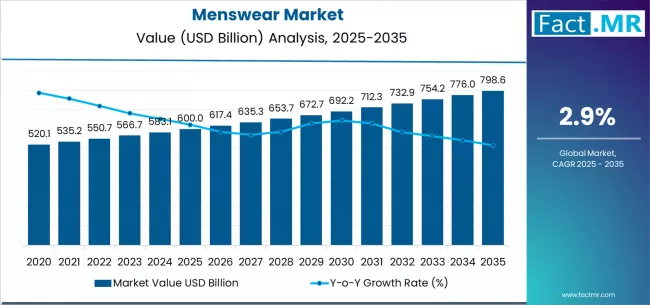
Image source:Fact.MR
There are many brands in China that have deeply cultivated the cross-border men's clothing sector, achieving remarkable results in overseas markets such as Europe and the United States.
Today we are going to introduceCOOFANDY, is one of the most representative top sellers.
This brand, with a selling priceThe $40 wrinkle-resistant, non-iron business casual shirt became Amazon's best-selling icon, and then continued to cultivate deeply,eventually growing into an annual sales breakthrough ofa cross-border men's clothing dark horse at the 2 billion level.
So, how did it achieve this?

Image source:Google
Seizing the blue ocean market opportunity, winning over overseas consumers with differentiated positioning
According to public information,COOFANDY is the core brand under Shenzhen Sailvan Times, focusing on men's clothing going overseas.
The Chen brothers behind the brand have long been rooted in the cross-border listing track,In 2012, the two invested 500,000 in startup capital to establish the company, and early on, they relied on full-category generic product listings on Amazon to complete initial accumulation.
In 2015, industry growth cooled down, and the drawbacks of the extensive listing model were fully exposed: severe product homogenization, continuous profit compression, and no brand premium capability.
At that time, the overseas men's clothing market was extremely polarized. High-end formal wear brands were often priced at hundreds of dollars, with high consumption thresholds; low-priced unbranded clothing had rough fabrics and ill-fitting cuts that did not conform to human body habits. Betweenthe $25 to $55 range, mid-range men's clothing that balances quality and cost-effectiveness, there was a huge market gap.
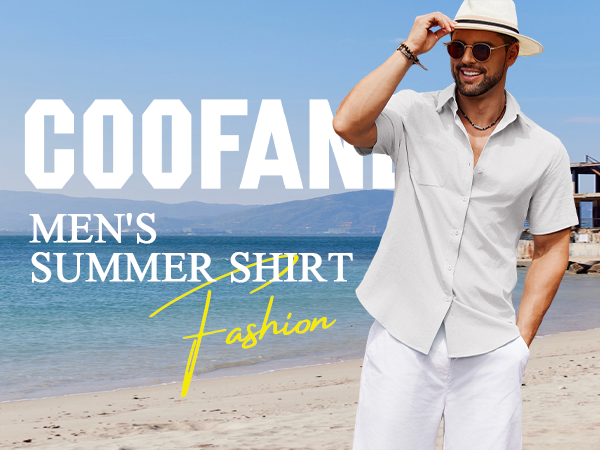
Image source:Google
The founder keenly captured the global"He economy" outbreak trend, with rising demand for men's dressing and image management. After identifying this blue ocean opportunity, he decisively abandoned the low-profit generic product listing model, transformed to deeply cultivate the vertical men's clothing brand track, and thus COOFANDY was born.
The brand uses fabrics and tailoring techniques comparable to major offline brands, but prices at only one-third of traditional offline men's clothing, precisely matching the mainstream consumption of overseas consumers, building a differentiated competitive advantage that is hard to replicate.

Image source:Google
Third-party platforms to expand traffic+ independent site to accumulate brand private domain
In 2015, the COOFANDY brand was officially registered and established, initially focusing on core basic items such as shirts and vests, specifically optimizing fits for Western male body shapes, while also adapting to multiple dressing scenarios, solving the dressing dilemma of office workers switching between business and casual.
Among them, a shirt priced at onlyThe $40 wrinkle-resistant, non-iron casual business shirt quickly became popular after launching on Amazon North America, becoming the brand's first iconic hit.
Thereafter,COOFANDY has successively expanded into mainstream markets such as the UK, Germany, France, Canada, and Japan, covering over 30 countries, and has built a multi-store matrix operation system. Relying on Amazon Prime two-day delivery and stable organic search traffic on the platform, it has accumulated its first batch of loyal customers.
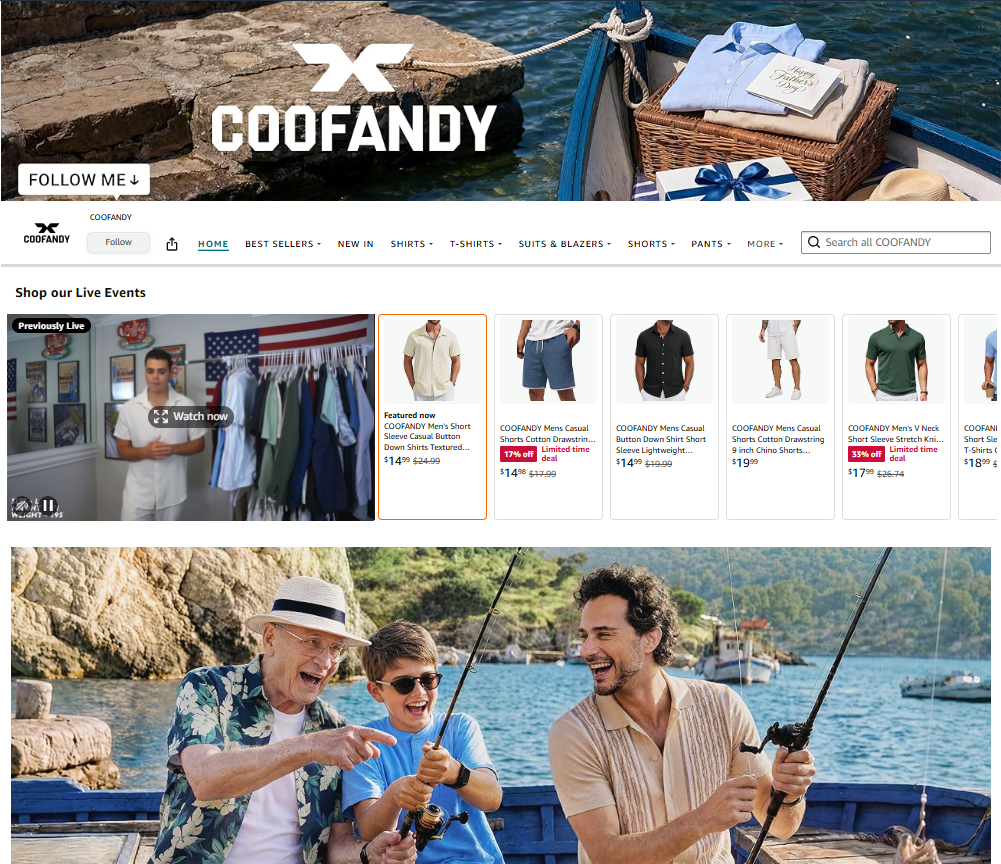
Image source: Amazon
Except for AmazonCOOFANDY has also simultaneously entered mainstream overseas e-commerce platforms such as Walmart and eBay, reaching down-market consumer groups who do not use Amazon, thereby avoiding the operational risks of relying on a single platform.
Not only that, but to break free from the constraints of third-party platform rules and accumulate its own private domain users, the brand also built its own overseas independent website, forming a traffic funnel from third-party platforms.+ Dual-track model for high gross margin conversion on independent sites.
Within the independent site,COOFANDY designs its pages based on male users' simple and efficient browsing habits, organizing displays by dressing scenarios such as workplace and daily wear to facilitate user purchases.
The brand also prioritizes new product launches and exclusive discounts for users of its independent site, guiding platform buyers to jump to private domain transactions, saving high platform commissions, and the profit margin per product far exceeds that of third-party stores.
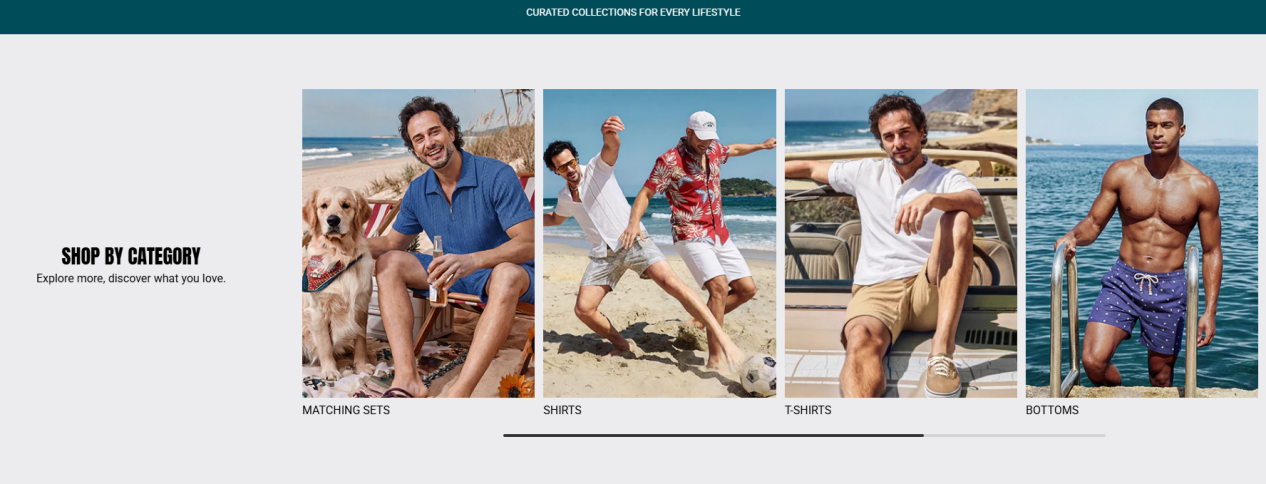
Image source:COOFANDY
Relying on third-party platforms+ Through the omnichannel layout with its own independent website, COOFANDY's performance achieved leapfrog growth:
inIn 2023, its sales revenue exceeded the 1 billion mark for the first time, reaching 1.455 billion yuan; by 2024, the brand's annual sales revenue broke through 2 billion yuan, firmly establishing its position as a top seller in the cross-border mid-range men's clothing niche.
70,000+ followers on TikTok, generating millions of impressions
For overseas-going domestic brands to continuously acquire customers, the core challenge lies in opening up overseas user awareness channels and building brand awareness. AndMainstream overseas social platforms like TikTok have become the key marketing battleground for the COOFANDY brand.
atTikTokPreviously, the brand first set up an official account.@Coofandyofficial, deeply cultivating its own social media presence. Currently, the account has 72,200 followers and over 2.2 million total likes.
You can see the brand's clever touches on the account's homepage:
The bio directly includes the link to the independent website, so that when users come across desired clothing products, they can jump to the private domain with one click to place an order.
Also, attention was marked.Followers of @Coofandyofficial can enjoy a 20% discount on orders placed on the independent website as an exclusive fan benefit. Use this promotion to reward followers and boost account growth, achieving bidirectional empowerment of social media traffic generation and independent website conversion, creating a virtuous cycle between the two channels.
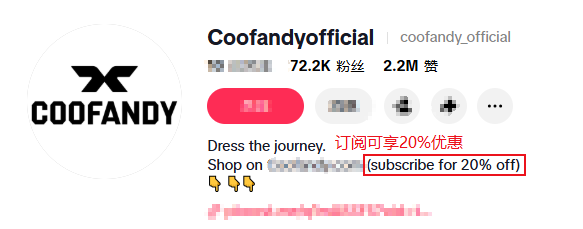
Image source:TikTok
The video content published on the account mainly revolves around all life scenarios such as men's workplace, weddings, daily casual, vacation travel, etc., outputting cost-effective high-quality men's outfit content, covering all categories including business suits, vacation casual sets, wedding attire, golf smart casual wear, knitted sweaters, and more.
The entire content system precisely aligns with the currentThe "He Economy" consumption trend has shaped the brand's professional men's styling tone. By visually demonstrating the texture of outfits and masculine temperament, it continuously attracts the attention of potential customers, paving the way for transaction conversion.
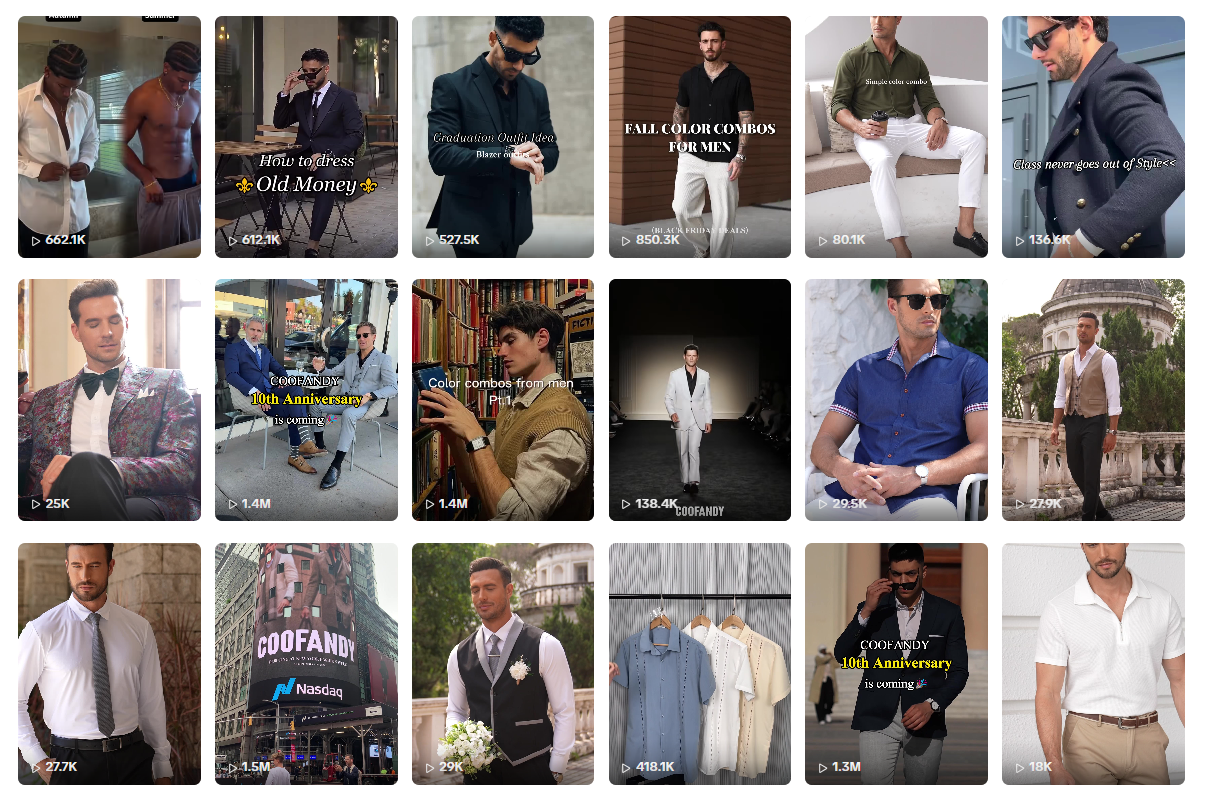
Image source:TikTok
Vertical category influencer seeding, precisely leveraging target customer groups
In carefully operating the brandaccountat the same time,COOFANDY did not only rely on its own traffic to acquire customers but also collaborated with top male fashion vertical influencers on TikTok, leveraging their mature fan base to expand brand exposure.
For example, havingThe fashion blogger @Moazzmorgan with 4.9 million followers is one of the brand's chosen partners.
This influencer's account primarily showcasesMen's fashion, with long-term deep cultivation in the men's fashion niche, and impressive content traffic performance. It has nearly 20 viral videos with tens of millions of views, and the total likes on the account have reached 40.3 million. The follower profile highly matches COOFANDY's target customer group.
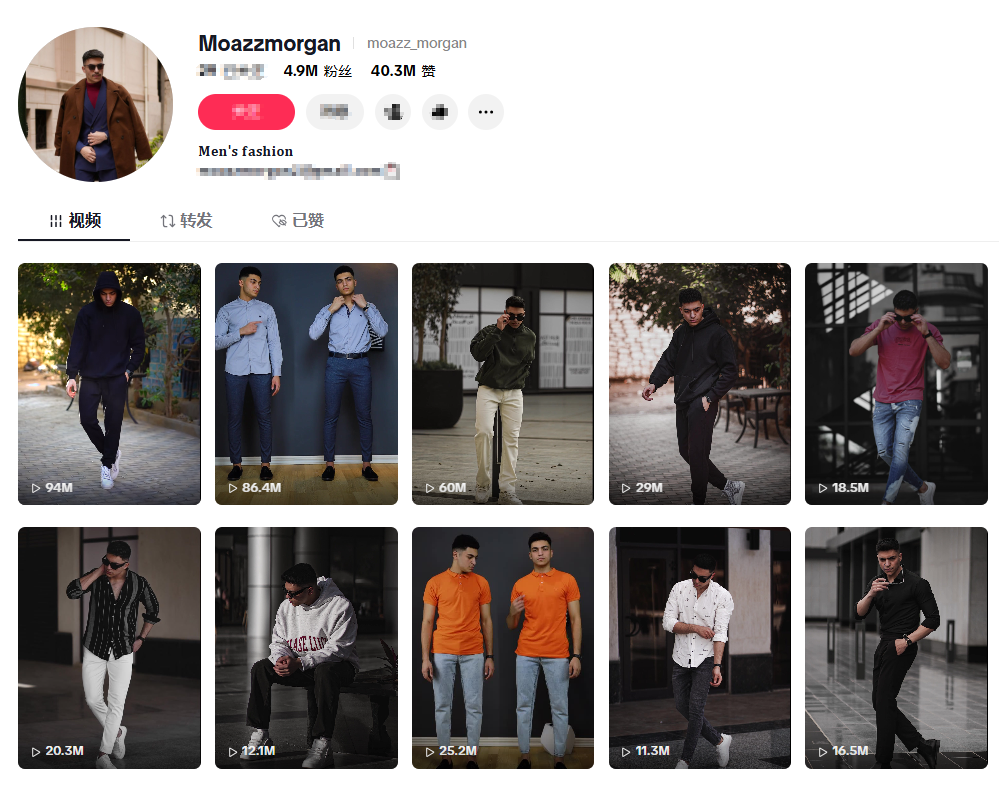
Image source:TikTok
It andthe short video shot in collaboration with COOFANDY is also full of creativity:
By striking3 Poses to showcase a day's outfit, in a simple and stylish visual presentation, intuitively reproducing the actual wearing effect of the clothing.
Currently, the video's views have exceeded3.7 million views and garnered 218,700 likes. In the comment section, many users expressed liking the same outfit and wanting to replicate the same look.
It is easy to see that genuine outfit recommendations from vertical professional influencers can precisely hit the target audience, quickly stimulate consumers' purchase intention, and thus efficiently drive product sales conversion.

Image source:TikTok
Now is actually the perfect time to enter the overseas men's clothing market.
Seeing this,many people will ask: is itstill too late to start a men's clothing line now? My view is, it's precisely now.
Because the overseas mid-range men's apparel market is far from saturated, and there is no truly dominant brand yet. Moreover, male consumers' loyalty is much higher than that of women; once they recognize a brand's fit and fabric, repurchase cycles can last for years.
Of course, the premise is that you can no longer operate with a distribution mindset.The path that COOFANDY has taken proves:Product differentiation, multi-channel layout, and authentic social media seeding are all indispensable. Especially the combination of independent websites andTikTok is almost the lowest-cost way for current overseas brands to break out.
The overseas market has never lacked opportunities; what it lacks are people willing to settle down and focus on products and channels. Don't always think that going overseas is only for giants. A shirt, a vest, or a suit—as long as you identify user pain points, you can stillbreak through the overseasmarket.
What this signal means for growth teams
This market signal should be treated as an operating prompt, not a standalone trend. The brand question is whether the team can connect TikTok content, creators, paid media, commerce readiness, and reporting into one measurable growth cycle.
Commercial read
- Market signal: TikTok marketing tips - short video marketing methods
- Published: June 24, 2026
- Commercial lens: TikTok Ads, creators, TikTok Shop, live commerce, and reporting.
- Source transparency: the original source linked in this article
What brands should do next
- Identify the market, audience, product group, and KPI this signal could affect.
- Turn the insight into a small TikTok creative, creator, Shop, or paid media test before scaling spend.
- Add FAQ, offer clarity, product proof, and contact paths so traffic can convert instead of only reading.
- Review weekly performance across reach, click quality, Shop actions, creator output, and revenue impact.
Tuke Marketing helps brands connect TikTok Ads, creator partnerships, TikTok Shop operations, live commerce, and reporting into one accountable operating system.
What should brands do with this TikTok signal?
Brands should translate the signal into a focused operating test across creative, creators, TikTok Shop readiness, paid media, and reporting before increasing budget.
How does Tuke Marketing evaluate this kind of news?
Tuke Marketing reviews platform news through market timing, category demand, creator supply, commerce readiness, and measurable growth actions.
When should a team contact Tuke about this topic?
A team should contact Tuke when it needs to turn a TikTok market signal into a practical launch, creator, advertising, live commerce, or reporting plan.
Source transparency: Tuke cites the original source linked in this article and adds its own operating analysis for brands evaluating TikTok growth decisions.