
Recently,Tuke Shop Southeast Asia Cross-border has issued a major new regulation for sellers, clearly prohibiting “blind box” card opening and any operations with randomness or gambling nature during live streaming.
This move means that live streaming routines that previously relied on uncertainty to attract attention will be completely eliminated. Sellers who continue to cross the line will face account penalties or even more severe sanctions.
Image source:Google
The new regulation targets“probability games,” live box opening can no longer rely on luck to attract attention
According tothe latest requirements released by Tuke Shop Southeast Asia Cross-border, the platform has completely denied all box opening behaviors with blind box attributes and uncertain outcomes during live streaming.
Simply put, any gameplay where buyers cannot clearly know what product they will get before opening, and the outcome depends on random probability, is prohibited.
The platform specifically emphasizes that merchants must clearly display the products that may be obtained after box opening in the live room, and explain how the outcome is determined, instead of letting buyers “gamble” on an unknown result like opening a blind box.
From specific violations, the platform lists a wide range of prohibited scenarios, including random cards, draft-style, bounty-style, card drawing games, points programs, relay games, and HP battles, etc.
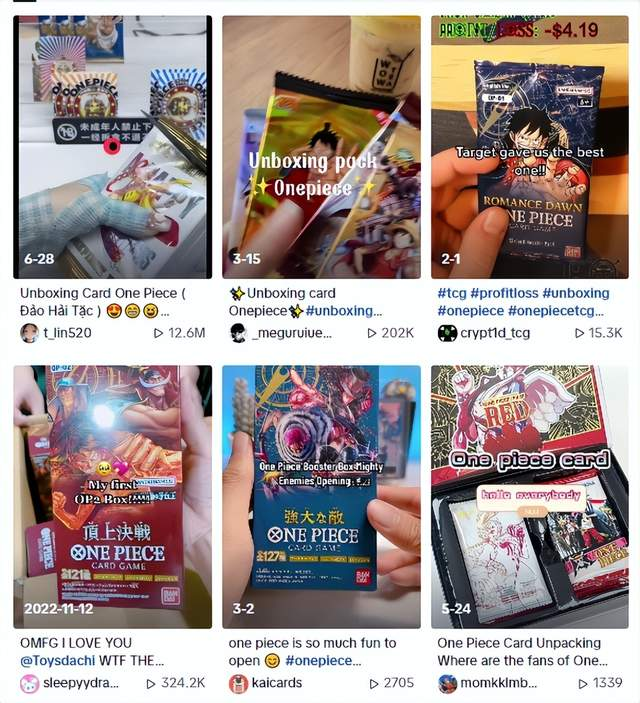
Image source:Tuke
The common point of these play methods is that they all introduce gambling mechanisms or probability-based gamified interactions. Buyers seem to be consuming, but are actually participating in a game with uncontrollable outcomes.
For sellers who have long relied on such highly interactive and stimulating gameplay to drive retention and conversion rates, this is undoubtedly a heavy blow.
Short-term pain is inevitable, compliance threshold rises sharply
After the new regulation takes effect, the most directly affected are undoubtedly cross-border sellers who rely on blind box card opening, random draws, and similar modes of operation.
Especially in categories such as cards, trendy toys, and collectibles, random gameplay has always been an important means to create suspense and stimulate impulse buying. Losing the “unknown outcome” as the core attraction, the popularity and conversion in live rooms will likely see a temporary decline.
More troublesome is that many sellers’ existing live scripts, interaction processes, and product display methods need comprehensive rectification. The previous inducement like “buy a pack, open a pack, see what you can draw” may now be directly judged as a violation. Repeat offenders will face even harsher sanctions, meaning there is very limited room for trial and error.
For small and medium sellers, redesigning compliant live scripts, training hosts, and adjusting product combinations in a short time brings considerable pressure and cost.

Image source:Google
Of course, from a positive perspective, the new regulation also forces sellers to return to a more transparent and healthier trading logic. After the model that relied on information asymmetry and randomness to create premiums is stopped, those who can truly provide clear product value and delivery rules may instead gain more stable user trust.
Completely eliminate random gameplay, shift to deterministic content
Facing this change, the most urgent task for sellers is to immediately conduct self-inspection and rectification.
First, review all existing live scripts. Any expressions with uncertainty, randomness, luck, or ambiguous phrases like “whether you can draw depends on your luck” must be deleted or replaced.
Secondly, any interactive forms that rely on probability to determine the actual product received by buyers, such as relay draws, battle drops, points lottery, etc., must also be completely removed.
Instead, establish completely transparent and predictable product delivery rules. For example, clearly display each card or product’s physical item and detailed list during live streaming, inform buyers what specific products and quantities they will receive after payment, and what styles are available, no longer relying on random draws.
You can also consider changing the original random card opening to fixed combination sales, or use transparent boxes so buyers can see all contents before ordering. This not only meets platform compliance requirements, but also retains the interactivity and display effect of live streaming.
In addition, sellers can think about how to enhance live streaming appeal through content creativity rather than probability games. For example, add product background stories, collectible value analysis, live Q&A, limited-time offers, etc., using deterministic value points to retain users, instead of relying on the thrill of gambling.

Image source:Google
Conclusion
Tuke Shop Southeast Asia’s comprehensive ban on “blind box” card opening and random gameplay marks that live-streaming e-commerce is moving from the stage of wild growth and traffic competition to a more mature stage focusing on transparency and compliance.
For sellers, this is not only a painful period of rule adaptation, but also an opportunity for reshuffling and upgrading. Those who can quickly adjust strategies and move users with certainty and sincere content may instead win a more stable market position under the new rules.
In the future, the core competitiveness of content e-commerce will increasingly return to the product itself and real user value, rather than short-term stimulation by playing with probability.
What this signal means for growth teams
This market signal should be treated as an operating prompt, not a standalone trend. The brand question is whether the team can connect TikTok content, creators, paid media, commerce readiness, and reporting into one measurable growth cycle.
Commercial read
- Market signal: TikTok Marketing Information and Solutions
- Published: June 5, 2026
- Commercial lens: TikTok Ads, creators, TikTok Shop, live commerce, and reporting.
- Source transparency: the original source linked in this article
What brands should do next
- Identify the market, audience, product group, and KPI this signal could affect.
- Turn the insight into a small TikTok creative, creator, Shop, or paid media test before scaling spend.
- Add FAQ, offer clarity, product proof, and contact paths so traffic can convert instead of only reading.
- Review weekly performance across reach, click quality, Shop actions, creator output, and revenue impact.
Tuke Marketing helps brands connect TikTok Ads, creator partnerships, TikTok Shop operations, live commerce, and reporting into one accountable operating system.
What should brands do with this TikTok signal?
Brands should translate the signal into a focused operating test across creative, creators, TikTok Shop readiness, paid media, and reporting before increasing budget.
How does Tuke Marketing evaluate this kind of news?
Tuke Marketing reviews platform news through market timing, category demand, creator supply, commerce readiness, and measurable growth actions.
When should a team contact Tuke about this topic?
A team should contact Tuke when it needs to turn a TikTok market signal into a practical launch, creator, advertising, live commerce, or reporting plan.
Source transparency: Tuke cites the original source linked in this article and adds its own operating analysis for brands evaluating TikTok growth decisions.