
Amazon is about to "disrupt" another industry again. This time, the target is logistics.
On May 4th, local time in the United States, e-commerce giant Amazon suddenly announced the launch of "Amazon Supply Chain Services (ASCS)", officially opening its vast logistics system to all businesses and all industries.
As soon as the news broke, Wall Street logistics stocks plummeted. The iShares US Transportation ETF, which tracks major transportation stocks, fell about 4% in a single day, UPS once fell more than 10%, and FedEx also fell more than 9%. Meanwhile, Amazon's stock price rose against the trend by about 1%.
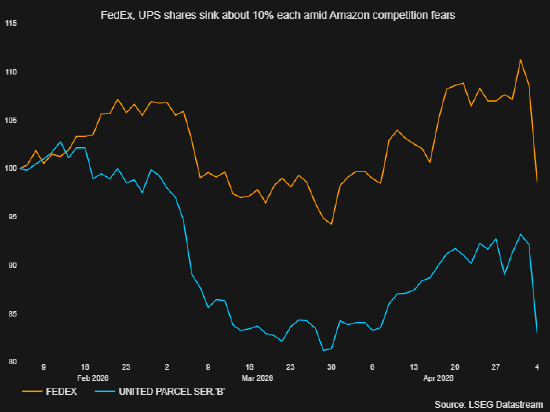
Image source: Internet
For a long time, Amazon's logistics system was like a high wall, only open to merchants on its own platform. This time, Amazon's move directly knocks down the wall, offering the complete capabilities of freight, sorting, fulfillment, and last-mile delivery as a package to the whole society.
This is completely different from simply delivering parcels by express.
So, why is Amazon willing to open up the "moat" it has spent years and huge investments building? In fact, the logic behind this is the same as Amazon Web Services (AWS): first build internal strength to meet its own needs, then turn the mature infrastructure into a profitable tool.
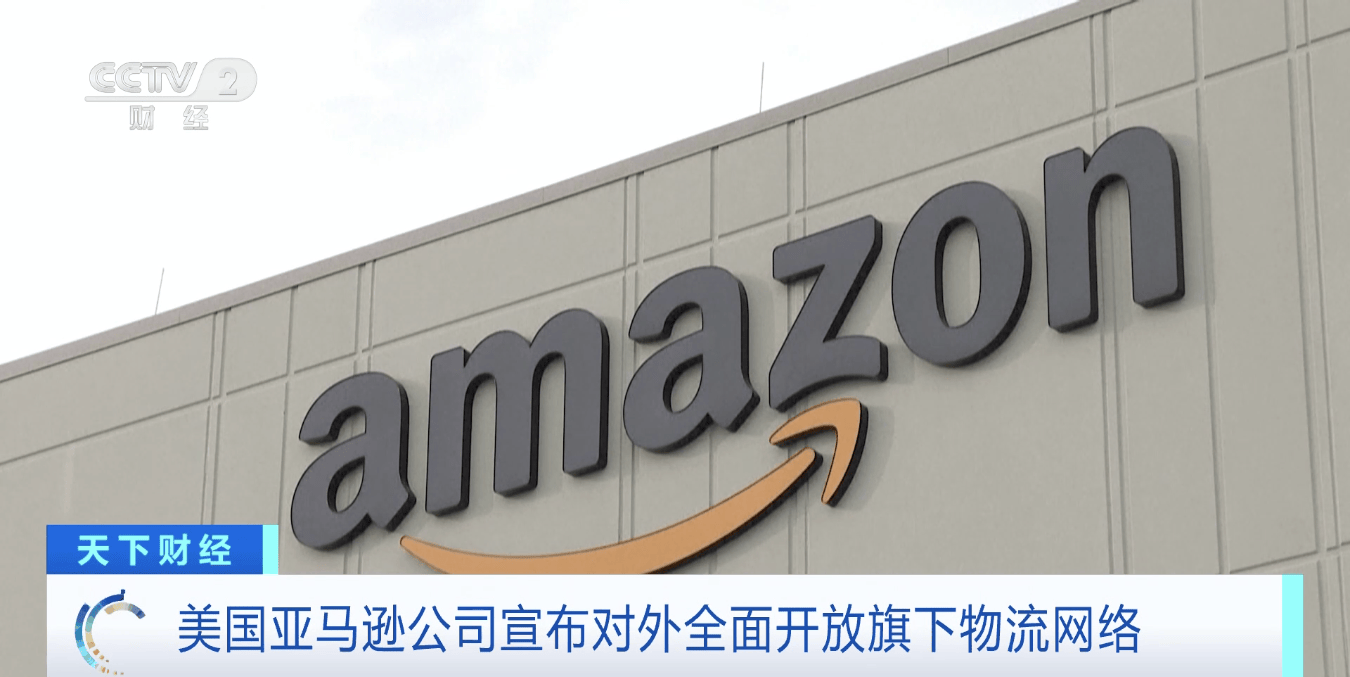
Image source: CCTV Finance
First batch of big-name clients rush in, "universal mover" covers all corners
"Amazon Supply Chain Services" is not just talk on paper; global top manufacturing and retail giants have already started rushing to pay for it.
Consumer goods giant Procter & Gamble and American apparel retail giant American Eagle have become the first "crab eaters". Public information shows that P&G is using Amazon's freight services to quickly transport urgently needed raw materials to its factories. 3M is leveraging Amazon's logistics network to rapidly distribute products from manufacturing plants to distribution centers around the world.
Another trend is even more noteworthy: P&G has directly handed over the entire process of transporting raw materials and finished products to Amazon. American Eagle has fully entrusted all order deliveries from its online store. This means that once these big clients get a taste of the benefits, UPS and FedEx may really lose their rice bowls.
More importantly, this service covers almost all transportation nodes by sea, land, and air. From sea, air, land to rail freight, everything is included. Enterprises can even use this system without selling goods on the Amazon platform.
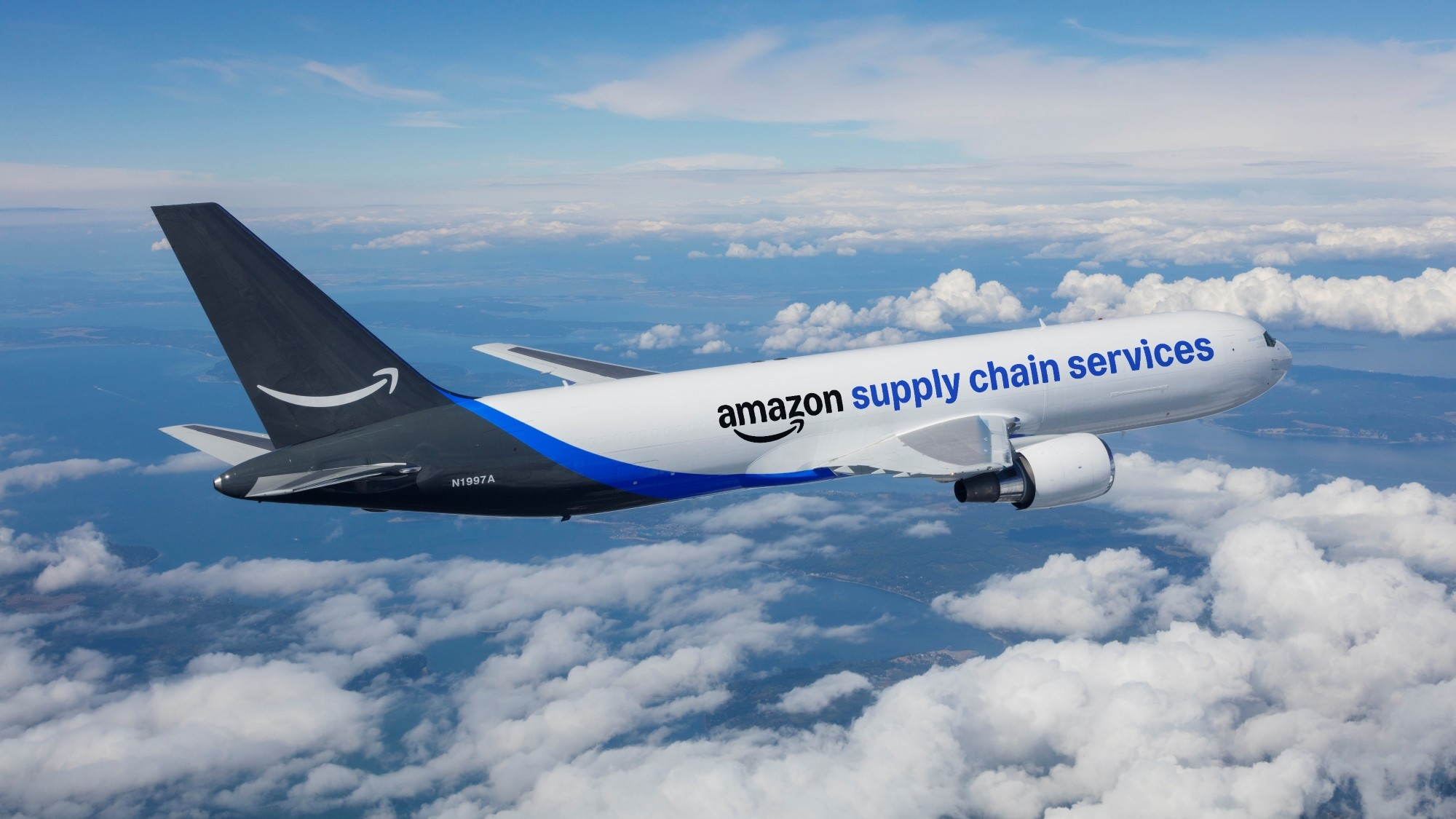
Image source:Amazon
Hardcore trump cards revealed for the first time, scale second only to FedEx and UPS
Amazon's confidence to challenge the entire logistics world comes from its "heavy assets" built with real money.
According to Amazon's financial reports and related news, by early 2026, Amazon will have more than 200 fulfillment and distribution centers in the US. Even more impressive is its fleet of cargo planes—Amazon owns a fleet of over 100 cargo aircraft, making it the second largest in the US after FedEx and UPS. Combined with more than 80,000 trailers and 24,000 intermodal containers across the US, Amazon's logistics iron army framework has already taken shape.
In addition, its extremely efficient big data algorithms are its secret weapon. Through AI, it can predict what you want to buy, move goods in advance to the warehouse closest to your doorstep, and complete last-mile parcel delivery and payment within just 2 to 5 days based on data.
Bernstein analysts have issued a warning that this new service could completely rewrite the circulation rules of the US logistics industry and intensify the competition among traditional companies in terms of price and delivery timeliness.
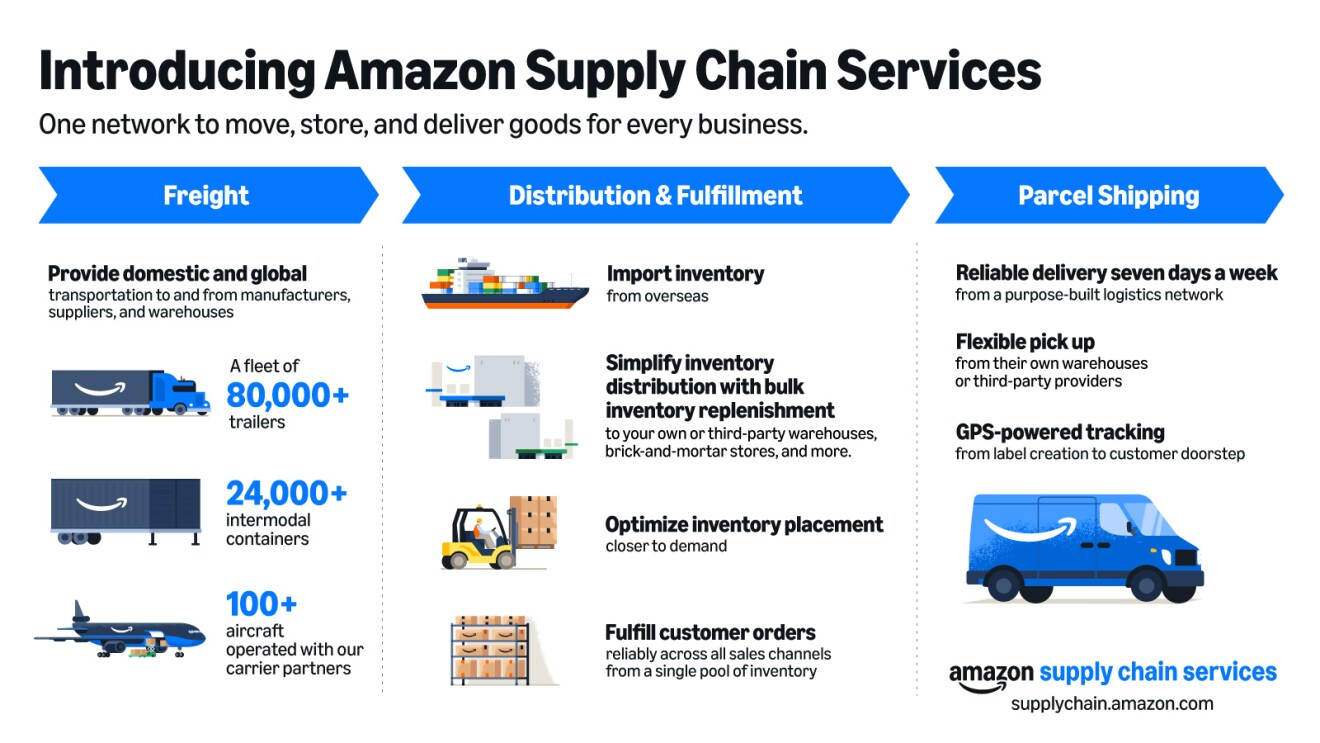
Image source:Amazon
"Integration" conquers the world, digital weapons are accelerating the reshuffle
By opening up its supply chain this time, Amazon has actually pieced together previously fragmented warehousing and transportation services into a versatile operating system. Whether you are in healthcare, manufacturing, or apparel, you can handle raw material transport, trunk logistics, and last-mile delivery with one click on the backend.
Moreover, Amazon's target is now set on high-value, high-frequency business express shipments. These B2B businesses are often more profitable and stable in volume than delivering toilet paper to ordinary households, and this is precisely the core business that UPS and FedEx do not want to lose.
Of course, this is both a challenge and an opportunity. As Amazon reshapes the logistics equity landscape, domestic e-commerce platforms and logistics companies will also need to consider: should they also build "open self-owned logistics" next? And in the trend of global trade fragmentation, will digital supply chains become the next generation's protective talisman for e-commerce and manufacturing?
Short answer for decision makers
This TikTok business signal should be used as a planning prompt, not a standalone trend. The practical question is whether your brand has the market readiness, creator supply, Shop conversion path, paid-media structure, and reporting cadence to act on it now.
Key facts
- Market signal: TikTok Marketing Information and Solutions
- Published: May 8, 2026
- Source transparency: the original source linked in this article
Tuke recommendation
Choose one market, one product group, one creator cohort, and one KPI for the next operating cycle. Then align creative testing, TikTok Shop optimization, live commerce readiness, and weekly reporting around that single decision.
What should brands do with this TikTok signal?
Brands should translate the signal into a focused operating test across creative, creators, TikTok Shop readiness, paid media, and reporting before increasing budget.
How does Tuke Marketing evaluate this kind of news?
Tuke Marketing reviews platform news through market timing, category demand, creator supply, commerce readiness, and measurable growth actions.
When should a team contact Tuke about this topic?
A team should contact Tuke when it needs to turn a TikTok market signal into a practical launch, creator, advertising, live commerce, or reporting plan.
Source transparency: Tuke cites the original source linked in this article and adds its own operating analysis for brands evaluating TikTok growth decisions.