
When it comes to soy milk machines,what is the first brand that comes to your mind?
I believe the name Joyoung has already appeared in many people's minds..
In 1994, Wang Xuning knocked on the doors of millions of Chinese households with a fully automatic home soy milk machine.
Decades later,hisother trump card——SharkNinja, is quietly rising in the overseas market.
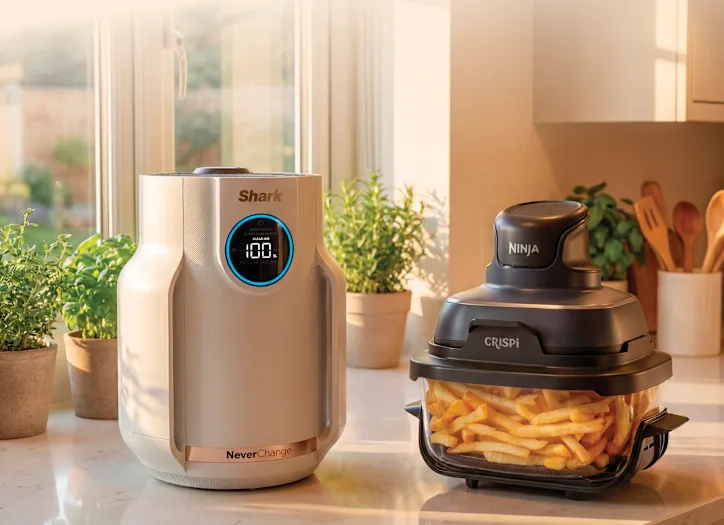
Image source:SharkNinja
In 2025, this brand that has been "hidden" for seven or eight years, handed in a rather impressive report card:
Annual net salesof $6.399 billion (about RMB 44.2 billion), up 15.7% year-on-year; net profit of $701.4 million, up 59.9% year-on-year.
In the North American cleaning appliance market, every2 households, 1 uses Shark products. In the field of kitchen small appliances, Ninja has ranked No.1 in sales in the US for several consecutive years.
Today, let's take a good look at whatSharkNinja has done right?
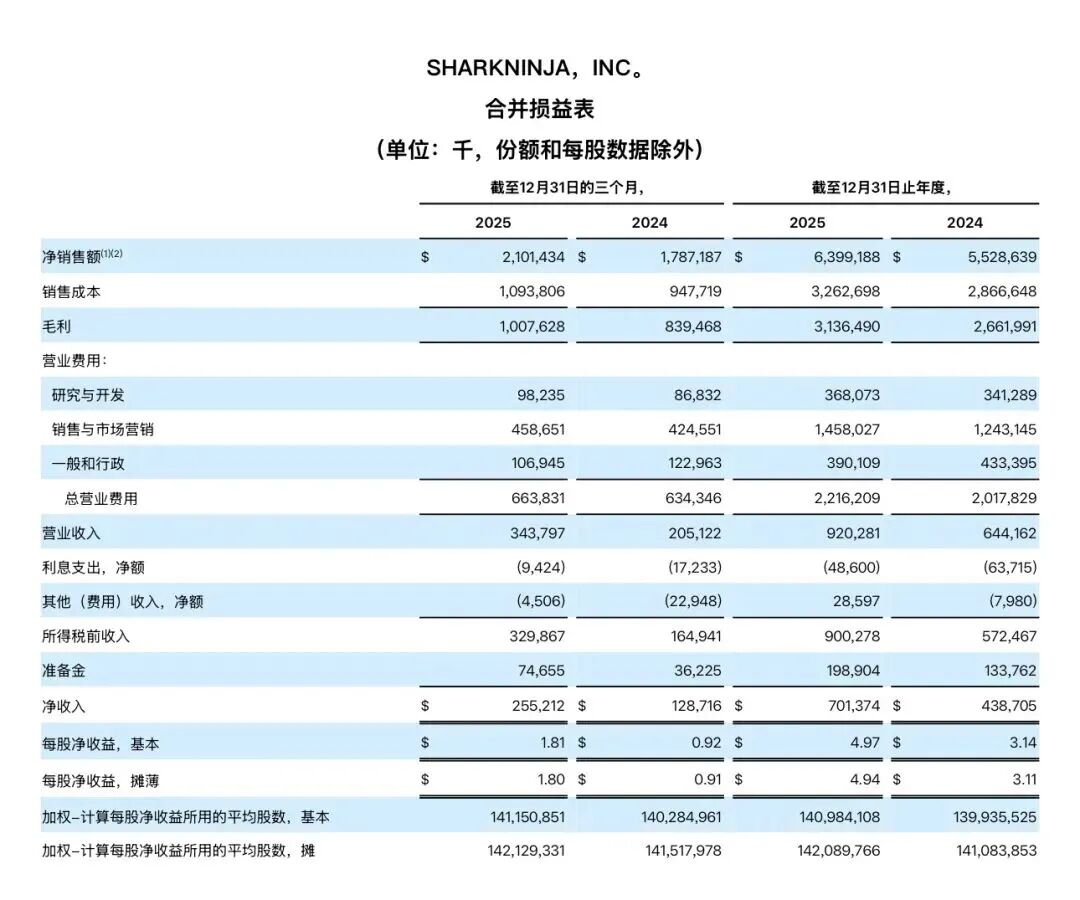
Image source:SharkNinja financial report
From Boston to Hangzhou, a cross-Pacific alliance
The story of SharkNinja starts in 1998.
That year,Shark was founded in Boston, focusing on cleaning small appliances, such asvacuum cleaners, steam mops, robot vacuums.Later,Ninja was born, focusing on kitchen appliances, mainly blenders, coffee makers, air fryers.
The two brands have their own division of labor, but in the North American market, they both follow the same path: high cost performance.
Most Shark vacuum cleaners are priced below $200, avoiding direct competition with Dyson in the high-end market. Ninja entered with blenders, refined the products, and then expanded horizontally to other categories.
This approach works very well in North America,byaround 2017, Shark and Ninja had become "perennial champions" in multiple categories on Amazon, with monthly sales of 30,000+ for vacuum cleaners and 9,000+ for steam mops being the norm.
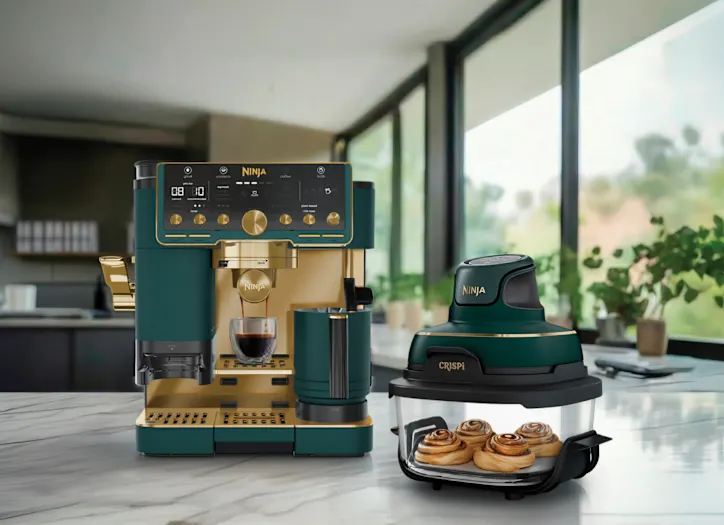
Image source:SharkNinja
Also in2017, Joyoung encountered its own bottleneck. After the boom period of the soy milk machine business in 2008-2009, it has been declining. The domestic market has peaked, and Tuke became an inevitable choice.
Wang Xuning took a fancy toSharkNinja. He didn't use the traditional "cut-and-manage" approach after the Chinese company acquisition, but instead adopted a "strategic holding + local operation" structure. Joyoung teamed up with CDH Capital, acquiring 70% of SharkNinja's parent company for $1.6 billion. Then, through equity swaps, Joyoung and SharkNinja were put into the same company, forming JS Global Lifestyle and listing on the Hong Kong Stock Exchange.
This structure was adjusted again in2023, splitting outSharkNinja's North American, European, and other overseas businesses for independent listing in the US. By the end of 2025, SharkNinja's market value had exceeded $10 billion, while JS Global Lifestyle, which remained listed in Hong Kong, was valued at about HK$5.4 billion.
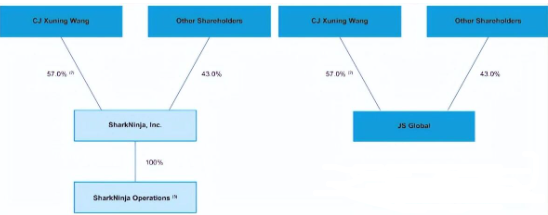
Image source: Internet
The "fork in the road" of the small appliance industry, how does SharkNinja move forward?
The small appliance market in 2025 can be described as "a tale of two extremes".
On the domestic side, data shows thatin the first half of 2025, China's small appliance retail sales fell by 6%-8% year-on-year, and categories such as air fryers and high-speed blenders that were hot in previous years saw declines in both volume and value.
But the overseas market is a different story. According to Customs data,in the first three quarters of 2025, China's small appliance exports continued to grow, with some companies recording double-digit increases in Southeast Asia, the Middle East, and Europe.
The global small appliance market is expected to reach $305 billion by2028. In other words, it's not that small appliances are no longer viable, but that "concept-only, no real skills" small appliances are no longer viable.
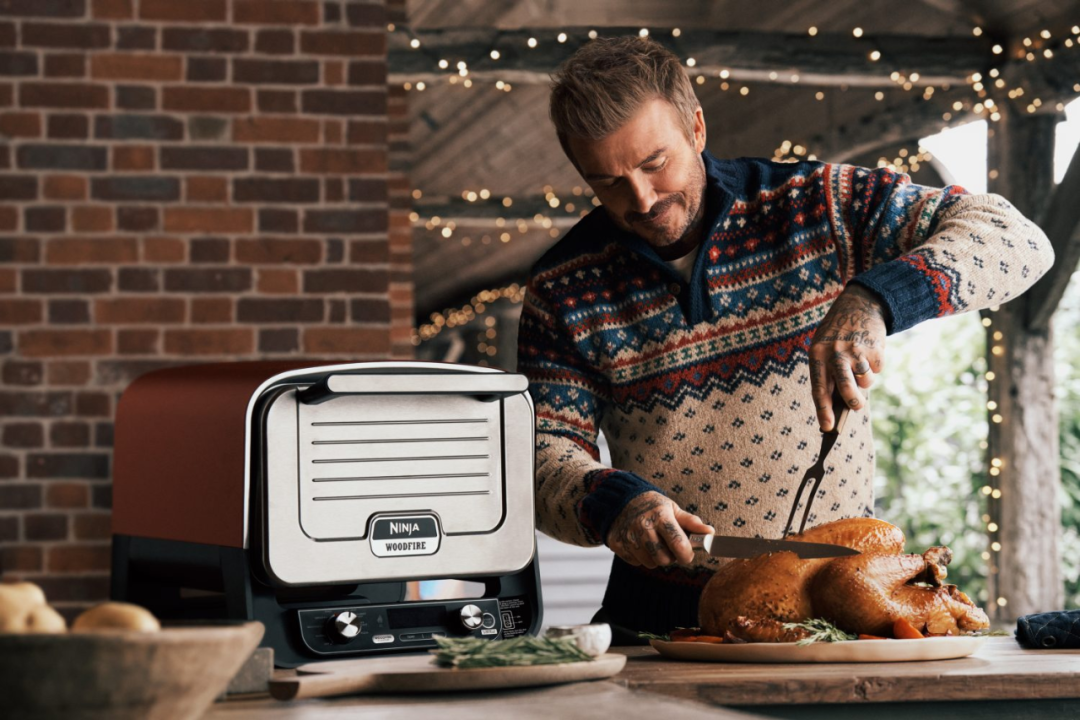
Image source:SharkNinja
SharkNinja has precisely seized this window. Its strategy is clear: technical upgrades on the product side, and advancing both online and offline channels.
The 2025 financial report shows that all four major product lines of SharkNinja achieved growth, with beauty and home environment appliances growing by over 45%, and food preparation appliances growing by 31.6%. This growth does not come from simple function stacking, but from insight into real user needs.
Meanwhile,SharkNinja's channel layout is even more impressive. Its performance on Amazon needs no elaboration, with multiple categories firmly occupying Best Seller lists.
But what truly enabled its leapfrog growth is the three-dimensional channel network built on social media and independent sites.
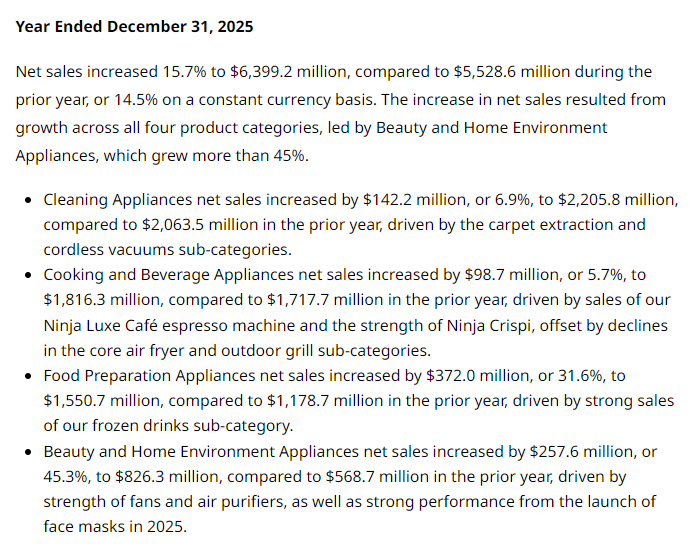
Image source:barchart
Social media layout, scenario-based marketing core
As the fastest-growing social media e-commerce platform globally,SharkNinjaonTikTokadopteda "category and region segmented" account matrix strategy.
Targeting consumption differences in different markets,theylauncheddifferentlocalized accounts, focusing on mainstream markets like the US, UK, France, and also launched regional accounts such as@sharkninjaidfor localized operations.
Annual revenue exceeds$6.3 billion, the small appliance brand acquired by Joyoung has quietly made a fortune!

Image source:TikTok
In category operations,SharkNinja chooses to operate the two brands separately, and has already accumulated considerable scale.
As ofMarch 2026, @ninjakitchen has accumulated 1.8 million followers and 14.7 million likes, @sharkhome has 294,200 followers and 2.4 million likes, the two accounts reach users with different needs for kitchen and cleaning appliances, avoiding brand positioning confusion.
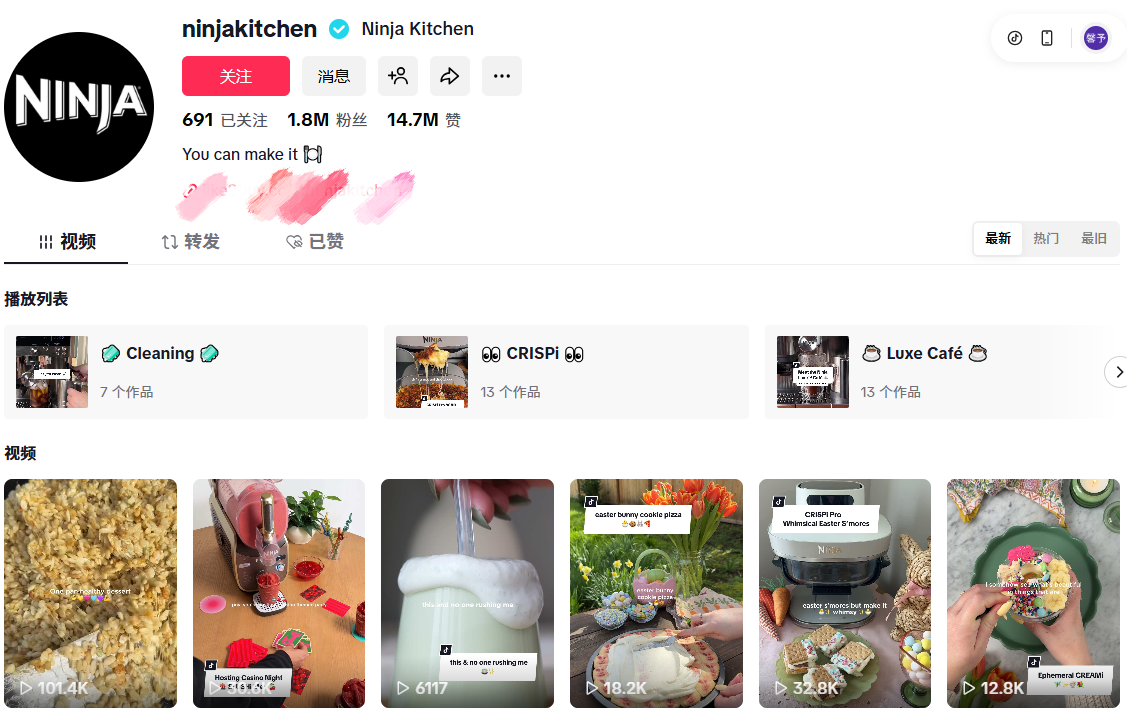
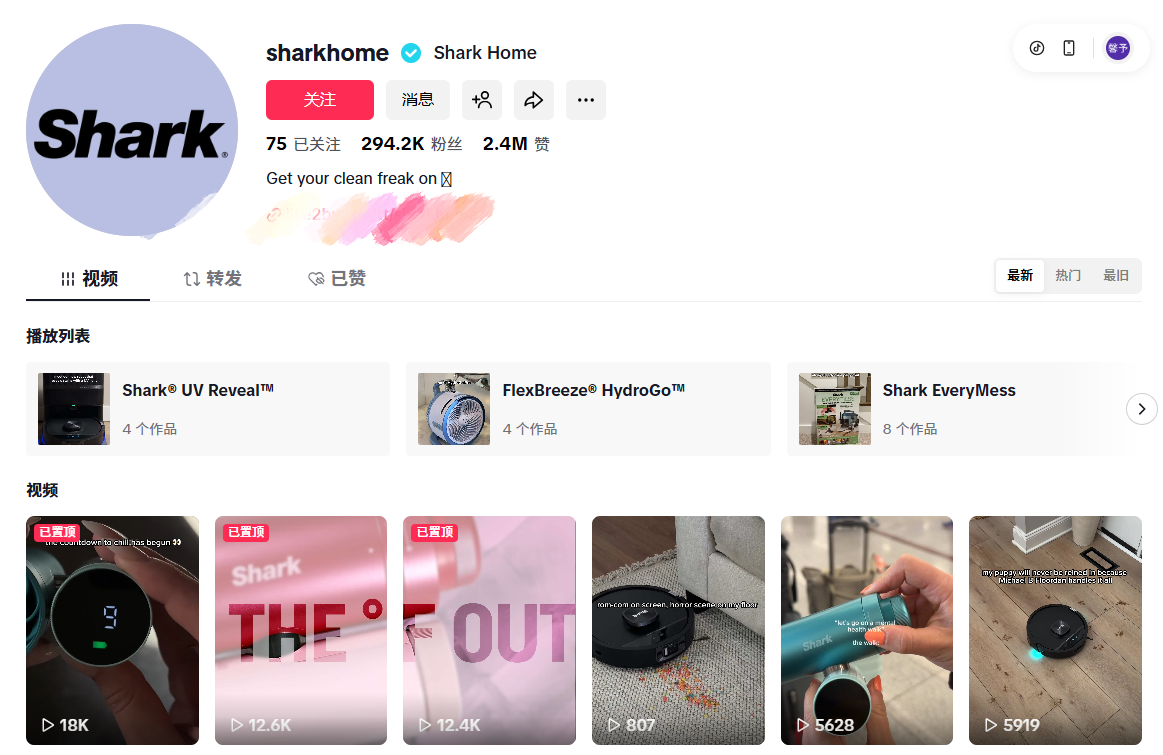
Image source:TikTok
Today, let's start withNinja and see its content strategy on TikTok.
Ninja's content strategy is very methodical, simply put, firstbind to trending topics,thendo scenario-based placement. For example,theyintegrate products into#OutdoorCooking, #CampingEssentials and other topics, letting product advantages naturally show in real usage scenarios, instead of bluntly shouting selling points.
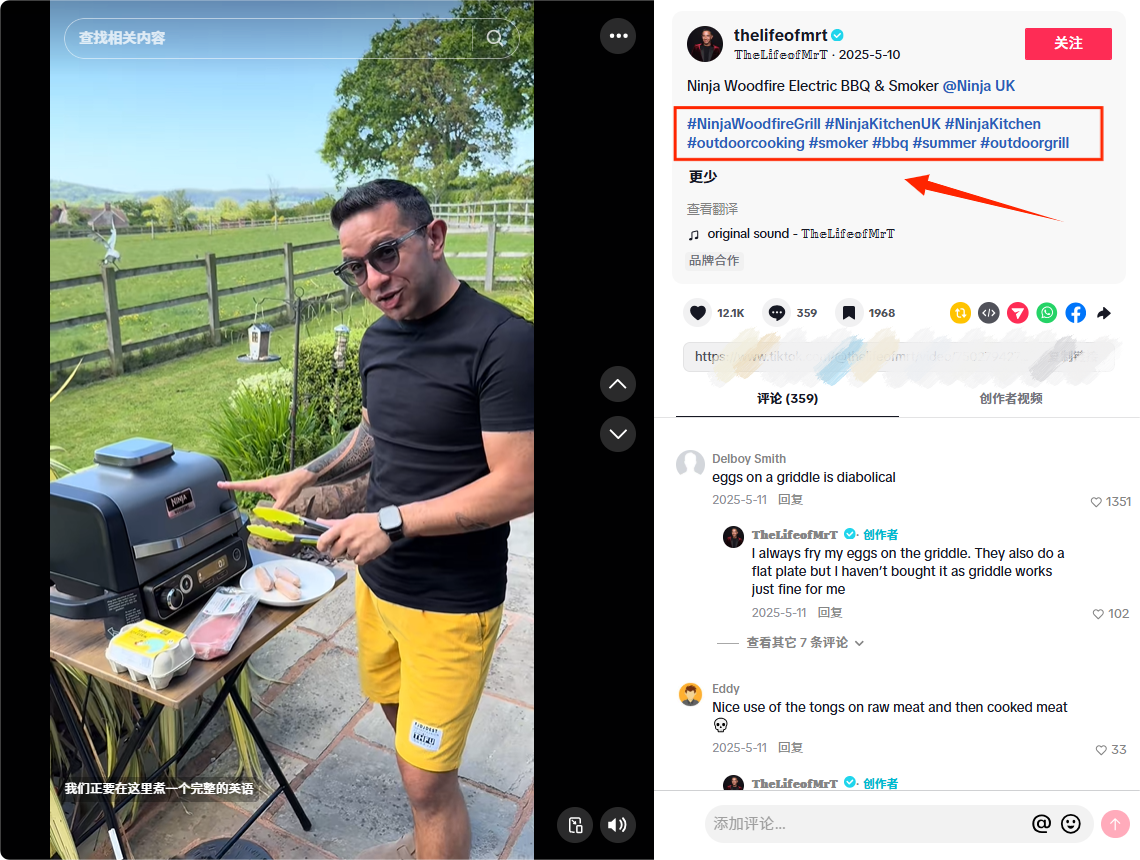
Image source:TikTok
On the account@ninjakitchen, you can often see such scenario-based content.
For example, a video released in early March this year cleverly combined the #Spring tag, integrating the Ninja SLUSHii slush machine into the spring atmosphere, instantly igniting users' longing for seasonal scenarios.
This video eventually garnered over5.2 million views, with the comments full of anticipation and discussion about the product, showing the effectiveness of scenario-based content.
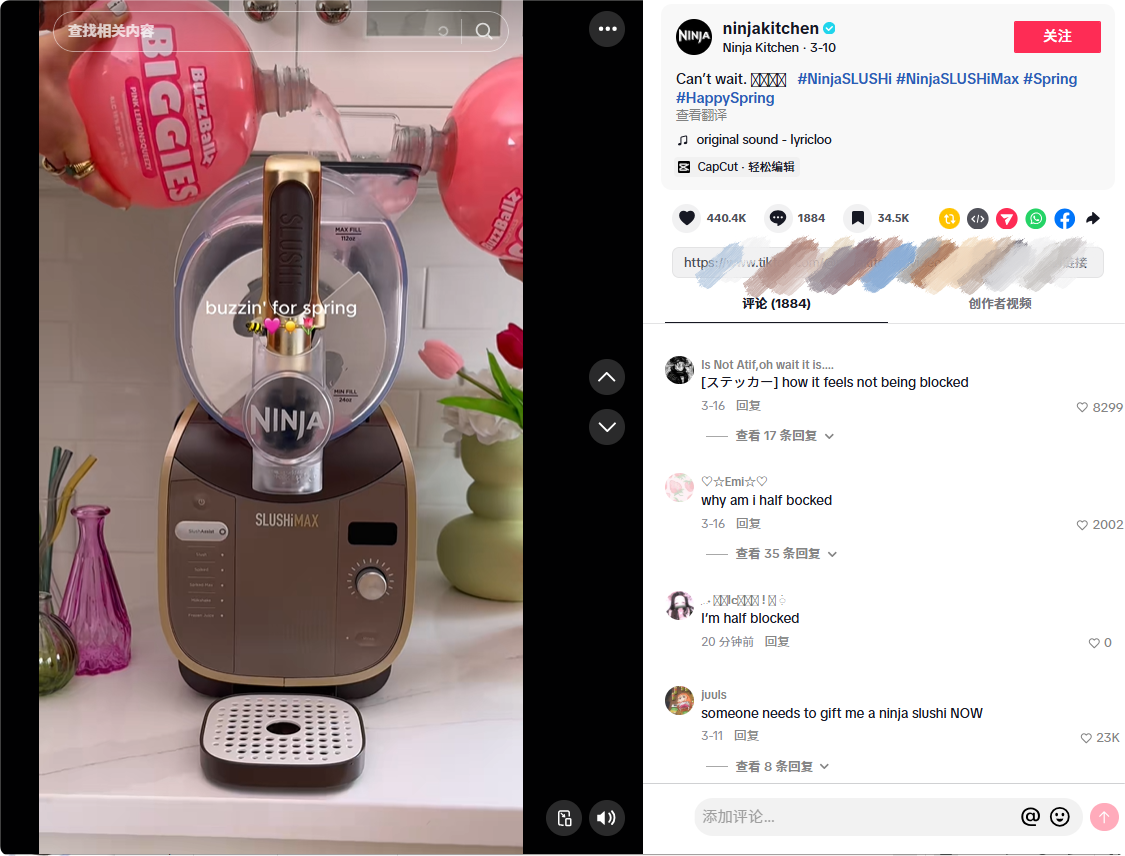
Image source:TikTok
In terms of influencer collaboration,Ninja also skips traditional hard ads and instead establishes long-term partnerships with vertical influencers.
TakeTikTok influencer @hay_hes as an example, she mainly shares family life content, with a real and natural style.
In her collaboration video with the brand, she chose a family day taking kids to the pool as the background, naturally placing theNinja FrostVault cooler usage scenario, and explained core selling points like "24-hour cooling, independent dry storage area".
The whole segment is blended into a warm family routine, fitting the influencer's usual content tone, and letting viewers unconsciously feel the product's value, making it easy for family users to relate.
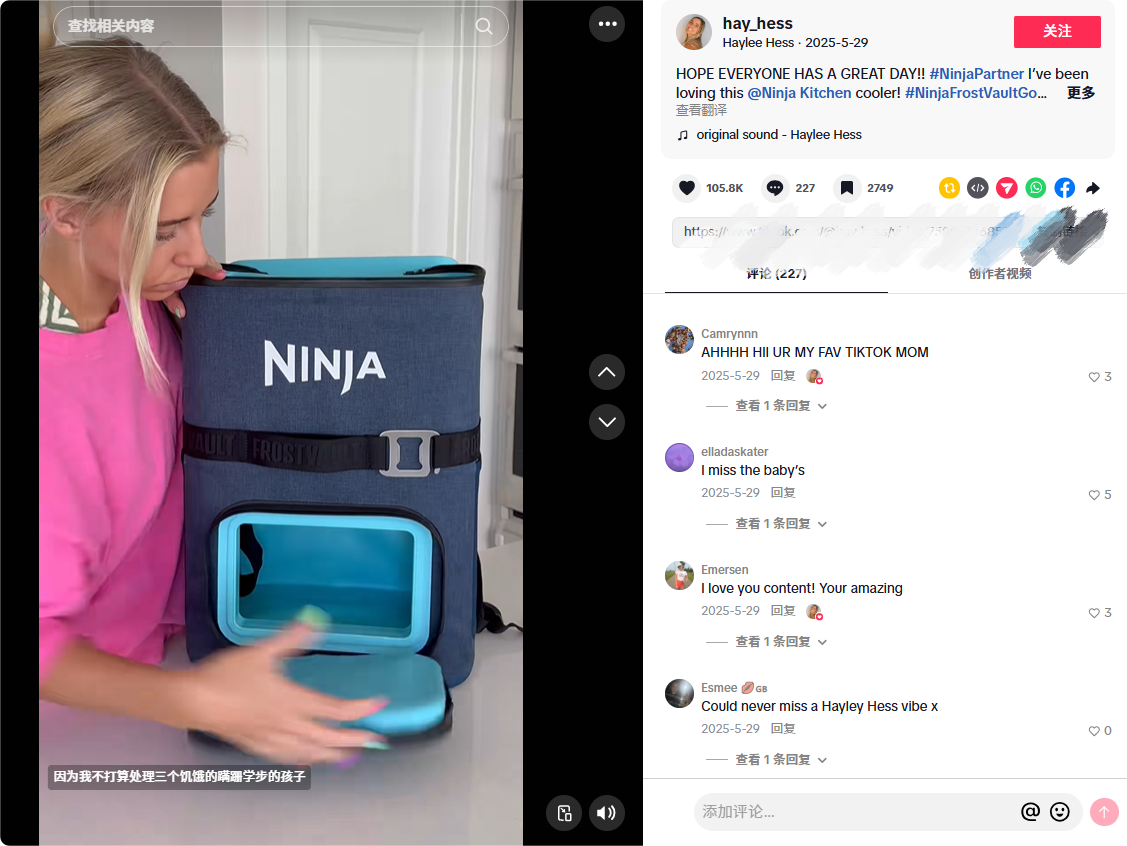
Image source:TikTok
This influencer seeding model has also achieved very impressive results.
According toTikTok Shop public data from Feb 22 to Mar 23, 2026, Ninja Kitchen US shop achieved $5.3827 million in transaction value in the past 30 days, with affiliate influencers contributing $4.9442 million, accounting for 91.85% of total transactions, fully validating the feasibility of this model.
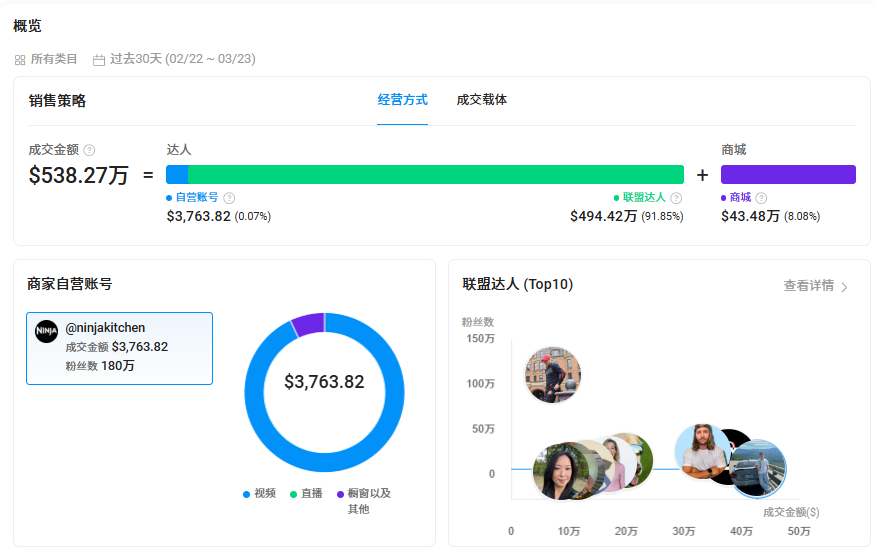
Image source:kalodata
Independent site and DTC: Holding user relationships in your own hands
In addition to traditional retail channels and platform e-commerce,SharkNinja has also been actively strengthening its independent site and direct-to-consumer (DTC) layout in recent years.
According to the company'sOctober 2025 press release, SharkNinja unified and upgraded its independent site, building a "unified destination" to improve conversion rates and brand experience consistency.
This means the brand no longer relies solely on third-party retail and platform traffic, but deposits first-party user data through the independent site, while connecting with social ads and content seeding to form a"seeding—jump—transaction—member retention" closed loop.
In addition, company management also clearly mentioned in the2025 financial report communication that they are increasing investment in software capabilities and direct-to-consumer platforms, hoping to strengthen bargaining power and brand control in their own channels during global expansion.
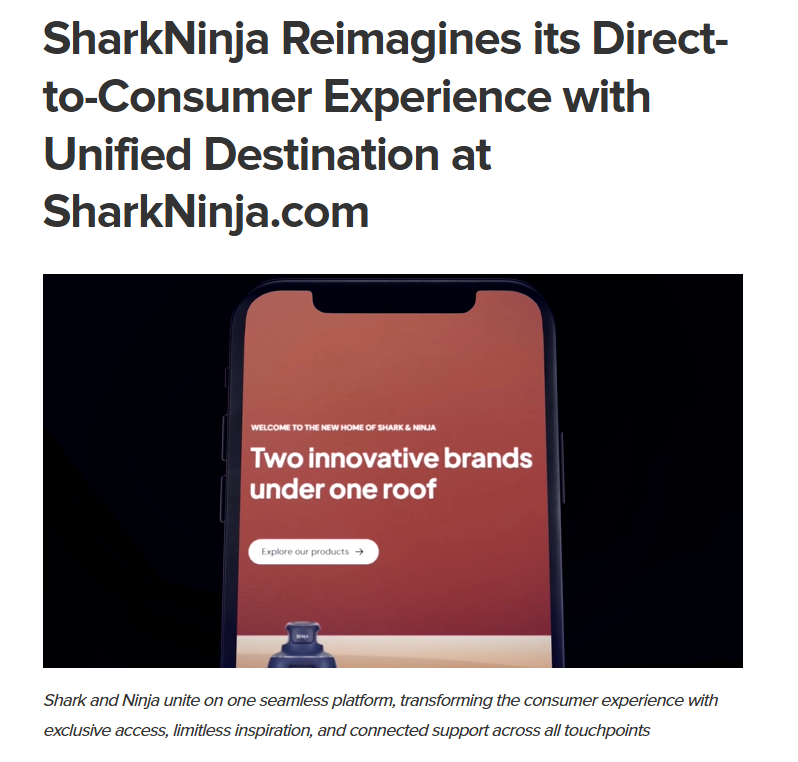
Image source:SharkNinja
FromSharkNinja's path, you can see an increasingly clear trend: doing overseas markets is far more than just "selling mature domestic products abroad", but requires systematic restructuring from brand, product, channel to organizational form.
Understand that Tuke is no longer just"the task of the marketing department", but a long-term strategic project from top to bottom.
For companies hesitating about Tuke, or just staying at"testing the waters", what is most needed now is to quickly clarify a clear timetable and investment plan, and take the first step within a manageable range.
What this signal means for growth teams
This market signal should be treated as an operating prompt, not a standalone trend. The brand question is whether the team can connect TikTok content, creators, paid media, commerce readiness, and reporting into one measurable growth cycle.
Commercial read
- Market signal: TikTok marketing tips - short video marketing methods
- Published: April 1, 2026
- Commercial lens: TikTok Ads, creators, TikTok Shop, live commerce, and reporting.
- Source transparency: the original source linked in this article
What brands should do next
- Identify the market, audience, product group, and KPI this signal could affect.
- Turn the insight into a small TikTok creative, creator, Shop, or paid media test before scaling spend.
- Add FAQ, offer clarity, product proof, and contact paths so traffic can convert instead of only reading.
- Review weekly performance across reach, click quality, Shop actions, creator output, and revenue impact.
Tuke Marketing helps brands connect TikTok Ads, creator partnerships, TikTok Shop operations, live commerce, and reporting into one accountable operating system.
What should brands do with this TikTok signal?
Brands should translate the signal into a focused operating test across creative, creators, TikTok Shop readiness, paid media, and reporting before increasing budget.
How does Tuke Marketing evaluate this kind of news?
Tuke Marketing reviews platform news through market timing, category demand, creator supply, commerce readiness, and measurable growth actions.
When should a team contact Tuke about this topic?
A team should contact Tuke when it needs to turn a TikTok market signal into a practical launch, creator, advertising, live commerce, or reporting plan.
Source transparency: Tuke cites the original source linked in this article and adds its own operating analysis for brands evaluating TikTok growth decisions.