
With the rapid popularization of whole-house intelligence, smart door locks, as the core product of home security, are ushering in a period of explosive demand.
According to fortunebusinessinsights data, the global smart door lock market size is estimated at $2.91 billion in 2024. It is expected that by 2032, the global smart door lock market size will grow to $13.44 billion.
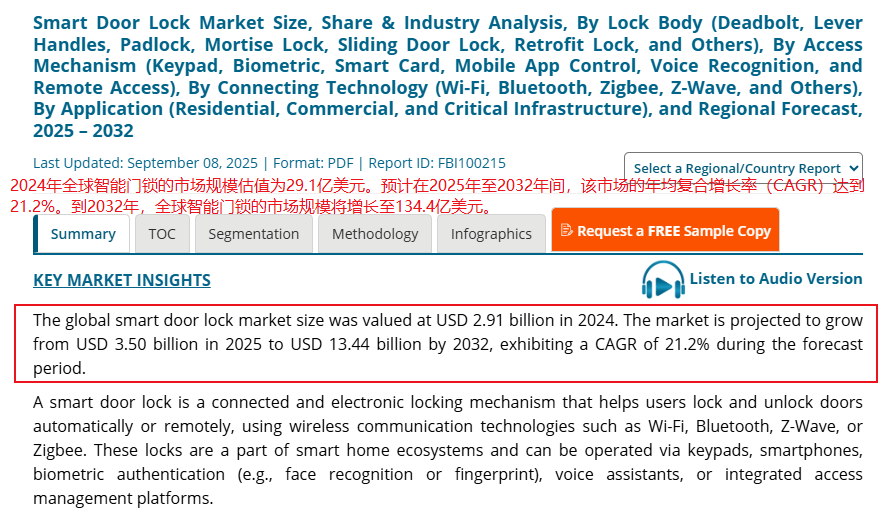
Image source: fortunebusinessinsights
Although smart door locks have now become a popular accessory in daily life, with application scenarios extending from homes to apartments, parks, schools, hotels, and many other fields, market demand continues to grow.
But if we turn back time to 2009, smart door locks were still a niche product for most consumers, not widely used in daily life scenarios.
However, it was during this market blank period that a company from Shenzhen, China, saw the opportunity, using smart door locks as an entry point, targeting the mid-to-high-end track, gradually expanding into Tuke markets, and eventually growing into a super seller in this niche category.
This company is Shenzhen smart door lock brandKaadas.
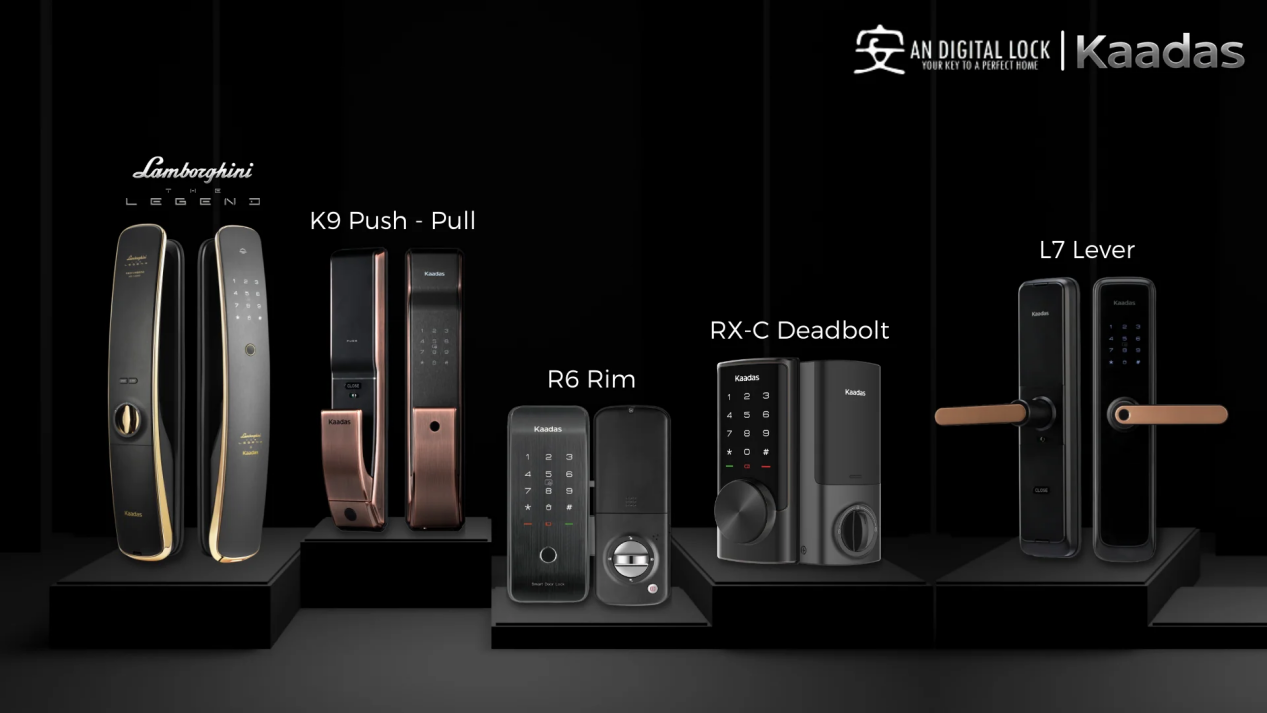
Image source: Google
Reportedly, the brand's revenue in 2021 surpassed 2 billion yuan, and in the same year completed a Series B financing round of nearly $100 million, setting a new record for smart door lock industry financing.
Subsequently, in 2022, it completed a Series C financing round of up to 600 million yuan, showing strong growth momentum.
Nowadays, Kaadas’ products cover 36 countries and regions worldwide, with cumulative sales exceeding 10 million units, serving over 6 million users, and securing the number one spot in global high-end smart lock sales, making it a highly popular brand in this niche track.
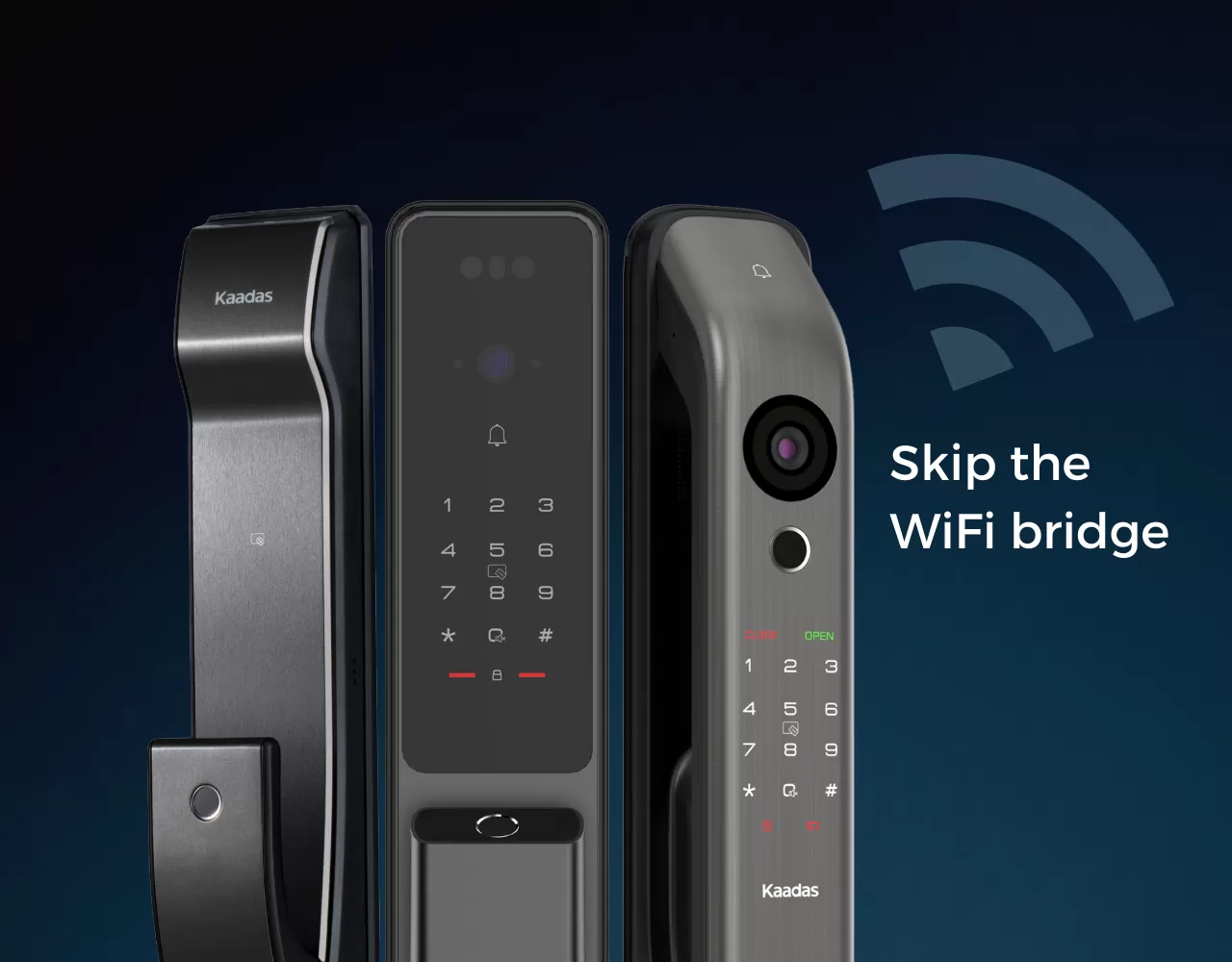
Image source: Kaadas
From mechanical locks to smart locks: Kaadas’ brand evolution
According to reports, the story of the Kaadas brand began in the 1980s.
Founder Mr. Su entered the lock industry as early as 1988, initially focusing on mechanical locks. By 2004, the company’s total product sales had exceeded 20 million sets, reaching a scale of hundreds of millions.
In 2005, while on a business trip in Germany, Mr. Su encountered local high-end smart door locks and judged that this product had huge potential in future home security, so he decided to switch tracks after returning to China and began developing smart door lock products.
In 2009, Mr. Su officially founded the Kaadas brand, focusing on the R&D and production of high-end smart locks.

Image source: Kaadas
However, the brand’s development was not all smooth sailing. As competition in the domestic smart door lock market intensified, Kaadas once faced growth pressure.
The turning point came in 2017, after a management transition, Kaadas launched the K7 series of new products priced at around 1,000 yuan, invited actress Liu Tao as spokesperson, and increased brand exposure in effective channels such as high-speed rail and airports.
These moves opened up the domestic market for Kaadas, allowing its revenue in 2017 to reach 330 million yuan and helping the brand emerge from its development trough.
In the following years, the company entered a rapid development phase. In 2021, its annual total revenue surpassed 2 billion yuan.

Image source: Kaadas
After achieving success in the domestic market, Kaadas began to lay out Tuke. Unlike its approach in the domestic market, Kaadas adopted a localized strategy for Tuke.
For the US market, which has high requirements for privacy protection, Kaadas launched "American Standard Locks" that comply with local standards, focusing on basic functions such as passwords and keys.
In the Southeast Asian market, due to language diversity, Kaadas made targeted adjustments to its products, equipping its smart door locks with voice control systems supporting more than ten local mainstream languages such as Indonesian, Thai, Vietnamese, etc., improving product usability and acceptance.
It is precisely this localized strategy that has made Kaadas’ products loved by many consumers Tuke.
Social media marketing: Let Tuke consumers see Kaadas
In Tuke markets, relying solely on localized product strategies is far from enough. How to make target consumers recognize and trust the brand is a problem that Tuke companies must solve.
For example, Kaadas chose to leverage the power of social media platforms such as TikTok and YouTube, promoting and marketing its products in ways that are closer to users.
TikTok: Using scenario-based content to get closer to users
On TikTok, Kaadas focuses on using everyday scenarios to get closer to users.
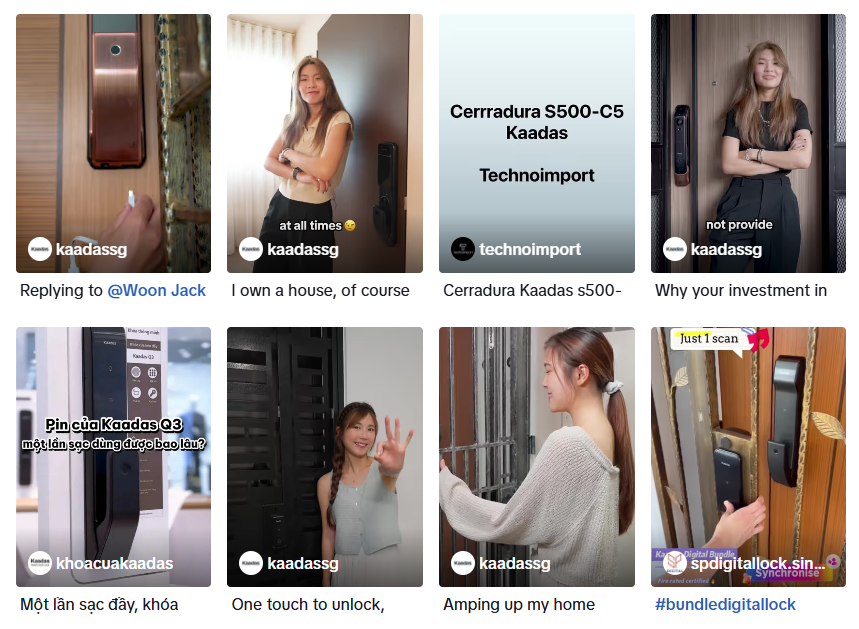
Image source: TikTok
For example, a video showcasing the Kaadas K20 smart door lock demonstrates how users can use a mobile app to check the situation outside the door in real time, record visitor information, and supports multiple unlocking methods such as fingerprint, password, and key.
So far, this video has received nearly 500,000 views, with many users asking about the price and specific operation methods in the comments, showing strong purchase intent:
"If I tap, can my phone open the door?"
"Can I know the price of this?"
It can be seen that such life-oriented video content allows potential users to intuitively feel the practicality of the product, which greatly helps to further promote purchase conversion.
YouTube: Professional reviews enhance product credibility
On YouTube, Kaadas chooses to cooperate with tech bloggers, showcasing the technical advantages of its products through professional reviews.
For example, tech blogger Shawn Koh collaborated with Kaadas to shoot a review video for the Kaadas K9 smart door lock.
So far, this video has reached 10,000 views.
In this video, blogger Shawn Koh thoroughly tests the product’s five unlocking methods, including fingerprint recognition, password input, card swipe, remote authorization of temporary passwords, and physical keys, and answers practical questions such as emergency use during power outages.
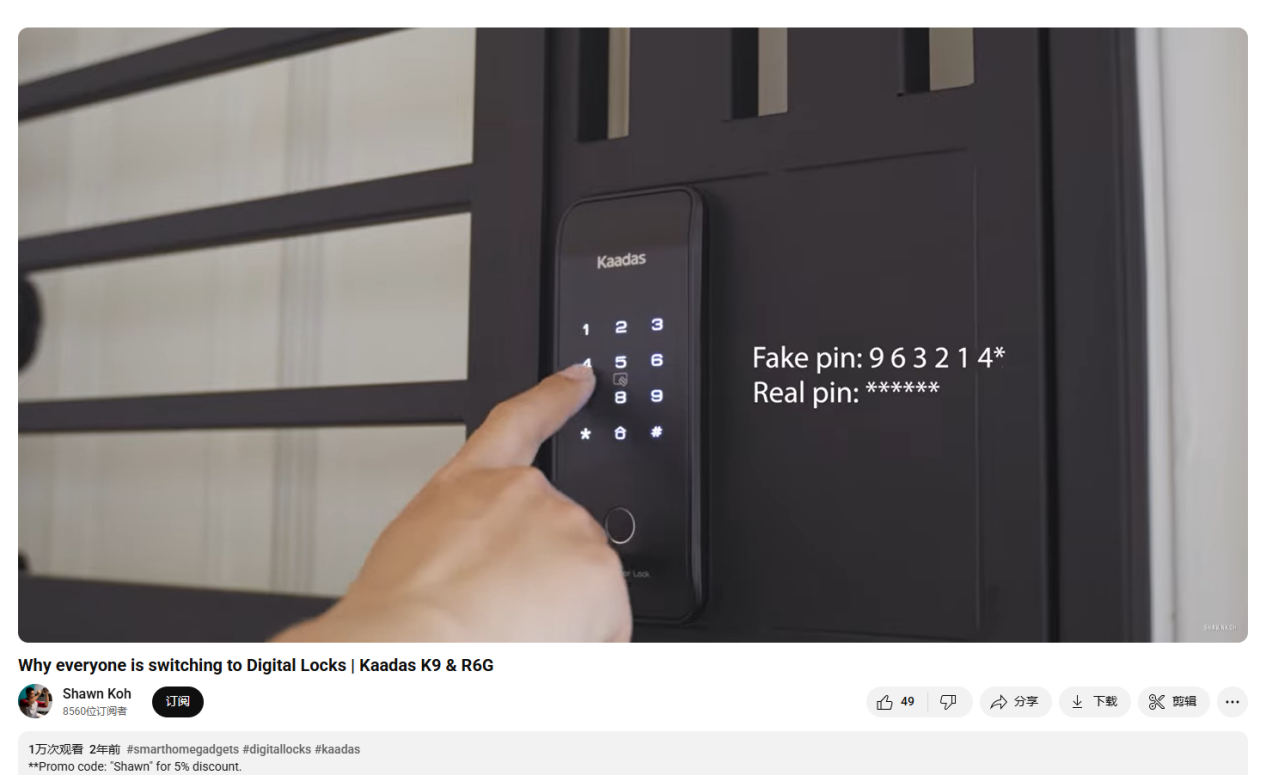
Image source: YouTube
Building an independent site to enhance brand autonomy
In addition to differentiated marketing on social media platforms, the Kaadas brand has also built an independent brand site. The website adopts a simple black, white, and gray color scheme, highlighting the functionality and sense of technology of the products.
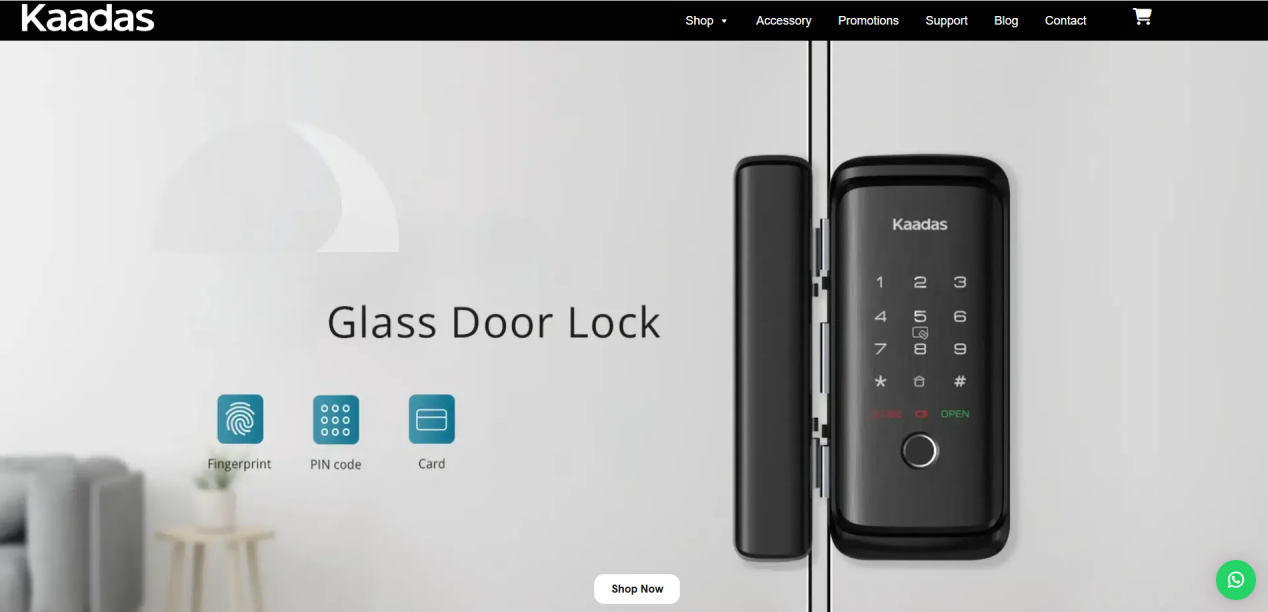
Image source: Kaadas
On the homepage of the independent site, Kaadas has set up a function area to directly showcase core selling points such as facial recognition, fingerprint unlocking, APP control, etc., allowing potential users to quickly understand the various functions of the products.
For users who purchase on the independent site, the brand also provides installation and after-sales services, which greatly helps to enhance user goodwill.
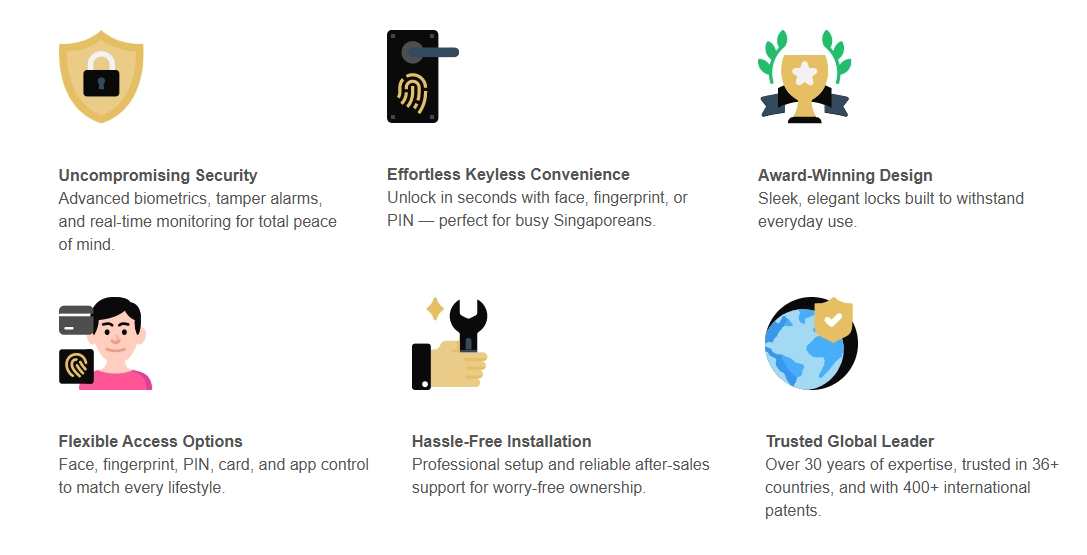
Image source: Kaadas
In addition, there is a user review section on the independent site, where real consumers leave feedback after use, which helps to dispel potential users’ doubts and further convert them into purchases.
Therefore, when promoting Tuke, you can also use the combination of independent site + social media like Kaadas, creating a complete closed loop from traffic acquisition to user retention, thereby obtaining more Tuke orders.

Image source: Kaadas
Conclusion
Kaadas’ Tuke journey proves one thing:A successful global layout requires systematic strategic support.
The brand’s localized thinking at the product level, content adaptation capability at the communication level, and independent operation system at the channel level together form the core framework of its Tuke strategy.
Although competition in the global market is fierce, cases like Kaadas show that with the right strategy and solid execution, Chinese brands are fully capable of succeeding in Tuke markets.
For companies considering Tuke, the key is to start substantive planning and continuously improve global operation strategies through market practice!
What this signal means for growth teams
This market signal should be treated as an operating prompt, not a standalone trend. The brand question is whether the team can connect TikTok content, creators, paid media, commerce readiness, and reporting into one measurable growth cycle.
Commercial read
- Market signal: TikTok marketing tips - short video marketing methods
- Published: September 30, 2025
- Commercial lens: TikTok Ads, creators, TikTok Shop, live commerce, and reporting.
- Source transparency: the original source linked in this article
What brands should do next
- Identify the market, audience, product group, and KPI this signal could affect.
- Turn the insight into a small TikTok creative, creator, Shop, or paid media test before scaling spend.
- Add FAQ, offer clarity, product proof, and contact paths so traffic can convert instead of only reading.
- Review weekly performance across reach, click quality, Shop actions, creator output, and revenue impact.
Tuke Marketing helps brands connect TikTok Ads, creator partnerships, TikTok Shop operations, live commerce, and reporting into one accountable operating system.
What should brands do with this TikTok signal?
Brands should translate the signal into a focused operating test across creative, creators, TikTok Shop readiness, paid media, and reporting before increasing budget.
How does Tuke Marketing evaluate this kind of news?
Tuke Marketing reviews platform news through market timing, category demand, creator supply, commerce readiness, and measurable growth actions.
When should a team contact Tuke about this topic?
A team should contact Tuke when it needs to turn a TikTok market signal into a practical launch, creator, advertising, live commerce, or reporting plan.
Source transparency: Tuke cites the original source linked in this article and adds its own operating analysis for brands evaluating TikTok growth decisions.