
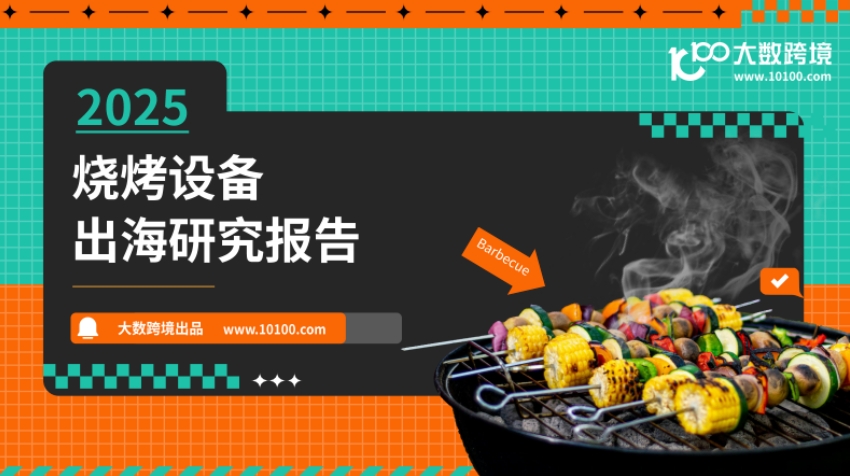
The document focuses on the overseas expansion of barbecue equipment, first discussing the popularity of barbecue culture, which drives the growth in market demand for barbecue equipment. Especially in the West, barbecue is regarded as an important social activity, and equipment has shifted from traditional charcoal grills to modernized products. Chinese products have expanded their international market share due to their cost-effectiveness and technological advantages. It then introduces that barbecue equipment includes various types such as grills, cooking tools, etc.
Next, it analyzes the market size. The global barbecue grill market is expected to reach about $8.2 billion by 2033, with a compound annual growth rate of 4.6%. Both commercial and household barbecue grills have growth potential, and the market size of gas grills will expand due to advantages such as convenience. The barbecue accessories market is also growing, with common accessories including grill racks, aluminum trays, etc.
Looking at regional markets, North America, Europe, and Asia-Pacific are the main regions. North America has a large market size, and American consumers have a strong willingness to barbecue in summer; in Europe, electric grills account for 38%, and the German market has growth potential; in the Asia-Pacific region, demand for barbecue equipment is growing rapidly in China, Japan, South Korea, etc.
China's export value of barbecue utensils is high, with a complete industrial chain and cost advantages, but brand awareness is low. Entering the international market faces challenges such as competition, standards, and differences in consumer demand. Consumers have demands for barbecue equipment such as intelligent temperature control, lightweight, and environmental protection, but there are also pain points such as inaccurate temperature control.
Finally, taking Asmoke as an example, it describes how the company has achieved success through strategies such as intelligence, crowdfunding, and multi-channel sales, emphasizing that the overseas expansion of barbecue equipment should focus on product innovation, brand building, etc. Daxu Cross-border Platform also provides related services to support enterprises in going global.


What this signal means for growth teams
This market signal should be treated as an operating prompt, not a standalone trend. The brand question is whether the team can connect TikTok content, creators, paid media, commerce readiness, and reporting into one measurable growth cycle.
Commercial read
- Market signal: TikTok Industry Research and Analysis Report
- Published: June 20, 2025
- Commercial lens: TikTok Ads, creators, TikTok Shop, live commerce, and reporting.
- Source transparency: the original source linked in this article
What brands should do next
- Identify the market, audience, product group, and KPI this signal could affect.
- Turn the insight into a small TikTok creative, creator, Shop, or paid media test before scaling spend.
- Add FAQ, offer clarity, product proof, and contact paths so traffic can convert instead of only reading.
- Review weekly performance across reach, click quality, Shop actions, creator output, and revenue impact.
Tuke Marketing helps brands connect TikTok Ads, creator partnerships, TikTok Shop operations, live commerce, and reporting into one accountable operating system.
What should brands do with this TikTok signal?
Brands should translate the signal into a focused operating test across creative, creators, TikTok Shop readiness, paid media, and reporting before increasing budget.
How does Tuke Marketing evaluate this kind of news?
Tuke Marketing reviews platform news through market timing, category demand, creator supply, commerce readiness, and measurable growth actions.
When should a team contact Tuke about this topic?
A team should contact Tuke when it needs to turn a TikTok market signal into a practical launch, creator, advertising, live commerce, or reporting plan.
Source transparency: Tuke cites the original source linked in this article and adds its own operating analysis for brands evaluating TikTok growth decisions.