
At the beginning of this year, a video once went viral on the Internet, in which a netizen showed off a washing machine from 1997 used at home, with the caption:“A washing machine from 1997, I bet the manufacturer has already gone out of business.”
As soon as this video was posted on social media, it instantly attracted a large number of viewers and playful comments. After all, a washing machine that has worked for 26 years and is still functioning is simplya kind of “reverse mockery” of modern technology.
But who would have thought that while netizens were joking about their own old appliances, the protagonist of the video actually appeared in the comment section andresponded humorously: “I heard you’re telling everyone we went out of business?” and even sent a brand new front-loading washing machine.

For a while,the washing machine brand “Weili”became a trending topic. After searching for information, netizens were surprised: “So Weili isn’t dead, it’s actually doing even better!”
That’s right, this “King of Chinese Washing Machines,” which once struggled on the verge of bankruptcy like some other old domestic brands, has successfully been reborn after overcoming its lowest point, riding the wave of globalization, entering overseas markets, and winning applause abroad through cross-border e-commerce and social media marketing.
Its story of going global is not only thought-provoking, but also provides valuable inspiration for the transformation of many traditional brands.

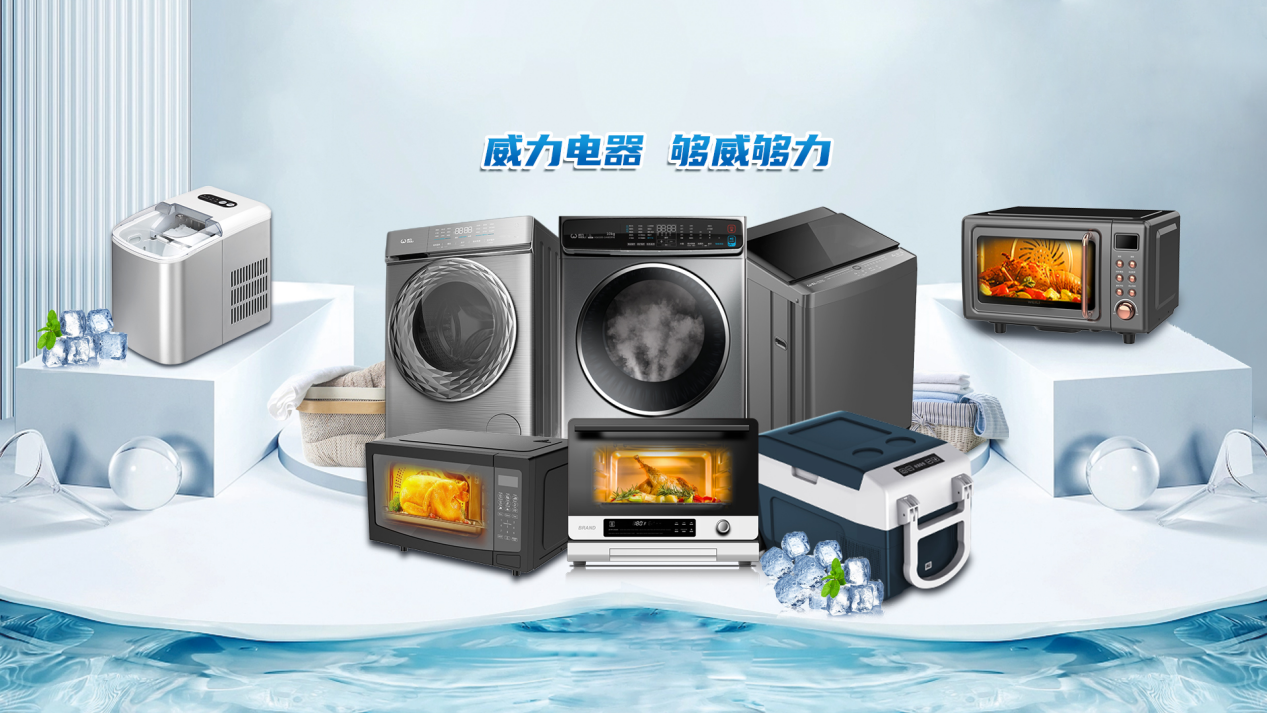
Image source: Weili Appliances official website
Why did the former “King of Washing Machines” fall into decline?
The glorious history of Weili Appliances dates back to 1979. At that time, it was just a small brand under Zhongshan Donlim Weili Electrical Appliances Co., Ltd., focusing on producing washing machines, refrigerators, and other household appliances.
With its sturdy and durable twin-tub washing machines, Weili quickly captured the domestic market and was the sales champion of washing machines from 1989 to 1996 for several consecutive years.
In 1994, Weili even set a record of 1.636 million units sold in a year, and was awarded the title of “King of Washing Machines” by the state the following year.
At that time, Weili was almost synonymous with the domestic washing machine market.

Can you imagine, in those years, how many families relied on Weili washing machines to wash out the memories of an entire generation?
However, as market demand changed, Weili failed to keep up with the times. Fully automatic and front-loading washing machines gradually emerged, while Weili still stuck to the traditional twin-tub design, causing its products to gradually lose market competitiveness. Coupled with fierce competition in the domestic home appliance market, Weili gradually fell behind and entered a slump.
In 2005, Weili was acquired by Guangdong Donlim Kitchen Group due to debts of 1.6 billion yuan. This event seemed to mark the “end” of Weili. But in fact, it was the beginning of its transformation.

Quietly going global: Weili’s globalization transformation
“Domestic brands are not dead, but living even more brilliantly.” The comeback of Weili washing machines began with this belief.
After being acquired, Weili began bold reforms, especially making daring attempts in its globalization strategy.
It cut off its air conditioner business, streamlined its organizational structure, leveraged years of technical accumulation and the resources of Guangdong Donlim Kitchen Group, and entered the Western small home appliance track, going abroad.
Subsequently, Weili quickly expanded, launching its core products—including washing machines, refrigerators, microwave ovens, and other home appliances—into overseas markets. At the same time, Weili began a brand overhaul, launching a brand new overseas brand—Kumio.
Kumio may still be unfamiliar to many people, but it has already become Weili’s new business card in the global market, representing Weili Appliances’ new positioning worldwide.
Unlike Weili’s traditional image in China, Kumio focuses on simple, modern, and stylish product design, better meeting the needs of global consumers.Through Kumio, Weili focuses on small appliances, especially a product line centered on kitchen appliances, such as small ice makers, ice cream makers, etc., which are particularly popular in the European and American markets.

Moreover, in its overseas expansion, Weili did not rely directly on traditional distributor channels, but quickly opened up overseas markets through Amazon. In just one year after the Kumio brand was launched, it quickly achievedsales of 4 million US dollarsthanks to its innovative products and differentiated market positioning.
This approach of directly reaching consumers, reducing intermediary costs, and interacting with global consumers through social media has helped Weili rapidly increase its brand awareness.
Of course, Weili’s cross-border e-commerce path does not simply rely on platforms, but focuses on brand marketing planning and the precise use of social media. Today, social media has become a key channel for global brand communication, and Weili’s grasp of this trend is spot on.
By cooperating with overseas influencers and social media personalities, Weili has further expanded the influence of the Kumio brand. In the US, Europe, and Southeast Asian markets,Weili has promoted its brand with a focus on “quality assurance” through cooperation with local influencers, emphasizing its products’ “high cost performance” and “durability”. Especially among young people, Kumio has quickly become a must-have small appliance for households thanks to its modern appearance and powerful functions.

Through carefully designed social media campaigns, Weili has also modernized the image of “old domestic brands,” successfully integrating its traditional brand value with a fashionable cross-border e-commerce image, allowing overseas consumers to realize that this Chinese brand not only “hasn’t gone out of business,” but is actually very “cool.”
According to statistics,Weili’s overseas sales revenue in 2021 has exceeded 3.5 billion yuan, and behind this achievement is its precise layout in product innovation, cross-border e-commerce channels, and social media marketing.
By continuously optimizing its product line, strengthening brand communication, and implementing flexible market strategies, Weili has successfully established a foothold in many global markets. Whether in developed markets in Europe and America or emerging markets such as Southeast Asia and Latin America, the Kumio brand has received considerable attention and sales.
Although it has not yet set up official accounts on mainstream overseas social platforms such as TikTok and YouTube, Kumio’s brand popularity continues to rise thanks to its strong performance on e-commerce platforms such as Amazon. Many users have even spontaneously uploaded review videos and recommendation content on these platforms, further expanding the brand’s influence. As the brand’s social media strategy gradually unfolds, Kumio’s global market layout will undoubtedly achieve even greater breakthroughs.

From “old domestic brand” to global name brand
The story of Weili washing machines going global is actually a typical brand transformation story. From “King of Washing Machines” to a new favorite in cross-border e-commerce, Weili’s success is not only due to its high-quality products, but also its willingness to break with tradition and embrace the tides of globalization and digitalization.
Today, Weili has not only entered the global market through Kumio, but also accumulated a strong brand effect on social media. It has proven how an old domestic brand can achieve a magnificent transformation in the new era, and also provides valuable experience for other traditional brands on the road to globalization.
As for those netizens who once joked that Weili had “gone out of business,” they probably never expected that this “old domestic brand” is quietly becoming a new star in the global home appliance market, bringing a better quality of life to more families.
What this signal means for growth teams
This market signal should be treated as an operating prompt, not a standalone trend. The brand question is whether the team can connect TikTok content, creators, paid media, commerce readiness, and reporting into one measurable growth cycle.
Commercial read
- Market signal: TikTok marketing tips - short video marketing methods
- Published: December 18, 2024
- Commercial lens: TikTok Ads, creators, TikTok Shop, live commerce, and reporting.
- Source transparency: the original source linked in this article
What brands should do next
- Identify the market, audience, product group, and KPI this signal could affect.
- Turn the insight into a small TikTok creative, creator, Shop, or paid media test before scaling spend.
- Add FAQ, offer clarity, product proof, and contact paths so traffic can convert instead of only reading.
- Review weekly performance across reach, click quality, Shop actions, creator output, and revenue impact.
Tuke Marketing helps brands connect TikTok Ads, creator partnerships, TikTok Shop operations, live commerce, and reporting into one accountable operating system.
What should brands do with this TikTok signal?
Brands should translate the signal into a focused operating test across creative, creators, TikTok Shop readiness, paid media, and reporting before increasing budget.
How does Tuke Marketing evaluate this kind of news?
Tuke Marketing reviews platform news through market timing, category demand, creator supply, commerce readiness, and measurable growth actions.
When should a team contact Tuke about this topic?
A team should contact Tuke when it needs to turn a TikTok market signal into a practical launch, creator, advertising, live commerce, or reporting plan.
Source transparency: Tuke cites the original source linked in this article and adds its own operating analysis for brands evaluating TikTok growth decisions.